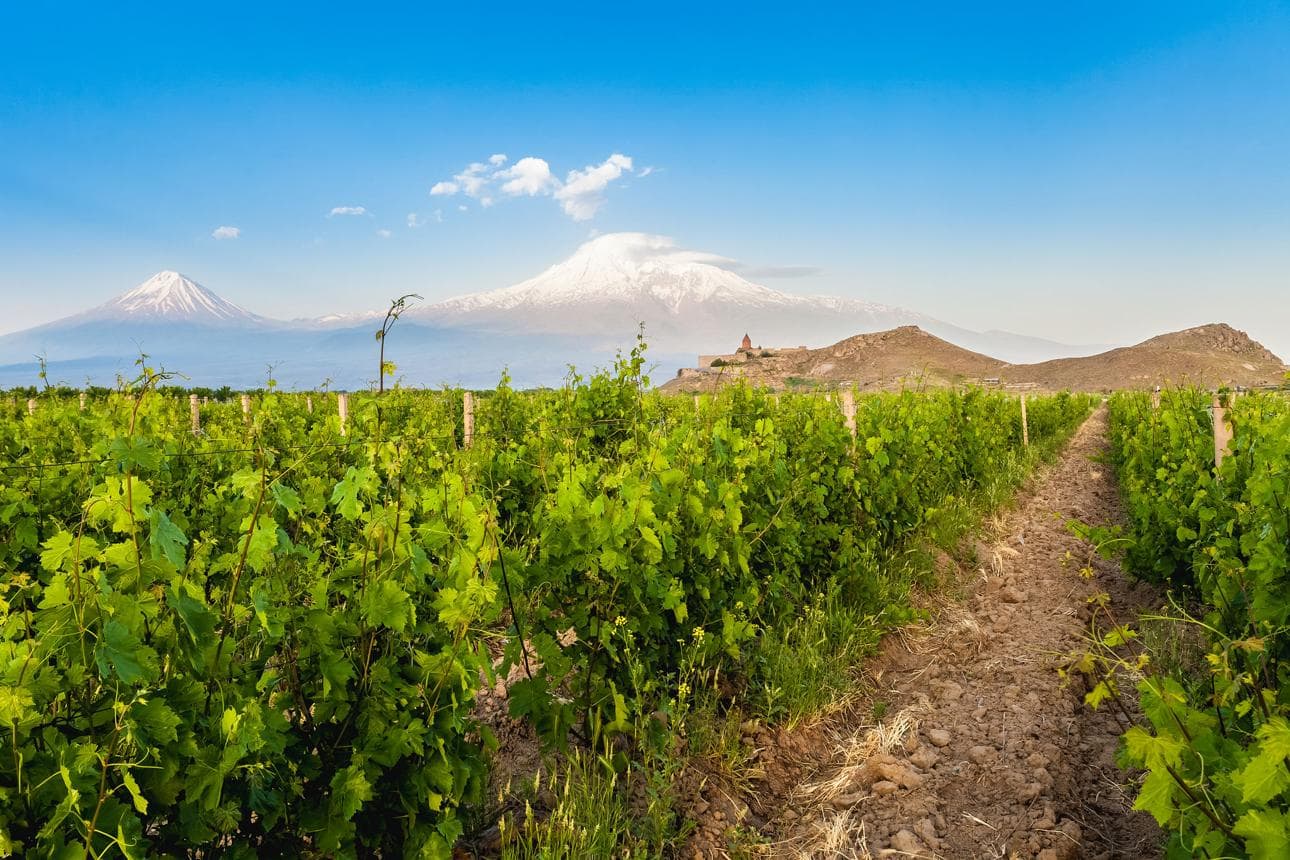
Ararat: The brandy distilleries and fruit processors of the Ararat valley built their business on a single assumption, which is that whatever they produced could be sold northwards without much thought about paperwork. That assumption has been failing for the better part of a year, and the European Union’s response to the failure arrived on 2 September when the Council agreed its position on temporary trade liberalisation measures for Armenian goods.
The measure is straightforward in outline. Import duties would be suspended on roughly four-fifths of Armenian exports to the Union, for a fixed period, subject to conditions and with a safeguard clause allowing the Commission to reimpose duties if European producers are harmed. The Council endorsed the Commission’s proposal without amendment, and the European Parliament is expected to do the same, which means the regulation could be in force before the end of the year. By the standards of autonomous trade preferences, that is fast.
The rationale offered is economic distress caused by Russian restrictions that have disrupted Armenia’s traditional supply chains. The Commission’s own framing is unusually direct about who is affected: small and medium enterprises and agricultural producers, the parts of the economy least able to absorb a sudden loss of market access and least able to reorient towards a buyer four thousand kilometres away.
That distance is where the policy meets its limit. Tariffs are not what keeps Armenian apricots and canned vegetables out of European supermarkets. Armenia is landlocked, its border with Turkey has been closed for decades and its border with Azerbaijan is not a working trade route, which leaves Georgian roads and the Black Sea as the practical corridor west. Freight on that route is expensive and slow. Removing a duty of a few per cent does not change the freight cost, the cold chain, or the fact that European retail buyers work to certification standards most Armenian producers have never had a commercial reason to meet.
There is a further structural point the regulation cannot address. Armenia remains a member of the Eurasian Economic Union, whose common external tariff and customs rules constrain what Yerevan can offer in return. Autonomous preferences are a one-way instrument precisely because a reciprocal agreement is not currently available. That makes the measure a gesture of support rather than the opening of a trade relationship, and it is worth being clear about the difference.
Read politically, the timing is the substance. The preferences arrive alongside a visa liberalisation dialogue that has been running since 2024 and a broader partnership agenda that Brussels has been assembling with a government explicitly interested in loosening its dependence on Moscow. Each individual instrument is modest. The accumulation is not, and the accumulation is presumably the point. Europe is making it materially easier for Armenia to face west at a moment when facing north has become costly.
The risk is the one that attaches to every temporary measure. Autonomous preferences expire, and an economy that restructures around them acquires an interest in their renewal that the granting side may not wish to honour indefinitely. The conditions attached give Brussels leverage; they also give it a decision to take again in a few years, under whatever circumstances then apply. For the distilleries in the valley, a fixed-term duty suspension is better than nothing and considerably less than a settlement.