September 22, 2026
LATEST
One Ticket Promise Meets Its First Real Test Inside the CouncilCyprus Judge Takes Over a General Court Still Absorbing CasesSkills Portability Act Sets Five Weeks as the New Recognition LimitIreland Reopens the Digital Omnibus With Cookies Back in PlayMinisters Weigh the Long-Term Budget Before a Negotiating BoxSocial Partners Have One Week Left to Shape the Quality Jobs ActPhuket Round Decides Whether Thailand Closes Its Deal This YearSyria’s Banks Reconnect While Europe’s Risk Premium Stays PutMercosur’s First Health Ban Tests a Deal Still Being RatifiedBudget Performance Regulation Slips Toward a 2027 VotePontes Digital Euro Platform Goes Live for 13 BanksEU Arctic Drilling Ban Survives Norway’s Lobbying PushPrivacy Watchdog Wants Tighter Limits on Eurojust’s New DatabasesScrutiny Board Sends Europe’s Circular Economy Act Back for ReworkLow-LEO Studies Open the Next Chapter for Europe’s IRIS2 PlanFour Indo-Pacific Partners Join Europe’s Ministers in New YorkWildfire Season Closes Above Average as the rescEU Fleet GrowsQuality Education Roadmap Lands in November With Three FrontsPartnership Plans Recast Cohesion Policy Before Anyone VotesHandling Fee on Small Parcels Must Be Ready by 1 November 2026One Ticket Promise Meets Its First Real Test Inside the CouncilCyprus Judge Takes Over a General Court Still Absorbing CasesSkills Portability Act Sets Five Weeks as the New Recognition LimitIreland Reopens the Digital Omnibus With Cookies Back in PlayMinisters Weigh the Long-Term Budget Before a Negotiating BoxSocial Partners Have One Week Left to Shape the Quality Jobs ActPhuket Round Decides Whether Thailand Closes Its Deal This YearSyria’s Banks Reconnect While Europe’s Risk Premium Stays PutMercosur’s First Health Ban Tests a Deal Still Being RatifiedBudget Performance Regulation Slips Toward a 2027 VotePontes Digital Euro Platform Goes Live for 13 BanksEU Arctic Drilling Ban Survives Norway’s Lobbying PushPrivacy Watchdog Wants Tighter Limits on Eurojust’s New DatabasesScrutiny Board Sends Europe’s Circular Economy Act Back for ReworkLow-LEO Studies Open the Next Chapter for Europe’s IRIS2 PlanFour Indo-Pacific Partners Join Europe’s Ministers in New YorkWildfire Season Closes Above Average as the rescEU Fleet GrowsQuality Education Roadmap Lands in November With Three FrontsPartnership Plans Recast Cohesion Policy Before Anyone VotesHandling Fee on Small Parcels Must Be Ready by 1 November 2026
September 22, 2026
LATEST
One Ticket Promise Meets Its First Real Test Inside the CouncilCyprus Judge Takes Over a General Court Still Absorbing CasesSkills Portability Act Sets Five Weeks as the New Recognition LimitIreland Reopens the Digital Omnibus With Cookies Back in PlayMinisters Weigh the Long-Term Budget Before a Negotiating BoxSocial Partners Have One Week Left to Shape the Quality Jobs ActPhuket Round Decides Whether Thailand Closes Its Deal This YearSyria’s Banks Reconnect While Europe’s Risk Premium Stays PutMercosur’s First Health Ban Tests a Deal Still Being RatifiedBudget Performance Regulation Slips Toward a 2027 VotePontes Digital Euro Platform Goes Live for 13 BanksEU Arctic Drilling Ban Survives Norway’s Lobbying PushPrivacy Watchdog Wants Tighter Limits on Eurojust’s New DatabasesScrutiny Board Sends Europe’s Circular Economy Act Back for ReworkLow-LEO Studies Open the Next Chapter for Europe’s IRIS2 PlanFour Indo-Pacific Partners Join Europe’s Ministers in New YorkWildfire Season Closes Above Average as the rescEU Fleet GrowsQuality Education Roadmap Lands in November With Three FrontsPartnership Plans Recast Cohesion Policy Before Anyone VotesHandling Fee on Small Parcels Must Be Ready by 1 November 2026One Ticket Promise Meets Its First Real Test Inside the CouncilCyprus Judge Takes Over a General Court Still Absorbing CasesSkills Portability Act Sets Five Weeks as the New Recognition LimitIreland Reopens the Digital Omnibus With Cookies Back in PlayMinisters Weigh the Long-Term Budget Before a Negotiating BoxSocial Partners Have One Week Left to Shape the Quality Jobs ActPhuket Round Decides Whether Thailand Closes Its Deal This YearSyria’s Banks Reconnect While Europe’s Risk Premium Stays PutMercosur’s First Health Ban Tests a Deal Still Being RatifiedBudget Performance Regulation Slips Toward a 2027 VotePontes Digital Euro Platform Goes Live for 13 BanksEU Arctic Drilling Ban Survives Norway’s Lobbying PushPrivacy Watchdog Wants Tighter Limits on Eurojust’s New DatabasesScrutiny Board Sends Europe’s Circular Economy Act Back for ReworkLow-LEO Studies Open the Next Chapter for Europe’s IRIS2 PlanFour Indo-Pacific Partners Join Europe’s Ministers in New YorkWildfire Season Closes Above Average as the rescEU Fleet GrowsQuality Education Roadmap Lands in November With Three FrontsPartnership Plans Recast Cohesion Policy Before Anyone VotesHandling Fee on Small Parcels Must Be Ready by 1 November 2026

Manila Holds Out on Procurement as Brussels Books a Signing Date

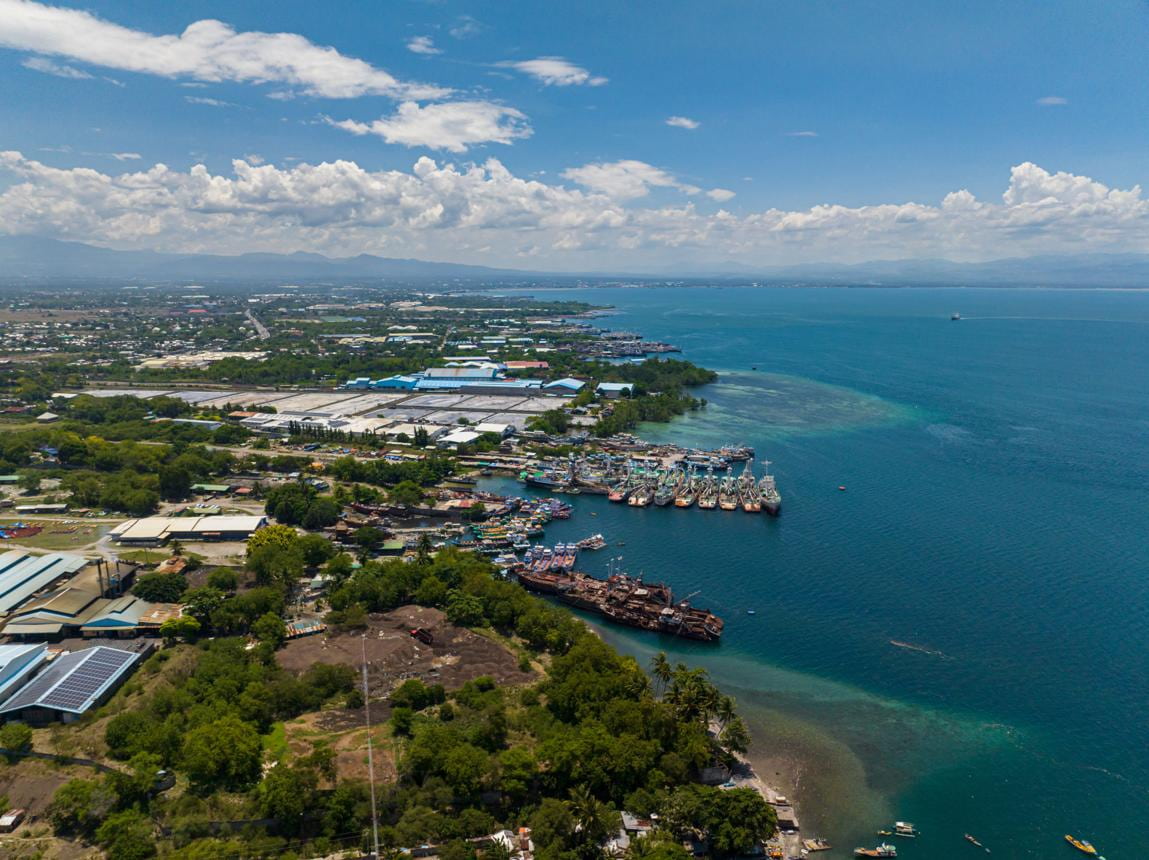
General Santos: The tuna canneries on the southern coast of Mindanao already ship into Europe at a zero tariff, and that fact explains why the trade agreement the European Commission is about to close with the Philippines matters less for what it opens than for what it makes permanent.

Trade Commissioner Maros Sefcovic is travelling to Manila to finalise a bilateral agreement that has been under negotiation since 2024. Six rounds have been completed. The most recent, in May, left a single unresolved chapter, and the Commission told Members of the European Parliament earlier this month that everything apart from public procurement is ready. That is an unusually narrow residual for a negotiation of this size, and it tells you where the real bargaining has been.

Procurement is the chapter where developing-country negotiators habitually dig in, because it touches domestic construction, utilities and infrastructure contracts that governments use as instruments of industrial policy. The Philippine Constitution reserves substantial economic activity for Filipino-owned entities, and although successive liberalisation laws have loosened the restrictions on public services and retail, the political cost of opening state tenders to European bidders is carried domestically while the benefit is diffuse. Brussels, for its part, treats procurement access as a standard of the current generation of agreements and has little room to concede it without setting a precedent for the negotiations that follow.

What is genuinely at stake for Manila is predictability rather than market access as such. Philippine exporters currently enter the European market under the Generalised Scheme of Preferences Plus, a unilateral arrangement that grants tariff-free treatment on most product lines in return for ratifying and implementing twenty-seven international conventions on human rights, labour standards, environmental protection and governance. GSP Plus is a concession, not a contract. It can be suspended after monitoring, it is reviewed periodically in Brussels, and a country that grows richer eventually loses eligibility by graduating out of the income threshold. For a middle-income economy with a strong growth trajectory, the arrangement has a visible end date that no exporter can plan around.

A bilateral agreement converts that conditional preference into a reciprocal treaty obligation. For the canneries, the coconut oil processors and the electronics assembly plants in the export zones north of Manila, the difference is the ability to sign multi-year supply contracts on the assumption that the tariff line will still be zero when the contract expires. That is a smaller headline than a new market, and a larger commercial fact.

The sequencing also matters for the Commission’s own agenda. Having reached agreements with Australia and India this year, and with Thailand identified as the next Southeast Asian file, Brussels is assembling a set of bilateral instruments across the Indo-Pacific at a pace it has not managed for a decade. The strategic logic is diversification: each agreement reduces, at the margin, the share of European trade that depends on a single large partner. The practical logic is that the window is open, because partners who are exposed to tariff volatility elsewhere are readier to sign than they were three years ago.

None of this makes the procurement chapter easy. Agreements concluded with a chapter deliberately thinned to allow signature tend to return as review clauses and joint committee agendas, and the European Parliament, which must consent, has shown itself willing to interrogate exactly those compromises. The likelier outcome is a limited opening with long transition periods and carve-outs for the sectors Manila cannot concede. That would be enough to sign. Whether it is enough to satisfy the committee that will read the text line by line is a separate question, and it will be answered in Brussels rather than in Mindanao.