Kinshasa: The Council of the European Union has strengthened its DRC sanctions regime, and the changes target both arms flows and attacks on United Nations peacekeepers. The amendments to Council Decision 2010/788/CFSP and Council Regulation (EC) No 1183/2005 became public in early November 2026, and they bring EU rules in line with recent decisions of the UN Security Council.
The most concrete change is a wider trade ban. The Union now prohibits the direct or indirect sale, supply, transfer or export of items on the EU Common Military List, specified firearms and their parts, and ammunition to any non-governmental entity or person operating in the Democratic Republic of the Congo. Related technical assistance, brokering, other services and financing restrictions follow the same logic, and the derogations were updated to match.
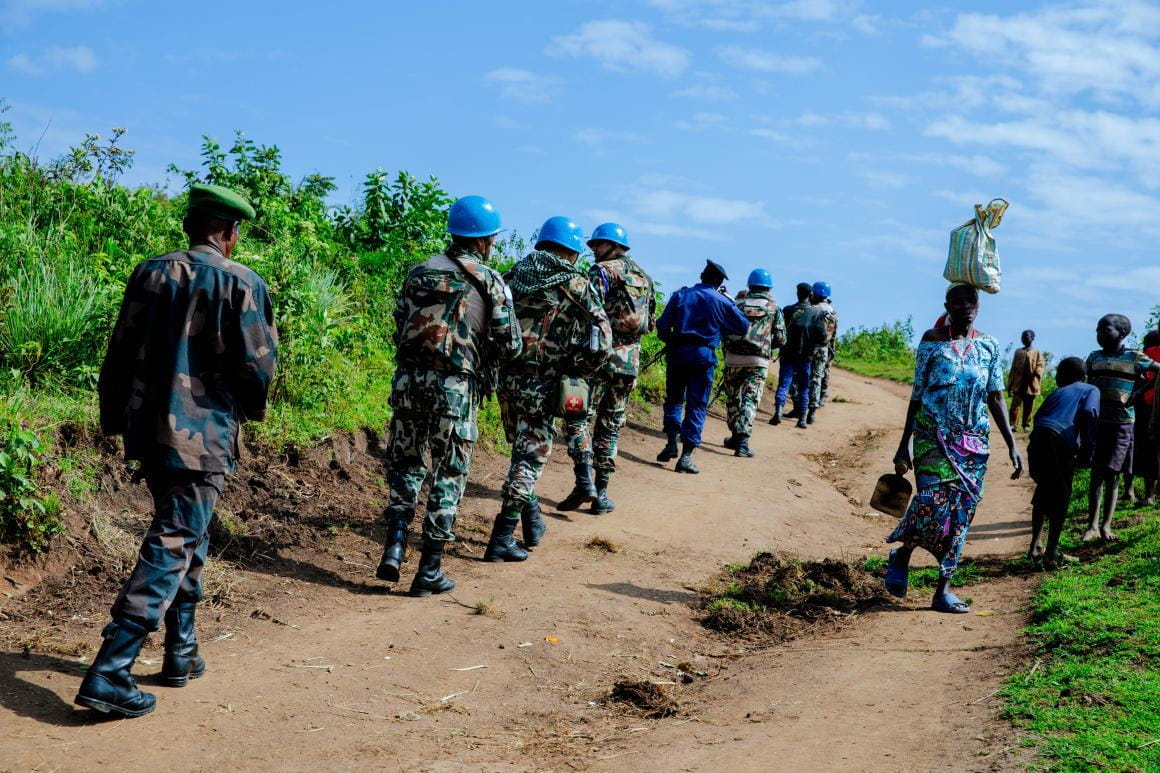
The second change adds a new listing criterion. People or entities that deliberately and gravely obstruct the mandate of MONUSCO, the UN mission in the country, can now face sanctions. The criterion names examples such as denying access, restricting movement and interfering with patrols and monitoring. Peacekeepers in eastern Congo depend on freedom of movement, so this wording speaks to the daily obstacles that armed groups and their backers create.
The Council also introduced a new definition of financing or financial assistance and strengthened the duty to share information between national authorities and the Commission. Authorities must exchange data on frozen funds, authorisations and suspected violations. That detail matters because the DRC sanctions regime has often worked less through headline listings than through the quality of national enforcement.
The amendment shows how the Union uses sanctions in Africa, and the DRC sanctions regime is now one of its more detailed African frameworks. It follows the UN lead, adds its own legal tools and relies on member states to enforce them. This approach gives Brussels credibility with African partners who want multilateral legitimacy, but it also leaves a gap between the text and the results on the ground. Arms reach armed groups through porous borders and informal networks, and a ban on paper does not close those routes.
The timing adds weight. Washington also took separate action on 28 October linked to Rwanda and the M23 movement, which shows that Western partners are looking at the same conflict from several angles. A coordinated message from the United States, the United Nations and the Union would carry more force than any single measure.
The real test for the DRC sanctions regime in 2026 is implementation. The DRC sanctions regime only works if Brussels names individuals who obstruct MONUSCO, help member states police arms brokers and keep the diplomatic channel open with Kinshasa and its neighbours. If it does, the new criterion could protect peacekeepers in practice and not only in legal language.