Brussels: Europe has become the largest donor to a catastrophe almost no one can reach. The gap between the money the Union commits to Sudan and the aid that arrives on the ground has turned into the defining failure of the world’s worst displacement crisis.
The figures are substantial. The EU has allocated roughly 162 million euros for lifesaving assistance inside Sudan in 2026, lifting its total contribution for the country and its neighbours to more than 276 million euros for the year. In April, the Union and its member states pledged over 811 million euros at a donor conference, and Brussels rightly points out that Europe and its capitals together form the biggest single source of humanitarian funding for Sudan.
Money, however, is not the binding constraint. Access is. Some 33.7 million Sudanese, sixty percent of them children, need humanitarian help this year, and the front lines keep moving over the very roads that convoys must use. The Rapid Support Forces seized El Fasher in North Darfur late last year, and renewed fighting through 2026 has driven fresh waves of families into camps that were already stretched past capacity.
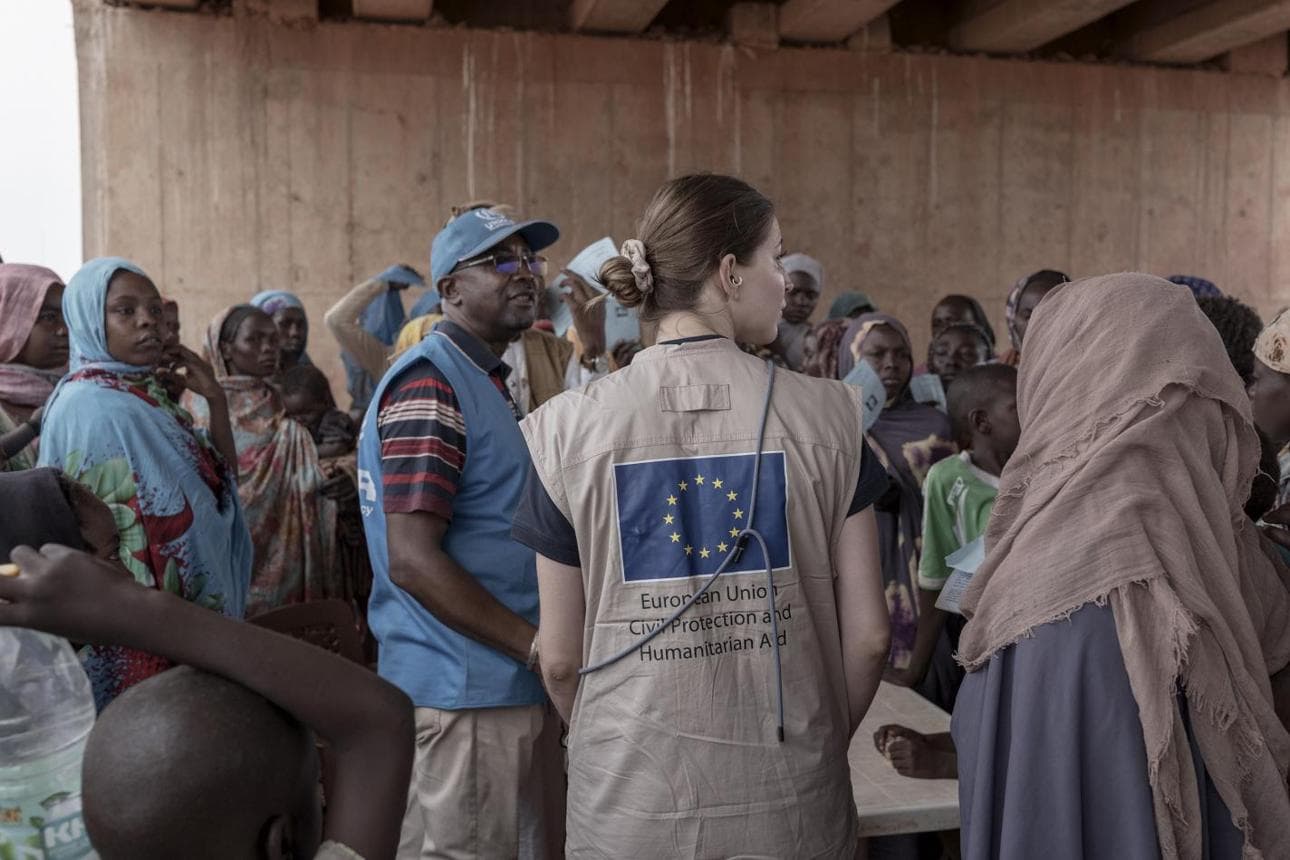
The violence follows the displaced across borders. Chad now shelters close to a million Sudanese refugees, most of them women and children, and aid workers describe malnutrition rates among those fleeing Darfur as staggering. Each new offensive adds thousands to camps that lack water, shelter and food long before the newcomers arrive. European cash keeps those operations breathing, yet it cannot open a corridor that armed men choose to close.
This is where Brussels confronts the limit of its favourite instrument. The Union is fluent in the language of pledges and generous with its budget, but it holds little leverage over the two warring commands that decide whether a truck moves or a border opens. Its humanitarian arm can fund partners on the ground, and it does so at scale, yet funding without access buys warehouses, not survival.
There is a diplomatic case that Europe underplays its hand. The same governments courting Gulf capital and African partnerships could tie political capital to humanitarian access, pressing the external backers of both Sudanese factions to permit aid rather than merely deploring the siege. That would demand a harder, more uncomfortable diplomacy than writing cheques allows.
For now the pattern holds. Europe announces, the crisis deepens, and the distance between a pledge in a Brussels conference hall and a meal in a Darfur camp stays wide. The Union’s generosity is real. So is the uncomfortable truth that generosity, on its own, has not been enough.