August 11, 2026
LATEST
Rail Passengers Win Full Rights on Multi-Leg TripsEuropean Universities Face a Budget and Reform TestTobacco Rules Face a Sweeping Reset as Vaping SurgesRiyadh Summit Tests Europe’s New Bet on the GulfEurope Pours Millions Into a Sudan Crisis It Cannot ReachBrussels Braces for a Bruising Fight Over Its New Space Act RulesEurope Pushes Households To Turn Savings Into Investment PowerCohesion Funds Pivot Toward Defence and Housing in Big RewireGas Customers Win Free Choice of Supplier Under New EU RulesEuro Inflation Hits 2.9% and Revives the Case for Rate RisesNearly 600 Million in EU Funds Flagged for Recovery by OLAFDigital VAT Overhaul Enters Its Operational Phase Across EuropeEurope’s Migration Pact Starts to Bite as Solidarity Rules ApplyData Flows Now Bind New Zealand Closer to EuropeBeijing’s Magnet Curbs Put Europe’s Factories on NoticeEurope Struggles to Make Its North Korea Sanctions BiteA Green Shipping Corridor Links Korea and EuropeEurope Retires Its China EV Tariffs for a Fragile Price FloorWhy Tokyo Has Become Europe’s Closest Security Partner in AsiaAir Passenger Rights Get Their First Overhaul in Two DecadesRail Passengers Win Full Rights on Multi-Leg TripsEuropean Universities Face a Budget and Reform TestTobacco Rules Face a Sweeping Reset as Vaping SurgesRiyadh Summit Tests Europe’s New Bet on the GulfEurope Pours Millions Into a Sudan Crisis It Cannot ReachBrussels Braces for a Bruising Fight Over Its New Space Act RulesEurope Pushes Households To Turn Savings Into Investment PowerCohesion Funds Pivot Toward Defence and Housing in Big RewireGas Customers Win Free Choice of Supplier Under New EU RulesEuro Inflation Hits 2.9% and Revives the Case for Rate RisesNearly 600 Million in EU Funds Flagged for Recovery by OLAFDigital VAT Overhaul Enters Its Operational Phase Across EuropeEurope’s Migration Pact Starts to Bite as Solidarity Rules ApplyData Flows Now Bind New Zealand Closer to EuropeBeijing’s Magnet Curbs Put Europe’s Factories on NoticeEurope Struggles to Make Its North Korea Sanctions BiteA Green Shipping Corridor Links Korea and EuropeEurope Retires Its China EV Tariffs for a Fragile Price FloorWhy Tokyo Has Become Europe’s Closest Security Partner in AsiaAir Passenger Rights Get Their First Overhaul in Two Decades
August 11, 2026
LATEST
Rail Passengers Win Full Rights on Multi-Leg TripsEuropean Universities Face a Budget and Reform TestTobacco Rules Face a Sweeping Reset as Vaping SurgesRiyadh Summit Tests Europe’s New Bet on the GulfEurope Pours Millions Into a Sudan Crisis It Cannot ReachBrussels Braces for a Bruising Fight Over Its New Space Act RulesEurope Pushes Households To Turn Savings Into Investment PowerCohesion Funds Pivot Toward Defence and Housing in Big RewireGas Customers Win Free Choice of Supplier Under New EU RulesEuro Inflation Hits 2.9% and Revives the Case for Rate RisesNearly 600 Million in EU Funds Flagged for Recovery by OLAFDigital VAT Overhaul Enters Its Operational Phase Across EuropeEurope’s Migration Pact Starts to Bite as Solidarity Rules ApplyData Flows Now Bind New Zealand Closer to EuropeBeijing’s Magnet Curbs Put Europe’s Factories on NoticeEurope Struggles to Make Its North Korea Sanctions BiteA Green Shipping Corridor Links Korea and EuropeEurope Retires Its China EV Tariffs for a Fragile Price FloorWhy Tokyo Has Become Europe’s Closest Security Partner in AsiaAir Passenger Rights Get Their First Overhaul in Two DecadesRail Passengers Win Full Rights on Multi-Leg TripsEuropean Universities Face a Budget and Reform TestTobacco Rules Face a Sweeping Reset as Vaping SurgesRiyadh Summit Tests Europe’s New Bet on the GulfEurope Pours Millions Into a Sudan Crisis It Cannot ReachBrussels Braces for a Bruising Fight Over Its New Space Act RulesEurope Pushes Households To Turn Savings Into Investment PowerCohesion Funds Pivot Toward Defence and Housing in Big RewireGas Customers Win Free Choice of Supplier Under New EU RulesEuro Inflation Hits 2.9% and Revives the Case for Rate RisesNearly 600 Million in EU Funds Flagged for Recovery by OLAFDigital VAT Overhaul Enters Its Operational Phase Across EuropeEurope’s Migration Pact Starts to Bite as Solidarity Rules ApplyData Flows Now Bind New Zealand Closer to EuropeBeijing’s Magnet Curbs Put Europe’s Factories on NoticeEurope Struggles to Make Its North Korea Sanctions BiteA Green Shipping Corridor Links Korea and EuropeEurope Retires Its China EV Tariffs for a Fragile Price FloorWhy Tokyo Has Become Europe’s Closest Security Partner in AsiaAir Passenger Rights Get Their First Overhaul in Two Decades

Riyadh Summit Tests Europe’s New Bet on the Gulf

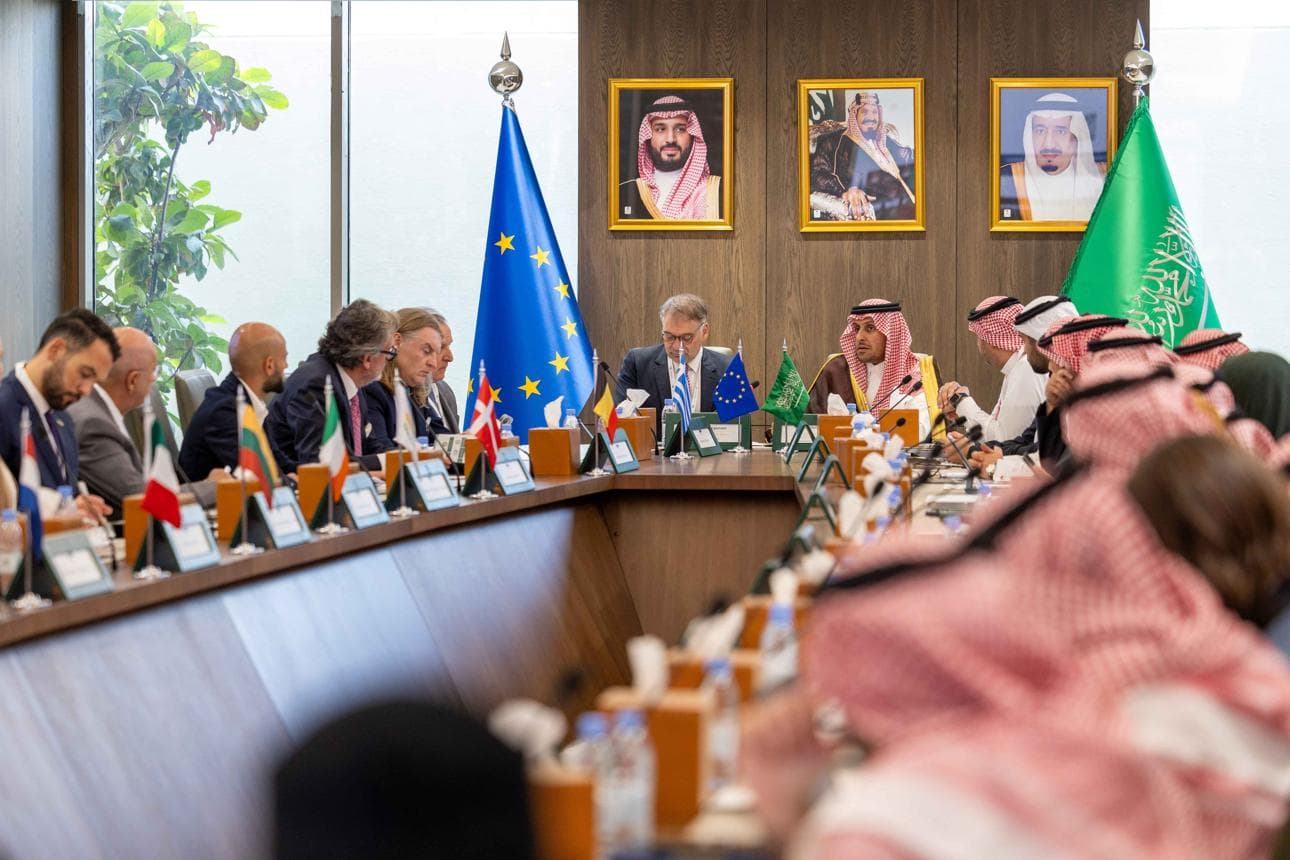
Riyadh: Europe and the Gulf have spent two decades circling a partnership neither side fully trusted enough to sign. This autumn in the Saudi capital, they meet again to test whether that hesitation has finally worn through.

The second EU-Gulf Cooperation Council summit follows the inaugural gathering Brussels hosted in October 2024. Leaders agreed then to meet every two years, and Saudi Arabia now takes its turn as host. The venue itself carries a message. It tells Europe that the Gulf no longer waits for invitations to Brussels and expects the Union to travel to a region it long treated as a fuel supplier rather than a strategic equal.

What both sides want has grown clearer since the first summit. Negotiators have quietly abandoned the dream of a single sweeping free trade treaty, a project that stalled for more than thirty years, and now chase sector-specific packages instead. Renewable energy, digital trade and industrial supply chains top the list. Smaller, faster deals let each capital claim a win without waiting for consensus among six Gulf monarchies and twenty-seven member states, a bar that almost guarantees paralysis.

Energy still anchors the relationship, though the terms have flipped. Europe once bought Gulf oil and asked few questions. Now Brussels arrives selling clean technology and courting Gulf sovereign wealth for its own green transition, while Riyadh and Abu Dhabi pitch themselves as future exporters of hydrogen and solar power. A planned EU-GCC forum on green transition gives that ambition a stage. Whether it produces contracts or communiqués is the open question.

The geopolitical backdrop pushes both blocs together. A more fractured world, an unpredictable Washington and a war on Europe’s eastern flank have taught Brussels the cost of depending on any single partner. The Gulf states, watching the same instability, hedge their own bets between China, the United States and Europe. A closer European tie diversifies their options without forcing a choice.

Yet the friction points are real. European lawmakers press on human rights and on the war in Gaza, subjects Gulf leaders prefer to keep off the summit agenda. Labour conditions, press freedom and the death penalty sit awkwardly beside talk of shared values. Brussels has learned to compartmentalise, ring-fencing commerce from criticism, but that balance irritates its own parliament and risks hollowing out the partnership’s claim to principle.

The measure of Riyadh will not be the warmth of the closing statement. It will be whether the sector packages carry deadlines, whether the energy forum names projects, and whether either side commits money that survives the flight home. Europe and the Gulf have proven they can convene. The harder test is whether they can deliver.