Ichigaya: Japan SAFE participation remains an open question almost a year after Tokyo applied to join the EU’s €150 billion Security Action for Europe loan instrument. As EU defence ministers prepare to meet in Brussels on 17 November 2026, officials at Japan’s Ministry of Defense in Ichigaya watch Canada enjoy the access that Japan still awaits.
The Council adopted SAFE on 27 May 2025 to fund joint procurement of priority capabilities through long-term loans to member states. Third countries need two steps to take part. They first sign a security and defence partnership with the EU and then negotiate a separate bilateral agreement that member states endorse.
Japan cleared the first step in November 2024, when Tokyo and Brussels signed their Security and Defence Partnership. It applied for SAFE association in December 2025, a few months after South Korea filed in September 2025. Canada, by contrast, became the first non-European participant when member states endorsed its bilateral agreement in December 2025.
The stakes of Japan SAFE participation go beyond symbolism. Article 16 of the SAFE regulation caps components from outside the EU, the EEA, EFTA and Ukraine at 35% of the estimated cost of a product’s components. Without an agreement on Japan SAFE participation, Japanese firms can enter SAFE-funded programmes only as minority suppliers, however advanced their technology.
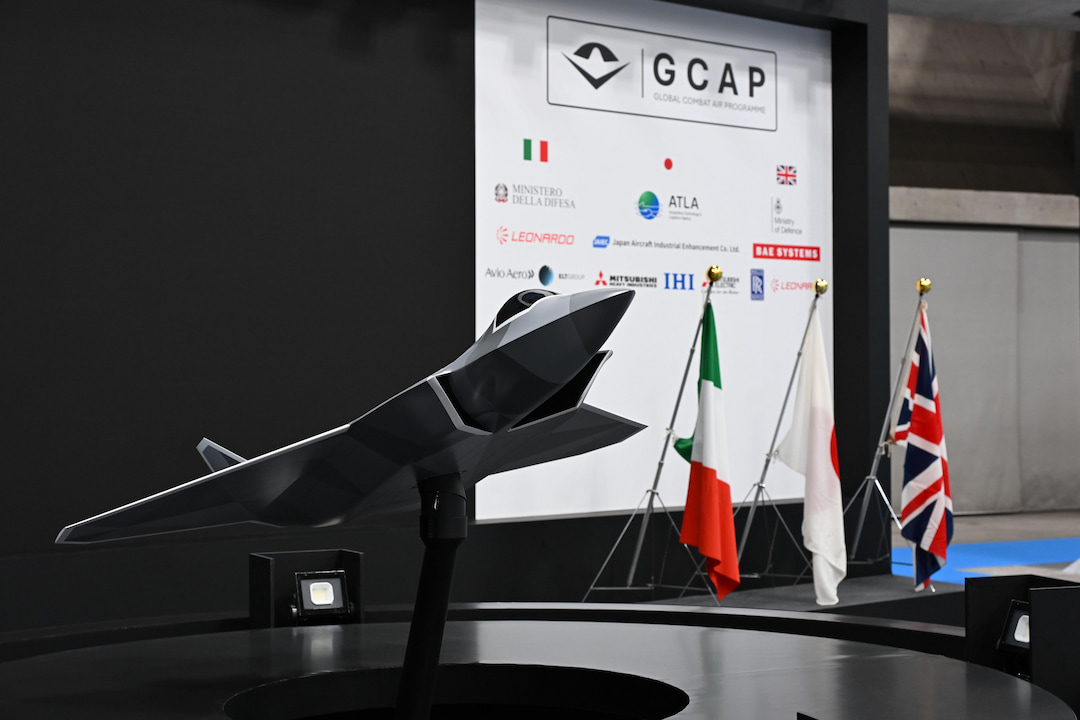
Japanese industry has already moved closer to Europe. On 3 July 2026 the GCAP Agency awarded Edgewing, the joint venture of BAE Systems, Leonardo and Japan’s JAIEC, an 18-month £4.6 billion contract for the next-generation fighter. Mitsubishi Electric, Leonardo and ELT formed G2E, which signed a mission avionics contract with Edgewing on 10 September 2026.
Tokyo has also loosened its own rules. On 21 April 2026 the government removed the five-category limit on exports of finished defence equipment, although weapons may still go only to countries with a defence transfer agreement. That reform makes Japan a far more credible partner for European co-production than it was a few years ago.
While talks on Japan SAFE participation continue, Brussels has opened a parallel industrial channel. The first EU-Japan Defence Industry Dialogue met on 17 April 2026, and the European Defence Industry Programme, worth €1.5 billion, now funds production projects at rates between 35% and 100%. Yet EDIP, like SAFE, rewards supply chains that sit inside Europe.
Several member states remain cautious about Japan SAFE participation. Some governments want EU money to build European capacity first and fear that every opening to a third country dilutes that goal. Others point to the Canadian precedent, which set clear terms and conditions for access, as a workable model for Tokyo.
Geopolitics argues for moving faster on Japan SAFE participation. Russia’s war against Ukraine and North Korea’s military cooperation with Moscow now link security in Europe and the Indo-Pacific more tightly than before. Japanese firms supply sensors, electronics and advanced materials that European producers need to expand output of missiles and air defence systems.
The next steps on Japan SAFE participation will show whether the EU treats its Asian partnerships as strategic or merely declaratory. A Japanese agreement on the Canadian template, with clear rules on technology transfer and end-use controls, would give European buyers wider choice while keeping SAFE anchored in European industry.