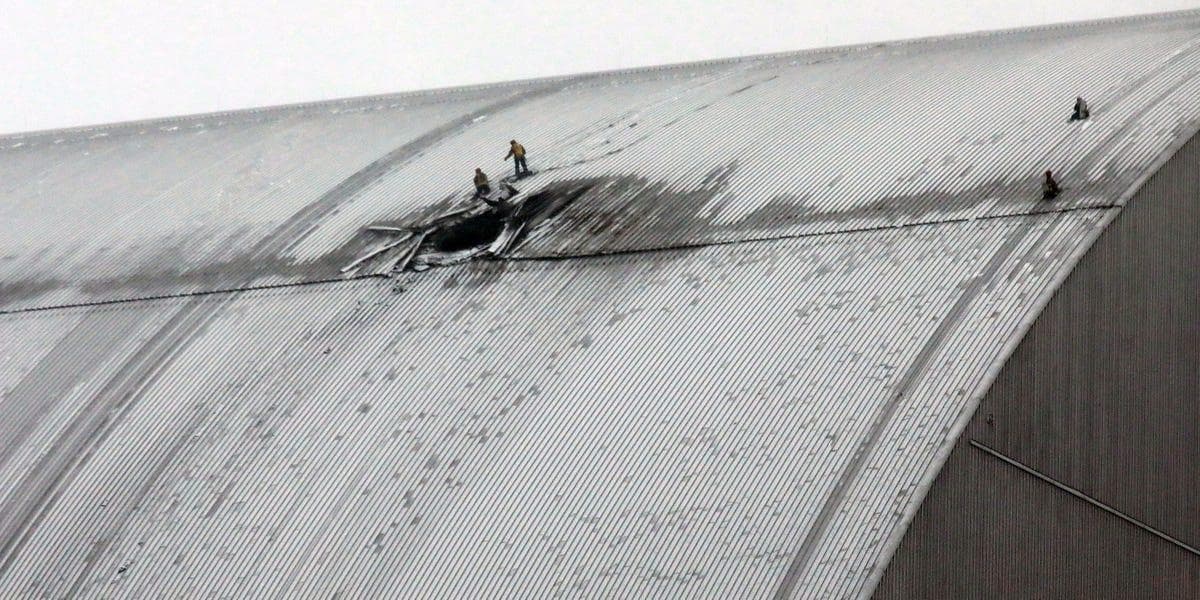
Chornobyl: Donors pledged 303 million euros in Paris on 9 November 2026 to restore the Chornobyl New Safe Confinement, the giant steel arch that a Russian drone pierced in February 2025. The money comes from 14 countries and international organisations, with the European Union among the largest contributors alongside Canada, Germany, France, the United States and the United Kingdom.
The conference brought together 34 delegations, in person or online, under the joint hosting of France, Ukraine and the European Bank for Reconstruction and Development. Pledges will flow into the International Chornobyl Cooperation Account, the EBRD-managed fund that has financed safety work at the site for nearly two decades.
The damage dates to 14 February 2025, when a drone struck the arch above the ruins of Reactor Unit 4. Organisers say the impact compromised both core functions of the Chornobyl New Safe Confinement: keeping radioactive remains contained, and allowing the safe dismantling of the old Soviet sarcophagus and the destroyed reactor beneath it.
Temporary repairs to the Chornobyl New Safe Confinement are already under way. The new pledges are meant to move the project from patchwork fixes and early engineering towards full restoration. Engineers want to act before damage to the outer cladding exposes the steel frame to corrosion, which would shorten the life of a structure designed to last a century.
The bill for the Chornobyl New Safe Confinement is far from covered. Ukraine’s Vice Prime Minister and Energy Minister, Denys Shmyhal, puts the total cost at about 500 million euros and says Kyiv aims to complete all engineering work and restore full functionality by 2030. He also wants the costs recovered from immobilised Russian assets, a demand that links the project to the EU’s wider debate on using those funds for Ukraine.
France has driven the effort through the finance track of its 2026 G7 presidency. Economy Minister Roland Lescure said he hopes the full amount can be raised by spring 2027, and G7 leaders committed in June to fund and secure the Chornobyl facilities. In October, the G7 had already announced 260 million euros for urgent repairs.
EBRD President Odile Renaud-Basso called the Paris response a real success. Greece, Moldova and the Netherlands said they would announce their own pledges later, which could narrow the remaining gap of almost 200 million euros.
For the EU, the Chornobyl New Safe Confinement is a test of nuclear safety diplomacy in wartime. The Union funded much of the original arch, completed in 2016, through the same EBRD channel, and it treats the site as a shared European responsibility rather than a purely Ukrainian one. A failure of containment would carry cross-border consequences that no sanctions package could undo.
The broader lesson concerns energy infrastructure under fire. Russian strikes on Ukrainian power plants, substations and nuclear-adjacent sites have become routine, and the International Atomic Energy Agency has repeatedly warned about risks near the Zaporizhzhia plant. Restoring the Chornobyl New Safe Confinement will show whether donors can protect critical nuclear assets faster than attacks can damage them.