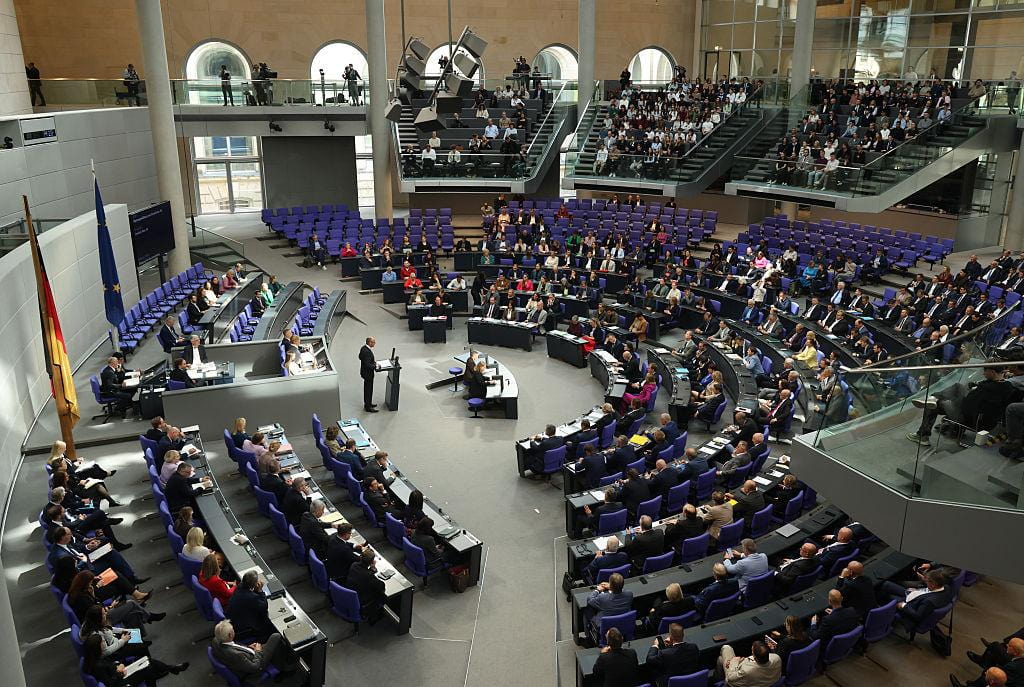
Berlin: The Mercosur interim agreement already applies in practice, even though the Bundestag has only begun to debate the wider partnership treaty behind it. On 7 October 2026 German lawmakers held a 30-minute first reading of government bill 21/8240, and Foreign Minister Johann Wadephul was among the speakers. The bill went to committee, with the Foreign Affairs Committee in the lead.
The sequence shows how the Union has split a large treaty into two parts. The EU-Mercosur Partnership Agreement covers political dialogue and cooperation and needs approval from national parliaments. The interim trade agreement carries the tariff provisions and can operate on EU approval alone. The Mercosur interim agreement will be repealed and replaced once the full partnership agreement is ratified and enters into force.
The calendar has moved quickly. Political agreement came on 6 December 2024 with Argentina, Brazil, Paraguay and Uruguay. The Commission proposed the Council decisions on 3 September 2025, the Council authorised signature on 9 January 2026, and the two instruments were signed on 17 January. On 25 March the Commission sent its note to Paraguay, the depositary of the Mercosur treaties, which completed the last procedural step. The Mercosur interim agreement began provisional application on 1 May 2026 for the Mercosur countries that had ratified and notified, including Argentina, Brazil and Uruguay.
The German bill describes the economic logic. More than 91 percent of EU exports to the bloc are to become tariff-free within 15 years, with gradual reductions. The Union exported goods worth about 57 billion euros to Mercosur in 2024 and holds an investment stock of about 390 billion euros in the region, which makes it the largest foreign investor there. The combined market has more than 700 million people.
Two uncertainties remain. The European Parliament asked the Court of Justice to assess whether the deal is compatible with the treaties, and the sources reviewed show no ruling as of March. The Commission also proposed a safeguard regulation on 8 October 2025 to protect European farmers, and the available pages do not confirm that it has been adopted. Both points will shape how national parliaments vote.
Germany matters because its position carries weight in the Council and in Europe’s farm debate. A slow reading in the Bundestag does not stop the trade provisions, yet it shows that the political legitimacy of the Mercosur interim agreement still depends on national capitals. Governments that wanted speed accepted a split structure, and they now have to win votes in 27 parliaments for the rest.
The coming committee hearings in Berlin will reveal how much scrutiny the Mercosur interim agreement receives. If lawmakers press on safeguards and sustainability, the treaty’s political bargain may be tested long after tariffs have started to fall.