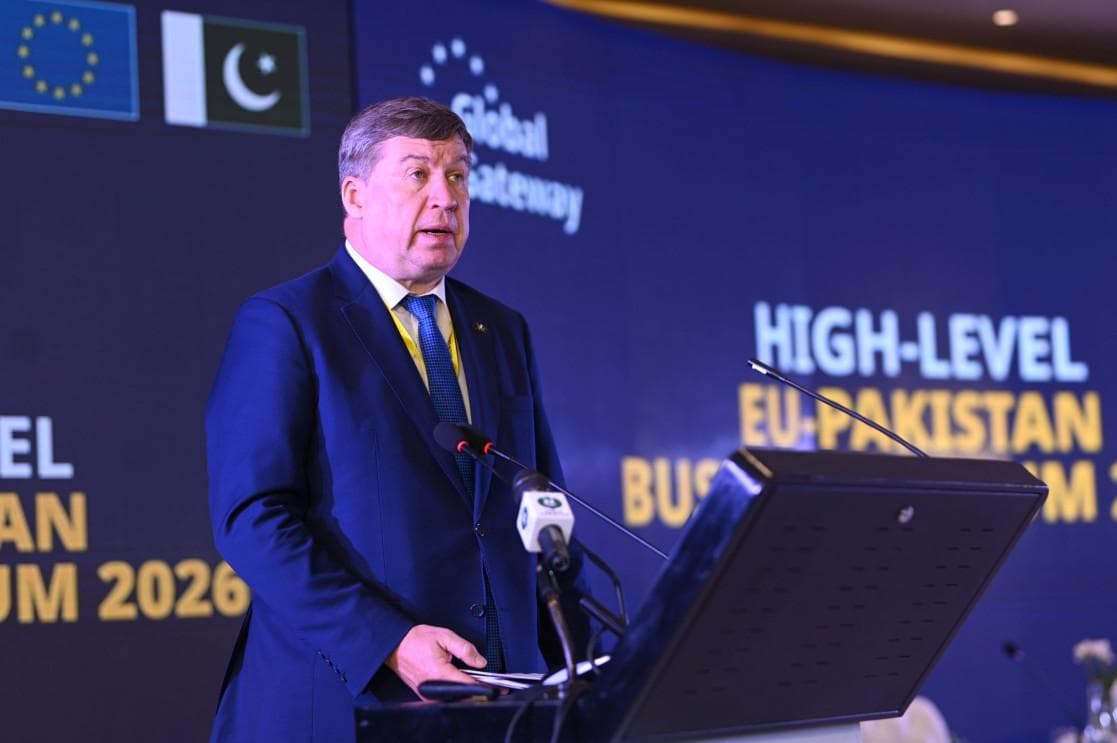
Islamabad: Pakistan GSP+ status will not carry over automatically into the next European trade preference scheme, the EU ambassador to Pakistan, Raimundas Karoblis, warned in September. He said the benefits cannot be taken for granted, and that Pakistan must reapply under the successor framework because the current one expires at the end of 2026.
Existing beneficiaries keep their preferences during a transition period that ends on 31 December 2028, but the transition does not guarantee that any country continues in the scheme. Pakistan must submit an action plan with concrete measures, timelines and performance indicators. The EU says its assessment found areas of regression that the reapplication must address.
The Commission’s concerns about Pakistan GSP+ status cover the period from 2023 to 2025. They include enforced disappearances, extrajudicial killings, freedom of expression, the rights of journalists and minorities, judicial independence, access to justice and forced labour. Karoblis said some legal and administrative measures have not yet produced enough results on the ground. Islamabad answers that it remains committed to the 27 linked conventions, while arguing that the EU assessment lacks balance.
The stakes are high because Pakistan is the largest beneficiary of the scheme. In 2024 it received nearly €732 million in tariff exemptions, and US$7.115 billion of its exports used preferential access. The EU takes about 28 percent of Pakistan’s total exports, and nearly 90 percent of those exports to the bloc qualify for GSP+. Textiles and clothing make up roughly 70 to 76 percent of the EU-bound total, so Pakistan GSP+ status matters most for its biggest employers.
The successor scheme also raises the bar. It covers 32 conventions, up from 27. Pakistan has ratified the five additional ones, but the EU says implementation is the real test. The Union has not decided whether its concerns warrant partial or full temporary suspension of preferences, and Karoblis said that should not be read as a free pass. Sri Lanka lost its GSP+ preferences in the past, and Bolivia faced a partial withdrawal.
Timing adds pressure on Pakistani exporters. Textile orders are placed months ahead, so doubt over Pakistan GSP+ status can affect contracts and investment plans before the EU takes any decision. Buyers in Europe will read the action plan closely for evidence that Islamabad intends to act on each concern the Commission has raised.
For Brussels, the case shows how trade preferences double as a foreign policy tool tied to human rights commitments. For Islamabad, it shows that a tariff advantage worth hundreds of millions of euros depends on domestic reform. The coming months of reapplication will decide whether Pakistan GSP+ status continues beyond the transition, and on what conditions.