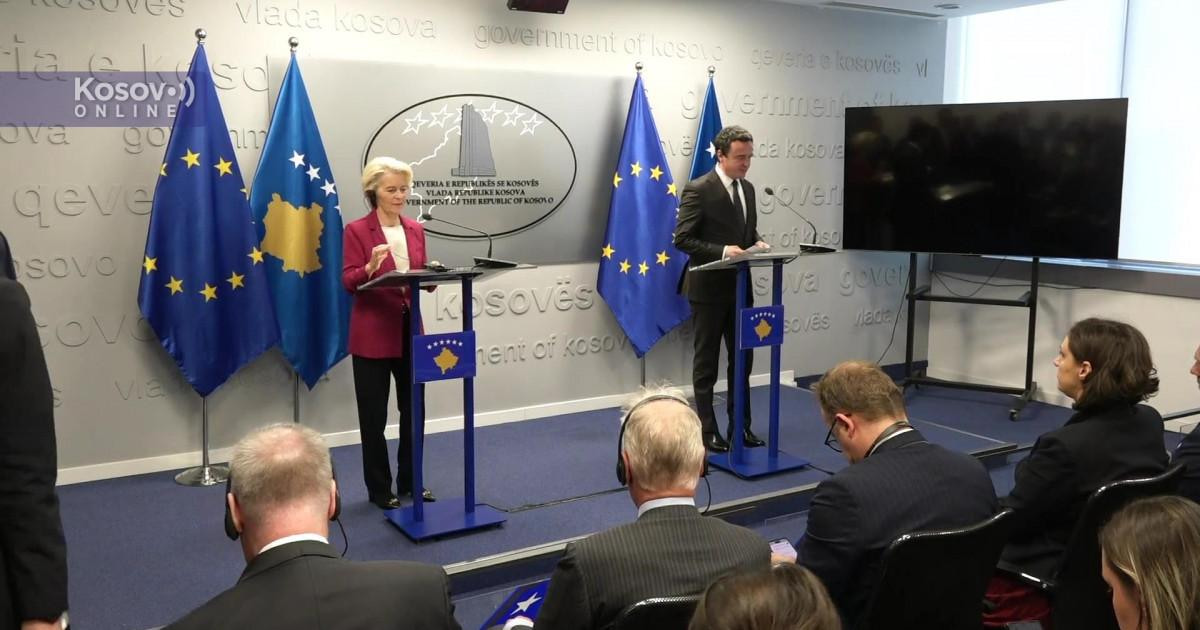
Pristina: The Kosovo Growth Plan allocation of up to €882 million now depends on how fast the new government delivers reforms, European Commission President Ursula von der Leyen told leaders during her visit to Pristina on 1 October 2026. She called for an absolute surge in reforms and said the Commission will release further money only when progress and working institutions justify it.
So far Kosovo has received €62 million in pre-financing, about 7 percent of its allocation and the highest share the Commission allows before reforms are checked. Everything beyond that sum is tied to results. The Kosovo Growth Plan is part of the Reform and Growth Facility for the Western Balkans, a €6 billion envelope for 2024 to 2027 that combines €2 billion in grants with €4 billion in concessional loans.
The Commission adopted the broader Growth Plan on 8 November 2023 and approved Kosovo’s Reform Agenda in October 2024. Von der Leyen’s visit followed the formation of a new Assembly and government, and she said the next step is the election of a President. Functioning institutions matter because payments depend on them as much as on laws passed.
She also announced concrete steps that bring Kosovo closer to the single market. Because Kosovo has appointed a chief negotiator, the EU will start talks on lowering roaming charges. Joining the Single Euro Payments Area requires new legislation in Pristina, and she said the scheme could save companies across the Western Balkans up to €500 million a year. These measures show the Kosovo Growth Plan working as an economic integration tool and not only as a funding line.
Politics ran through the visit as well, and the Kosovo Growth Plan sat at the centre of the discussions. Von der Leyen urged respect for the independent judicial institutions after the Specialist Chambers judgment and noted that the defendants can appeal. She said Kosovo must protect its multi-ethnic character and rebuild trust with the Kosovo-Serb community, and she welcomed steps taken this year, including the agreement of 14 March.
The message to Pristina is plain, and it carries weight for the wider accession debate in the Western Balkans, where candidates watch how the Commission links money to results. The money is available, but the Commission expects visible results on legislation, the rule of law and community relations before it pays more. For Kosovo’s government, the coming months will show whether it can turn the Kosovo Growth Plan from a promise of €882 million into delivered investment and closer ties with the Union.