August 7, 2026
LATEST
New Zealand Trade With Europe Hits a Record in Its First YearEurope Locks Chinese Medical Devices Out of Its Public TendersHow Far Can Europe and Japan Take Their New Security Pact NowSeoul’s Gamble on Europe’s Research Money Is Starting to Pay OffEurope Freezes Its Retaliatory Tariffs on the US IndefinitelyAir Passenger Rights Get Their First Big Rewrite in 20 YearsFive Joint Defence Projects Win Brussels Backing and Shared CashTobacco Tax Overhaul Stalls as Governments Block UnanimityCritical Medicines Act Heads for Final Adoption This AutumnMoldova Accession Reaches Its Foreign-Policy ChapterMercosur Tariffs Fall as Europe’s Farmers Watch the GaugesWhy Europe’s Digital Fairness Act Worries Online RetailersErasmus+ Faces a Budget Fight Before Its 2028 RelaunchMedia Freedom Rules Turn One as Enforcement LagsPlatform Work Rules Push Member States Toward a December ReckoningSingle Ticket Plan Would Let One Booking Cover Europe by RailHungary Races an August Deadline to Unlock Its Recovery FundsCapitals Race a September Deadline to Restore NatureEuro-Zone Inflation Nudges Back Up as Energy Bills ClimbRed Bull Case Tests a New Frontier in EU AntitrustNew Zealand Trade With Europe Hits a Record in Its First YearEurope Locks Chinese Medical Devices Out of Its Public TendersHow Far Can Europe and Japan Take Their New Security Pact NowSeoul’s Gamble on Europe’s Research Money Is Starting to Pay OffEurope Freezes Its Retaliatory Tariffs on the US IndefinitelyAir Passenger Rights Get Their First Big Rewrite in 20 YearsFive Joint Defence Projects Win Brussels Backing and Shared CashTobacco Tax Overhaul Stalls as Governments Block UnanimityCritical Medicines Act Heads for Final Adoption This AutumnMoldova Accession Reaches Its Foreign-Policy ChapterMercosur Tariffs Fall as Europe’s Farmers Watch the GaugesWhy Europe’s Digital Fairness Act Worries Online RetailersErasmus+ Faces a Budget Fight Before Its 2028 RelaunchMedia Freedom Rules Turn One as Enforcement LagsPlatform Work Rules Push Member States Toward a December ReckoningSingle Ticket Plan Would Let One Booking Cover Europe by RailHungary Races an August Deadline to Unlock Its Recovery FundsCapitals Race a September Deadline to Restore NatureEuro-Zone Inflation Nudges Back Up as Energy Bills ClimbRed Bull Case Tests a New Frontier in EU Antitrust
August 7, 2026
LATEST
New Zealand Trade With Europe Hits a Record in Its First YearEurope Locks Chinese Medical Devices Out of Its Public TendersHow Far Can Europe and Japan Take Their New Security Pact NowSeoul’s Gamble on Europe’s Research Money Is Starting to Pay OffEurope Freezes Its Retaliatory Tariffs on the US IndefinitelyAir Passenger Rights Get Their First Big Rewrite in 20 YearsFive Joint Defence Projects Win Brussels Backing and Shared CashTobacco Tax Overhaul Stalls as Governments Block UnanimityCritical Medicines Act Heads for Final Adoption This AutumnMoldova Accession Reaches Its Foreign-Policy ChapterMercosur Tariffs Fall as Europe’s Farmers Watch the GaugesWhy Europe’s Digital Fairness Act Worries Online RetailersErasmus+ Faces a Budget Fight Before Its 2028 RelaunchMedia Freedom Rules Turn One as Enforcement LagsPlatform Work Rules Push Member States Toward a December ReckoningSingle Ticket Plan Would Let One Booking Cover Europe by RailHungary Races an August Deadline to Unlock Its Recovery FundsCapitals Race a September Deadline to Restore NatureEuro-Zone Inflation Nudges Back Up as Energy Bills ClimbRed Bull Case Tests a New Frontier in EU AntitrustNew Zealand Trade With Europe Hits a Record in Its First YearEurope Locks Chinese Medical Devices Out of Its Public TendersHow Far Can Europe and Japan Take Their New Security Pact NowSeoul’s Gamble on Europe’s Research Money Is Starting to Pay OffEurope Freezes Its Retaliatory Tariffs on the US IndefinitelyAir Passenger Rights Get Their First Big Rewrite in 20 YearsFive Joint Defence Projects Win Brussels Backing and Shared CashTobacco Tax Overhaul Stalls as Governments Block UnanimityCritical Medicines Act Heads for Final Adoption This AutumnMoldova Accession Reaches Its Foreign-Policy ChapterMercosur Tariffs Fall as Europe’s Farmers Watch the GaugesWhy Europe’s Digital Fairness Act Worries Online RetailersErasmus+ Faces a Budget Fight Before Its 2028 RelaunchMedia Freedom Rules Turn One as Enforcement LagsPlatform Work Rules Push Member States Toward a December ReckoningSingle Ticket Plan Would Let One Booking Cover Europe by RailHungary Races an August Deadline to Unlock Its Recovery FundsCapitals Race a September Deadline to Restore NatureEuro-Zone Inflation Nudges Back Up as Energy Bills ClimbRed Bull Case Tests a New Frontier in EU Antitrust

Seoul’s Shipyards Become Europe’s Answer to a Naval Squeeze

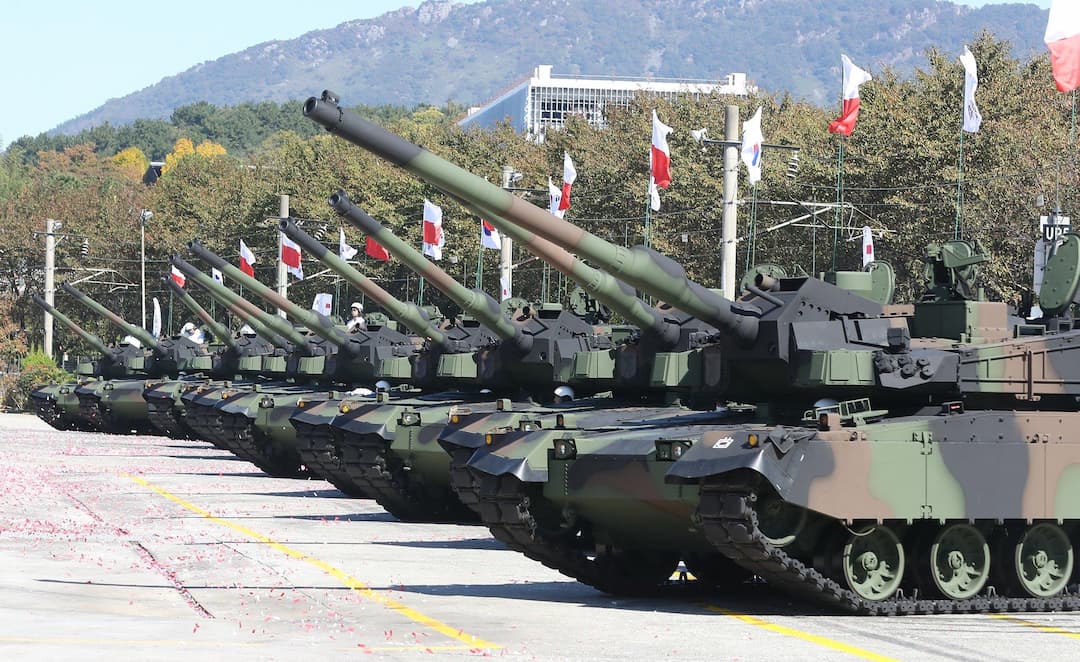
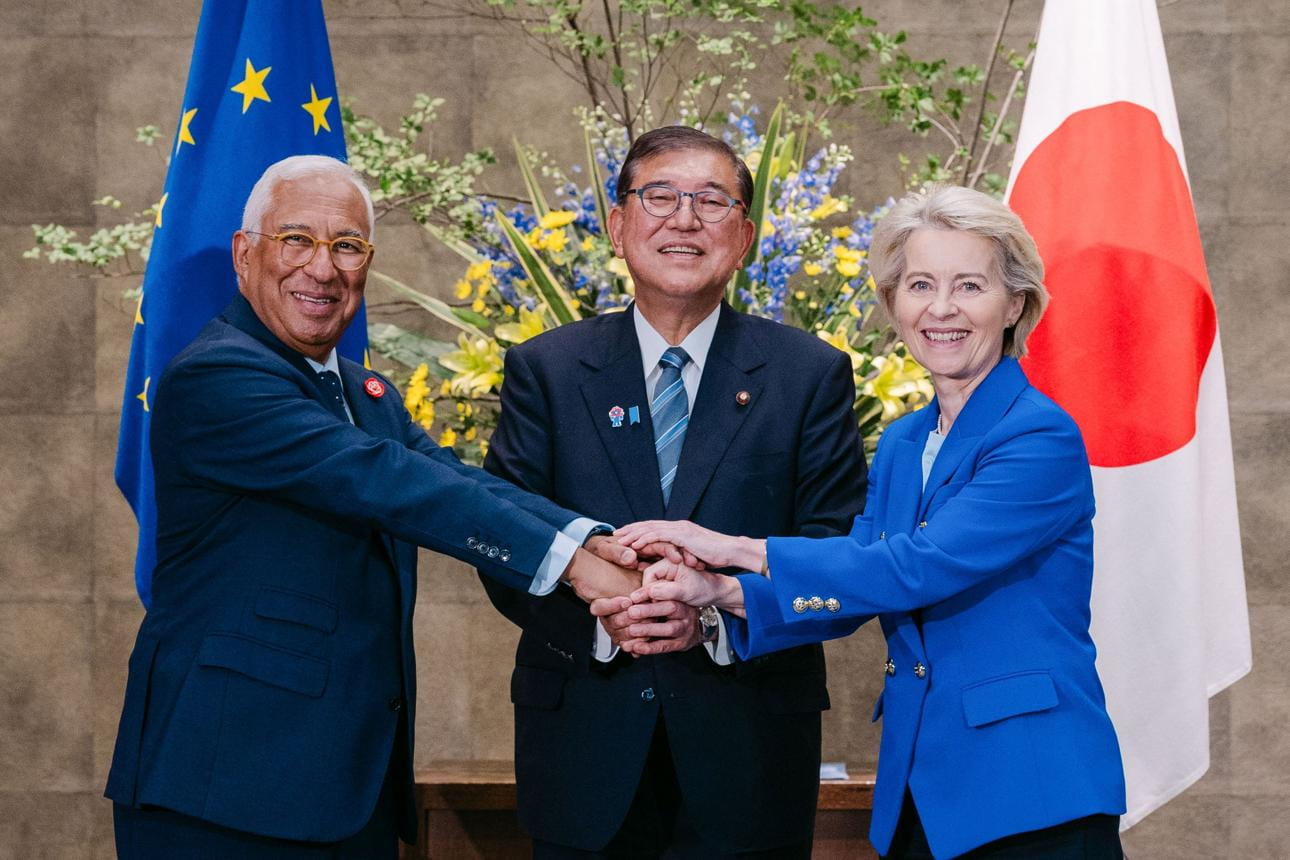
Seoul: As European navies confront the widening gap between the ships they need and the yards able to build them, an unlikely answer is taking shape on the far side of Eurasia. South Korea, whose shipbuilders have spent decades mastering the art of producing large, complex vessels quickly and affordably, is emerging as a serious industrial partner for a continent that has allowed much of its own naval capacity to wither. The EU-Republic of Korea Security and Defence Partnership, reviewed at their summit in Brussels, has given this convergence a formal frame.

The strategic backdrop is unforgiving. Europe has committed to rearmament in principle, but principle collides with a hard bottleneck. Warships take years to build, skilled labour is scarce, and the consolidation of European yards over decades of thin budgets has left limited surge capacity. South Korea, by contrast, has kept its industrial base humming, with firms such as HD Hyundai Heavy Industries and Hanwha Ocean demonstrating a scale and efficiency that European planners can only envy. When the immediate need is hulls in the water, a partner who can deliver them is worth courting.

What the partnership has produced so far is more than paperwork. The two sides have upgraded their defence dialogue to a level carrying real authority, and cooperation has moved into the water, including a joint naval exercise linking South Korean forces with Operation Atalanta, the European maritime security mission in the North-West Indian Ocean. Maritime security occupies one of the longest sections of the partnership document, a signal that both sides see the sea, and the industries that contest it, as the natural centre of gravity for their cooperation.

The appeal of the Korean model runs deeper than raw output. Seoul has built its defence export success on localisation, technology transfer and long-term investment, helping partner nations expand their own manufacturing rather than simply selling finished goods. For European governments wary of trading one dependency for another, that offer matters. A partnership that leaves behind skills, shared production lines and resilient supply chains is politically far easier to defend than a straightforward import bill, and it addresses the anxiety that outsourcing defence weakens the sovereignty it is meant to protect.

The obstacles are real and should not be waved away. Integrating Korean industrial practice with European procurement rules, security requirements and domestic political sensitivities is intricate work, and every government that builds warships guards those jobs jealously. There will be friction over intellectual property, over which yards win which contracts, and over how much to entrust to a partner thousands of miles away. Rearmament that flows through foreign yards will always attract the charge that Europe is buying capability it should be building.

Still, the logic is difficult to escape. Europe needs ships faster than it can produce them alone, and South Korea needs trusted, high-value partners as it moves from arms exporter to strategic collaborator. The maritime partnership taking shape between Brussels and Seoul is a modest thing measured against the scale of Europe’s naval ambitions, but it points toward a wider truth. In an era of contested seas, industrial capacity has become a form of security, and the states that can build are the states that can deter.