Taipei: Europe’s ambition to secure its own supply of advanced chips runs, for now, straight through this island.
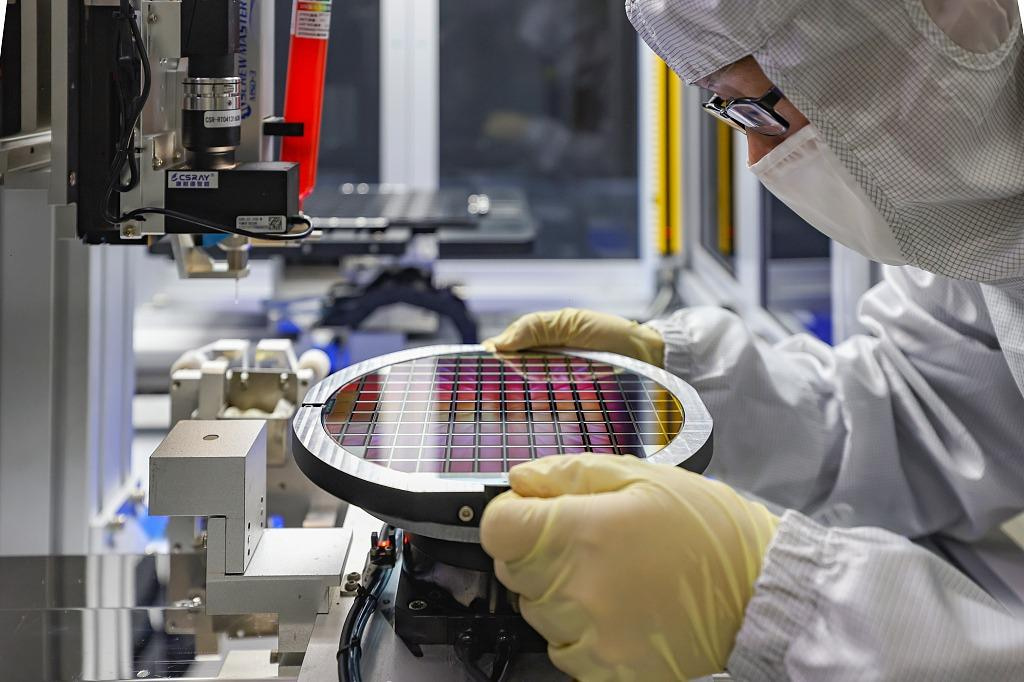
Taiwan produces close to 90 percent of the world’s most advanced semiconductors, the sub-seven-nanometre parts that power artificial intelligence, defence systems and the electric cars Europe wants to build at scale. That concentration hands Taipei quiet leverage and leaves European planners uneasy about depending on a single geography that sits within reach of Chinese pressure.
The two sides are answering the problem by binding their industries closer together. Taiwan Semiconductor Manufacturing Company is building a fabrication plant in Dresden through a joint venture with European partners, and firms such as Foxconn and GlobalWafers are widening their footprint across the continent. The traffic runs both ways. European champions including ASML, Merck and Air Liquide sit deep inside Taiwan’s production networks, supplying the lithography machines, chemicals and gases without which no advanced fab can operate.
Brussels wants to convert that mutual dependence into durable policy. The Commission co-organised an EU-Taiwan Semiconductor Industry Dialogue during SEMICON Europa in Munich, gathering more than forty senior figures from companies and research centres on both sides. Officials are now shaping a second Chips Act that would push European output higher and, its authors hope, make cooperation with Taiwan a structured partnership rather than a series of one-off investments.
The economics reinforce the strategy. TSMC reported revenue of roughly 122 billion dollars in 2025, with AI chips driving more than half of its growth, and no European rival comes close to matching its capability at the leading edge. Building that expertise from scratch would take a decade and hundreds of billions of euros, money the bloc cannot easily find while it also funds defence and the energy transition.
Frictions remain. Regulators move at different speeds, talent runs short on the European side, and the two partners weigh strategic risk through different lenses. Taipei watches China’s military signalling with an urgency that Brussels, for all its statements of concern, does not fully share. European firms, meanwhile, guard their intellectual property carefully and hesitate to transfer their most sensitive know-how.
Analysts frame the relationship as a test of whether Europe can practise economic security without slipping into autarky. Diversifying away from any single supplier makes sense, they argue, but pretending the bloc can replace Taiwan outright ignores physics and arithmetic alike. The wiser course ties the two economies together tightly enough that disruption on one side becomes costly for the other. On that logic Europe is not reducing its exposure to Taiwan so much as investing in the stability of the partner it cannot do without.