September 24, 2026
LATEST
Rights Groups Test the EU Civil Society Strategy as Pressure MountsJudges Weigh EU Staff Nationality Quotas in Parliament Hiring CasePatents Could Unlock Startup Loans Under the European Innovation ActHungary EU Funds Move Closer as Commission Lifts Rule of Law FreezeMinisters Debate Chips Act 2.0 as Europe Pushes for More Chip OutputMontenegro Waits on a Dutch Vote as the EU Enlargement Sprint StallsGlobal Green Bond Initiative Bets on Private Money for PartnersEurope Draws a Line on Strait of Hormuz Tolls as Iran Talks ResumeStrasbourg Lets the European Defence Fund Pay for Tests in UkraineCSAM Regulation Talks Hinge on Scanning Private MessagesGoogle GDPR Fine of €403 Million Puts Location Data on TrialMFF 2028-2034 Talks Stall as Ministers Hold Their Red LinesBanks Contest Key Parts of the EU Banking Competitiveness PlanEMFAF Amendment Offers Fishers Simpler Rules and a Quota Cut CushionTeachers Trail Pupils as AI in Education Reports Expose a Training GapMacron Presses Brussels to Relax EU Fuel Quality Rules Before WinterEurostat Fuel Prices Jump 23.8 Per Cent as Diesel Leads August RiseData Centre Rating Scheme Puts Energy and Water Use on the EU RecordEU Indo-Pacific Security Partnerships Move From Paper to the SeaEU Thailand Free Trade Agreement Heads to Phuket for Its Final ThirdRights Groups Test the EU Civil Society Strategy as Pressure MountsJudges Weigh EU Staff Nationality Quotas in Parliament Hiring CasePatents Could Unlock Startup Loans Under the European Innovation ActHungary EU Funds Move Closer as Commission Lifts Rule of Law FreezeMinisters Debate Chips Act 2.0 as Europe Pushes for More Chip OutputMontenegro Waits on a Dutch Vote as the EU Enlargement Sprint StallsGlobal Green Bond Initiative Bets on Private Money for PartnersEurope Draws a Line on Strait of Hormuz Tolls as Iran Talks ResumeStrasbourg Lets the European Defence Fund Pay for Tests in UkraineCSAM Regulation Talks Hinge on Scanning Private MessagesGoogle GDPR Fine of €403 Million Puts Location Data on TrialMFF 2028-2034 Talks Stall as Ministers Hold Their Red LinesBanks Contest Key Parts of the EU Banking Competitiveness PlanEMFAF Amendment Offers Fishers Simpler Rules and a Quota Cut CushionTeachers Trail Pupils as AI in Education Reports Expose a Training GapMacron Presses Brussels to Relax EU Fuel Quality Rules Before WinterEurostat Fuel Prices Jump 23.8 Per Cent as Diesel Leads August RiseData Centre Rating Scheme Puts Energy and Water Use on the EU RecordEU Indo-Pacific Security Partnerships Move From Paper to the SeaEU Thailand Free Trade Agreement Heads to Phuket for Its Final Third
September 24, 2026
LATEST
Rights Groups Test the EU Civil Society Strategy as Pressure MountsJudges Weigh EU Staff Nationality Quotas in Parliament Hiring CasePatents Could Unlock Startup Loans Under the European Innovation ActHungary EU Funds Move Closer as Commission Lifts Rule of Law FreezeMinisters Debate Chips Act 2.0 as Europe Pushes for More Chip OutputMontenegro Waits on a Dutch Vote as the EU Enlargement Sprint StallsGlobal Green Bond Initiative Bets on Private Money for PartnersEurope Draws a Line on Strait of Hormuz Tolls as Iran Talks ResumeStrasbourg Lets the European Defence Fund Pay for Tests in UkraineCSAM Regulation Talks Hinge on Scanning Private MessagesGoogle GDPR Fine of €403 Million Puts Location Data on TrialMFF 2028-2034 Talks Stall as Ministers Hold Their Red LinesBanks Contest Key Parts of the EU Banking Competitiveness PlanEMFAF Amendment Offers Fishers Simpler Rules and a Quota Cut CushionTeachers Trail Pupils as AI in Education Reports Expose a Training GapMacron Presses Brussels to Relax EU Fuel Quality Rules Before WinterEurostat Fuel Prices Jump 23.8 Per Cent as Diesel Leads August RiseData Centre Rating Scheme Puts Energy and Water Use on the EU RecordEU Indo-Pacific Security Partnerships Move From Paper to the SeaEU Thailand Free Trade Agreement Heads to Phuket for Its Final ThirdRights Groups Test the EU Civil Society Strategy as Pressure MountsJudges Weigh EU Staff Nationality Quotas in Parliament Hiring CasePatents Could Unlock Startup Loans Under the European Innovation ActHungary EU Funds Move Closer as Commission Lifts Rule of Law FreezeMinisters Debate Chips Act 2.0 as Europe Pushes for More Chip OutputMontenegro Waits on a Dutch Vote as the EU Enlargement Sprint StallsGlobal Green Bond Initiative Bets on Private Money for PartnersEurope Draws a Line on Strait of Hormuz Tolls as Iran Talks ResumeStrasbourg Lets the European Defence Fund Pay for Tests in UkraineCSAM Regulation Talks Hinge on Scanning Private MessagesGoogle GDPR Fine of €403 Million Puts Location Data on TrialMFF 2028-2034 Talks Stall as Ministers Hold Their Red LinesBanks Contest Key Parts of the EU Banking Competitiveness PlanEMFAF Amendment Offers Fishers Simpler Rules and a Quota Cut CushionTeachers Trail Pupils as AI in Education Reports Expose a Training GapMacron Presses Brussels to Relax EU Fuel Quality Rules Before WinterEurostat Fuel Prices Jump 23.8 Per Cent as Diesel Leads August RiseData Centre Rating Scheme Puts Energy and Water Use on the EU RecordEU Indo-Pacific Security Partnerships Move From Paper to the SeaEU Thailand Free Trade Agreement Heads to Phuket for Its Final Third

Ministers Hand Heavy Industry Another Tranche of Free Allowances

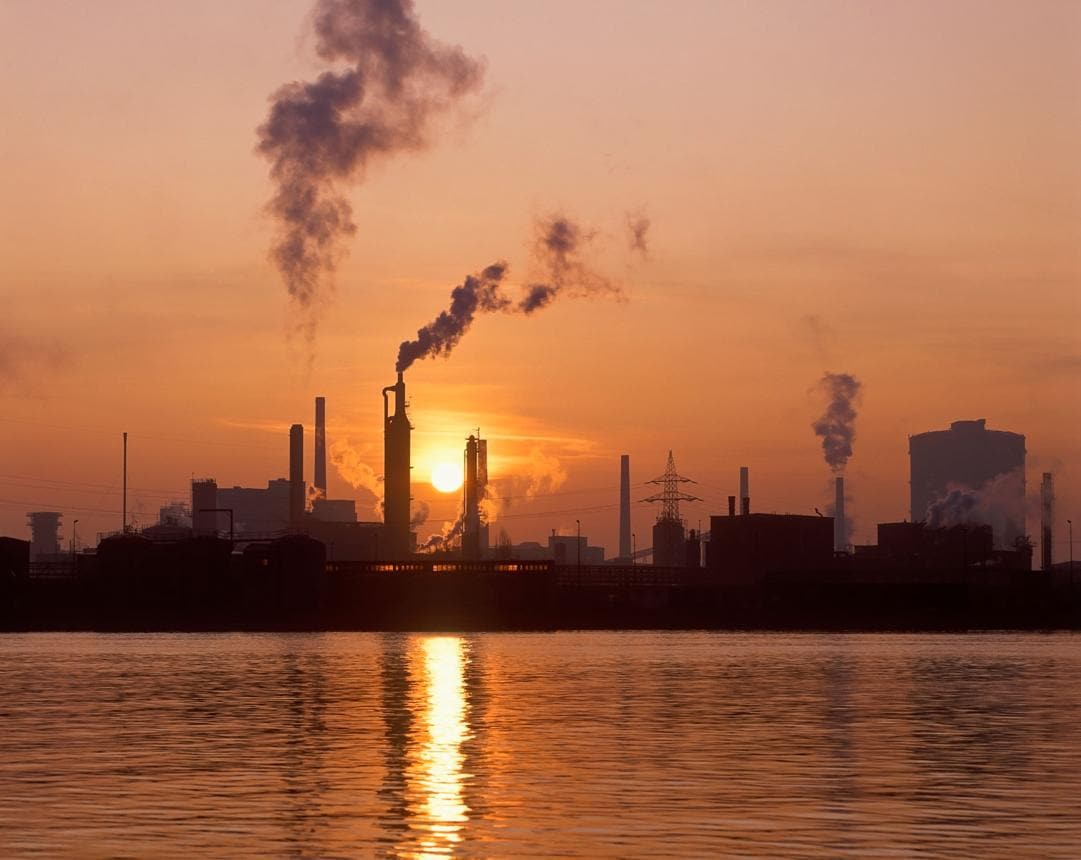
Linz: The furnaces along the Danube in Upper Austria do not care very much about the difference between a benchmark and a target. They care about the gap between the carbon a plant actually emits and the carbon it is allowed to emit for free. That gap widened in June. On 16 September it narrowed again.

Member states, meeting at ambassadorial level, agreed a negotiating position on a revised law that increases free carbon allowances between 2026 and 2030 for sectors covered by the emissions trading system’s heat and fuel benchmarks. The mechanics are unglamorous and the sums are not. Around 88 million allowances available for free allocation will be deployed, which the Commission estimates is worth some six billion euro in avoided costs to the industries concerned. The Council then went further than the Commission had asked, adding another 33 million allowances that had never been handed out because the installations in line for them failed to meet existing conditionality requirements.

That second tranche is the more interesting decision. Allowances withheld for non-compliance are, in effect, a disciplinary reserve. Recycling them into a competitiveness package converts a penalty pot into a support pot. Nobody in the room described it that way, but the arithmetic is what it is.

The story begins with the benchmark update completed in June for the 2026 to 2030 period. Benchmarks are set by reference to the best performing installations in each product category, and they tighten automatically as the frontier improves. Heat and fuel benchmarks are the awkward cousins of the family because they cover a diffuse set of processes rather than a single clean product. When the updated figures landed, the sectors that sit under them found their free allocation falling faster than they had planned for, at a moment when electricity prices and input costs were already uncomfortable.

Industry made the carbon leakage argument, which is the argument that always gets made and is sometimes true. If a European producer faces a carbon cost that a competitor outside the bloc does not, and the product is tradeable, the emissions do not disappear. They relocate, and so does the employment. EU leaders took note of the Commission’s intention to address the complaint in June. The proposal arrived in July. The Council mandate arrived last week.

Darragh O’Brien, Ireland’s climate and energy minister, framed the agreement as safeguarding jobs during a transition period while the longer term ambition remains intact. The framing matters because the presidency wants this file finished quickly, and a swift file is one that does not become a proxy fight about the 2040 target.

There is a genuine tension underneath. Free allocation is the instrument the system uses to protect exposed industry, and it is also the instrument that blunts the price signal the system exists to send. Every allowance handed out for free is a tonne of carbon that carries no marginal cost at the point of decision. The carbon border adjustment mechanism was designed precisely so that free allocation could be phased down without exposing European producers, and the two instruments are meant to move in opposite directions on a fixed schedule. Adding allowances back in the second half of the decade complicates that choreography.

Negotiations with the European Parliament cannot begin until Parliament adopts its own position, which it has not yet done. Parliamentary committees have historically been less willing than member states to loosen free allocation, and the additional 33 million allowances give them an obvious target. Whether they take it will say a good deal about where the institution’s centre of gravity now sits on the trade-off between decarbonisation speed and industrial retention.

For the plants on the Danube, the practical question is narrower. They are planning capital expenditure on a ten-year horizon against a rule that has now changed twice in three months.