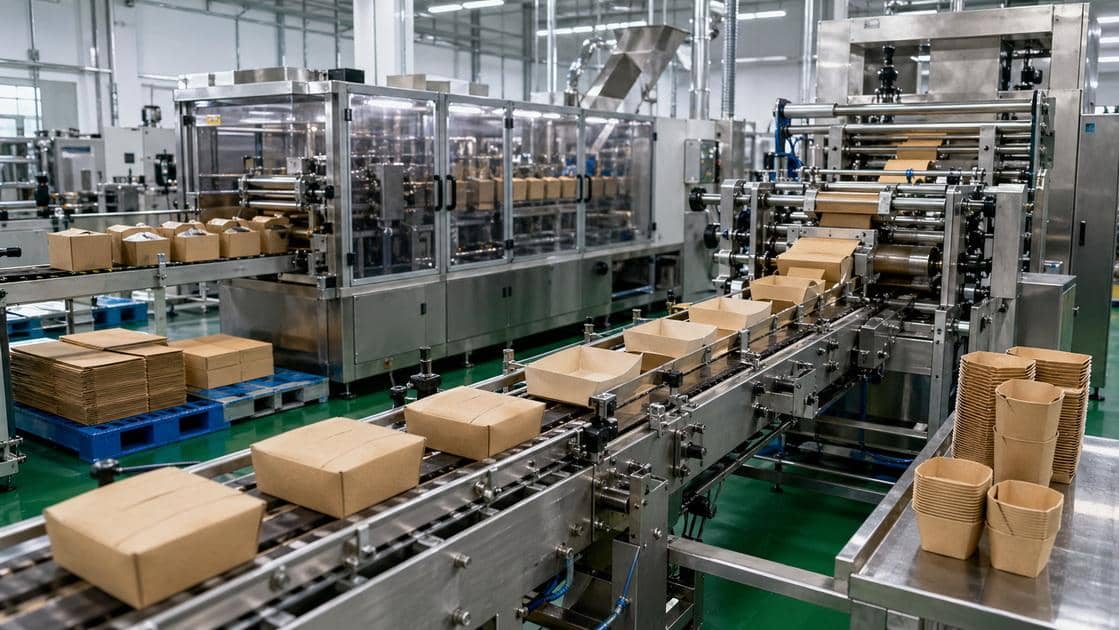
Utrecht: A grease-proof paper bowl left a Dutch production line last month with a different lining than the one it carried in June. The change was not marketing. Since August, European rules forbid food-contact packaging containing per- and polyfluoroalkyl substances above set thresholds, and the sector has quietly reformulated ahead of the first real PFAS ban to reach consumers.
The measure sits inside the packaging regulation rather than chemicals law, which is why it arrived before the broader restriction everyone has been arguing about. It is narrow by design. It covers one exposure route, food contact, and it leaves the same chemistry untouched in textiles, firefighting foam, semiconductors and medical devices.
The wider file moves on a slower clock. Five national authorities proposed a universal restriction on PFAS in 2023, covering thousands of substances at once rather than chasing them one by one. The European Chemicals Agency’s scientific committees are working through an extraordinary volume of comments, with their assessment expected to be complete by the end of this year. Only then does the Commission draft an actual restriction, which member states must vote on.
Industry has pushed hard for exemptions in the meantime, arguing that some applications have no substitute and that a blanket approach would strand investment in exactly the technologies Europe says it wants. Chipmakers and fluoropolymer producers have been loudest. Environment ministries counter that every derogation granted becomes permanent in practice, because the derogated use eventually acquires a supply chain that defends it.
While that argument runs, the water rules have already changed. Member states have been required since January to monitor PFAS in all drinking water and to keep concentrations within the limits set by the recast drinking water directive. In April the Union updated its lists of surface and groundwater pollutants, adding trifluoroacetic acid and other persistent substances that scientists had flagged as accumulating faster than the law recognised.
Monitoring produces bills. Utilities that detect contamination must treat it, and granular activated carbon or reverse osmosis plants cost tens of millions to build and more to run. Commission-backed work has put the health-related costs of PFAS pollution across Europe in the range of tens of billions of euros a year, a figure that dwarfs the reformulation costs the packaging sector has just absorbed.
Who pays remains unsettled. The revised urban wastewater rules make pharmaceutical and cosmetics producers contribute to advanced treatment, and industry has challenged that principle in court. No equivalent mechanism yet makes PFAS manufacturers fund the removal of compounds they sold decades ago. Water companies therefore recover the money from household bills, which converts an industrial externality into a utility charge.
The packaging ban matters less for the tonnage it removes than for what it demonstrates. Substitution proved possible, quickly, in a sector that had insisted the coatings were essential. Every other sector claiming indispensability will now be asked why paper bowls managed it.