Gütersloh: The new EU durability label arrives in shops on 27 September 2026, and the appliance plants of this part of Westphalia have spent the better part of a year deciding what they are willing to promise. The label, carrying the word GARAN alongside a harmonised EU notice, is voluntary. What is not voluntary is everything that sits around it, because the same date brings into application the Directive on Empowering Consumers for the Green Transition, the instrument that quietly rewrites what a manufacturer may say about its own products.
The directive, adopted in 2024 as an amendment to the Unfair Commercial Practices Directive and the Consumer Rights Directive, gives member states until this month to have transposition in force. Its logic is simple enough to state and difficult to comply with. Generic environmental claims such as climate neutral, eco-friendly or green are banned outright unless the trader can demonstrate recognised excellent environmental performance. Claims that a product is carbon neutral on the basis of offsetting are prohibited. Sustainability labels must rest on a certification scheme or be established by public authorities. And traders may no longer present a feature as distinctive when it is simply the law, which removes a favourite line of marketing copy across half a dozen sectors.
The durability element is where the EU durability label does its work. Where a producer offers a commercial guarantee of durability longer than the two-year legal conformity period across the whole product, and offers it at no extra cost, the harmonised label may be displayed. The notice beside it reminds the buyer that the two-year legal guarantee exists regardless. That reminder is the point. Commission consumer surveys have repeatedly found that a majority of shoppers believe a paid extended warranty is buying them protection they already hold for free, and the notice makes that overlap visible at the shelf rather than in the small print.
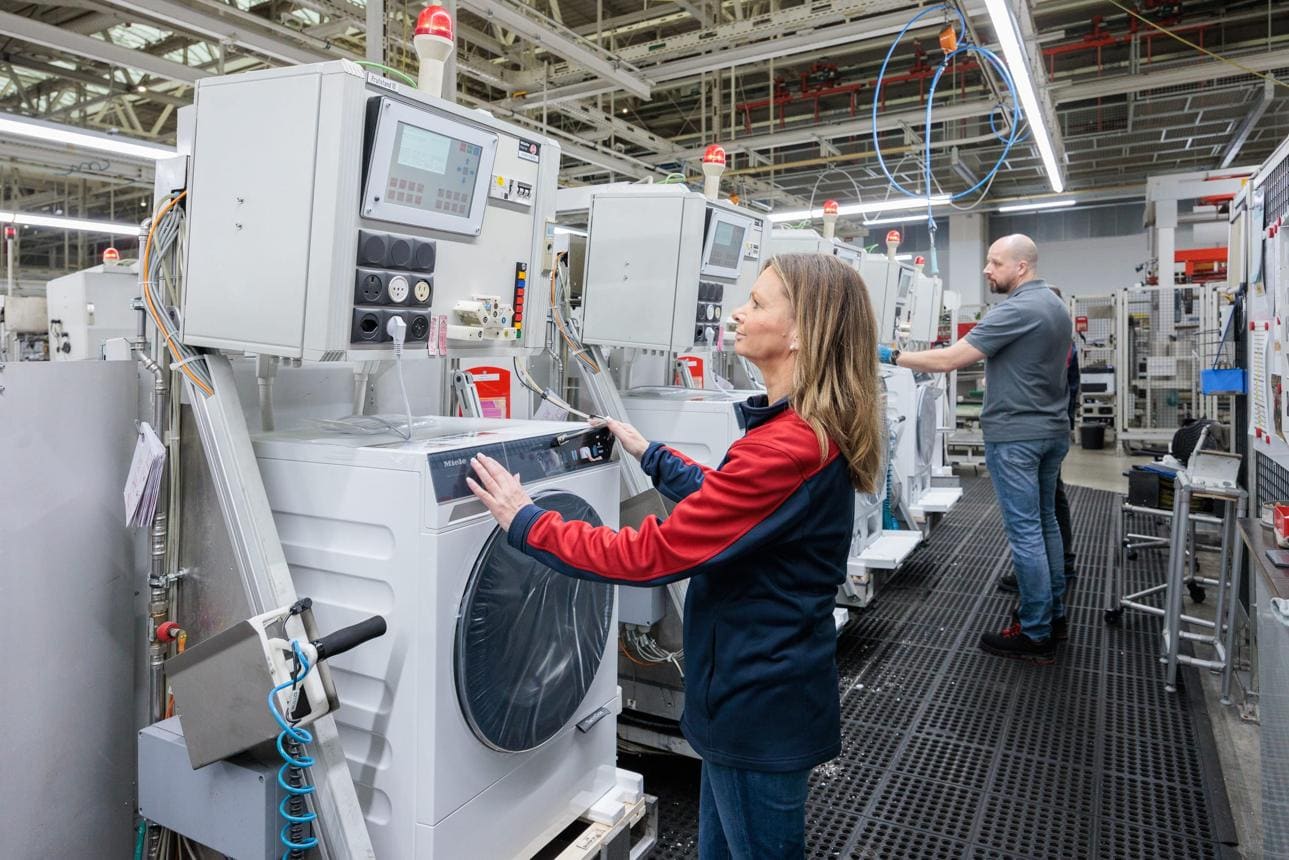
For manufacturers the calculation is uncomfortable. A three-year or five-year free guarantee across an entire washing machine, including the motor, the drum bearings and the electronics, is a real balance-sheet commitment, and the label only rewards the whole product rather than the component a producer is most confident about. Several German and Italian white-goods firms have told trade associations that they will hold back in the first year and watch what competitors do. Others see an opening, on the reasoning that the first movers will own the visual language of durability before the rules tighten again.
Enforcement of the rules surrounding the EU durability label will be uneven at the start, which is the familiar pattern with directives of this kind. National consumer authorities differ sharply in staffing and in appetite, and the Commission has already signalled that it regards this as the weak joint in the system. Its 2030 Consumer Agenda, adopted in November 2025, put enforcement and redress among four priorities and promised a review of the Consumer Protection Cooperation Regulation during 2026, including an examination of whether certain enforcement powers should move to the Union level. That review is expected before the end of the year, and the e-commerce dossier sits underneath it, since a large share of misleading green claims reach European buyers from traders established outside the Union.
Retailers face a narrower but more immediate problem. Shelf-edge material, online product pages and packaging all carry claims written under the old permissive regime, and the directive applies to what a consumer sees rather than when it was printed. Larger chains ran compliance sweeps through the summer. Smaller ones, particularly in the independent electrical trade, rely on suppliers to say what has changed, which means the risk sits with whoever last touched the listing.
None of this settles the deeper question the EU durability label raises, which is whether a voluntary mark can move a market that has spent three decades optimising for price. The Commission’s own impact work assumed modest uptake in the early years and a gradual pull effect as the banned claims strip away cheaper alternatives. Westphalia’s engineers, who have been designing to a two-year expectation for a generation, will find out over the next few seasons whether the buying public pays for the difference.