October 30, 2026
LATEST
Government Deficit Hits 3.3 percent Of GDP As Romania Falls To 9.2 percentTax-to-GDP Ratio Climbs To 40.7 percent With France Leading The UnionMinisters Weigh Higher Baltic Sea Fishing Quotas For Herring And SpratUnions And Startups Clash Over Worker Rights In The EU Inc PlanDigital Omnibus Mandate Keeps GDPR Definition And Cuts Cookie WaitGreece Landfill Referral Tests EU Waste Law ComplianceCritical Medicines Act Deal Faces Final Endorsement TestDefence Projects Of Common Interest Reshape EU RearmamentRiyadh EU-GCC Summit Delay Leaves Security Agenda WaitingCanada EU Summit Tests Brussels Language On MembershipLabour Market Holds As Euro Area Unemployment Rate Stays At 6.5 percentMauritania European Peace Facility Aid Rises To 75 Million EurosEurozone GDP Growth Beats Forecasts At 0.4 percent In Third QuarterCommission Supplier Diversification Tool Aims At China RiskWinter Price Spike Exposes The Wider EU Gas Storage GapToledo Crash Puts EU Rail Safety Rules Under ScrutinyEurostat Data Show EU Waste Generation At 765 Million TonnesAgri-Food Trade Surplus Climbs To 34.7 Billion As Imports FallMiddle Corridor Funding Meets German Industry Interest in AktauTurkey-Libya Maritime Deal Tests EU Diplomacy After Fidan TalksGovernment Deficit Hits 3.3 percent Of GDP As Romania Falls To 9.2 percentTax-to-GDP Ratio Climbs To 40.7 percent With France Leading The UnionMinisters Weigh Higher Baltic Sea Fishing Quotas For Herring And SpratUnions And Startups Clash Over Worker Rights In The EU Inc PlanDigital Omnibus Mandate Keeps GDPR Definition And Cuts Cookie WaitGreece Landfill Referral Tests EU Waste Law ComplianceCritical Medicines Act Deal Faces Final Endorsement TestDefence Projects Of Common Interest Reshape EU RearmamentRiyadh EU-GCC Summit Delay Leaves Security Agenda WaitingCanada EU Summit Tests Brussels Language On MembershipLabour Market Holds As Euro Area Unemployment Rate Stays At 6.5 percentMauritania European Peace Facility Aid Rises To 75 Million EurosEurozone GDP Growth Beats Forecasts At 0.4 percent In Third QuarterCommission Supplier Diversification Tool Aims At China RiskWinter Price Spike Exposes The Wider EU Gas Storage GapToledo Crash Puts EU Rail Safety Rules Under ScrutinyEurostat Data Show EU Waste Generation At 765 Million TonnesAgri-Food Trade Surplus Climbs To 34.7 Billion As Imports FallMiddle Corridor Funding Meets German Industry Interest in AktauTurkey-Libya Maritime Deal Tests EU Diplomacy After Fidan Talks

Democracy Shield Vote Leaves The Funding Question Open

Strasbourg: Six weeks after Parliament endorsed its report on the European Democracy Shield, the Democracy Shield debate has moved from rhetoric to resources. MEPs approved the text on 15 September by 420 votes to 220, with 26 abstentions. The harder question is whether the EU will fund the body that the report places at its centre.

The vote matters because it turns a political promise into a concrete list of demands addressed to the Commission. This analysis weighs what the report proposes, who objects, and where implementation could stall.

What the Democracy Shield report proposes

The report comes from the special committee on the European Democracy Shield, which Parliament set up in December 2024 and which approved its text in June 2026. Rapporteur Tomas Tobé, a Swedish member of the European People’s Party, framed the document as a response to hybrid threats rather than a policy on speech.

It names Russia as the main threat and cites cyber-attacks, sabotage and espionage, with Belarus, China, Iran and North Korea also listed. The remedies are wide-ranging. MEPs call for an EU Centre for Democratic Resilience with its own mandate and budget, sanctions on people who facilitate disinformation, and protection for electoral infrastructure as critical infrastructure. They also want measures against deepfakes and illicit political funding, plus firmer enforcement of the Digital Services Act and the EU’s AI rules.

Why the vote split Parliament

The 220 votes against came from the European Conservatives and Reformists, Patriots for Europe, Europe of Sovereign Nations and The Left. Their objections centre on a familiar worry: that tools built to fight foreign interference could be turned against legitimate opinion at home.

Tobé rejected that reading. He argued that the report concerns foreign interference, not political opinions. Parliament President Roberta Metsola took a firmer line and urged stricter sanctions on promoters of disinformation, together with better enforcement of existing law. The split shows that consensus on the threat does not translate into consensus on the toolbox.

Can the Centre for Democratic Resilience deliver?

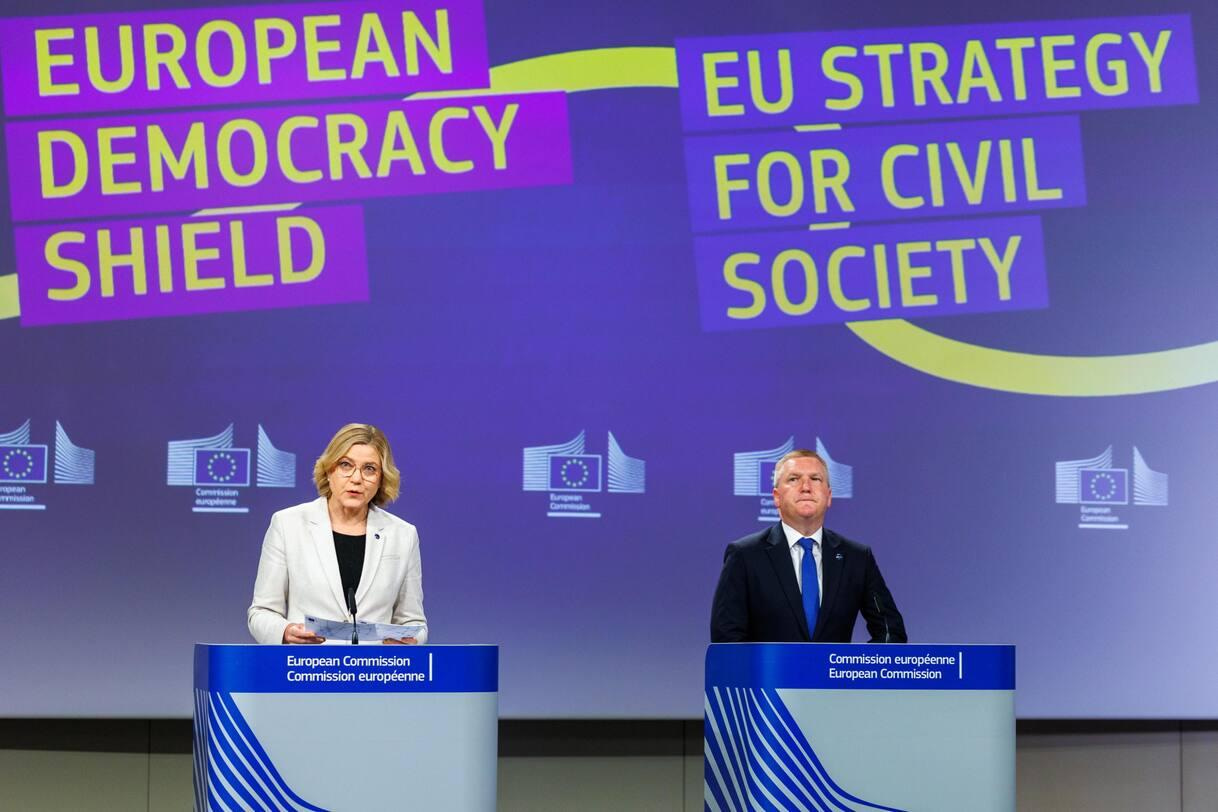
Commissioner Michael McGrath told MEPs that the Centre has been operational since February and that all member states have joined. He added that candidate countries are expected to take part soon. Those statements suggest the structure already exists, which weakens the argument that the Democracy Shield is only paper.

McGrath also called for a budget that matches the ambition, and that remark is the crux. A centre without dedicated money depends on goodwill and on staff seconded from elsewhere. Parliament’s call for its own mandate and budget therefore lands directly in the negotiations over the next long-term EU budget, where every new body competes with established priorities.

What happens next for the Democracy Shield

The report contains recommendations to the Commission, and it does not bind the institution. The reporting available gives no timeline for a formal response, so the pace will depend on political will in Brussels and on how member states treat sanctions proposals, which require unanimity in the Council.

Three tests will show whether the Democracy Shield becomes operational policy: a named budget line for the Centre, a Commission answer on sanctions against disinformation facilitators, and consistent enforcement of the Digital Services Act against election interference. Until those appear, the 420-vote majority remains a signal of intent rather than a change in practice.