October 30, 2026
LATEST
Greece Landfill Referral Tests EU Waste Law ComplianceCritical Medicines Act Deal Faces Final Endorsement TestDefence Projects Of Common Interest Reshape EU RearmamentRiyadh EU-GCC Summit Delay Leaves Security Agenda WaitingCanada EU Summit Tests Brussels Language On MembershipLabour Market Holds As Euro Area Unemployment Rate Stays At 6.5 percentMauritania European Peace Facility Aid Rises To 75 Million EurosEurozone GDP Growth Beats Forecasts At 0.4 percent In Third QuarterCommission Supplier Diversification Tool Aims At China RiskWinter Price Spike Exposes The Wider EU Gas Storage GapToledo Crash Puts EU Rail Safety Rules Under ScrutinyEurostat Data Show EU Waste Generation At 765 Million TonnesAgri-Food Trade Surplus Climbs To 34.7 Billion As Imports FallMiddle Corridor Funding Meets German Industry Interest in AktauTurkey-Libya Maritime Deal Tests EU Diplomacy After Fidan TalksJapan Horizon Europe Association Deepens Tokyo Brussels Research TiesArmenia EU Membership Push Meets Eurasian Union PressureMercosur Interim Agreement Runs Ahead Of German RatificationIndia EU Trade Deal Faces Brussels Approvals Before December SigningConsumer Credit Directive Gap Hits 16 Member StatesGreece Landfill Referral Tests EU Waste Law ComplianceCritical Medicines Act Deal Faces Final Endorsement TestDefence Projects Of Common Interest Reshape EU RearmamentRiyadh EU-GCC Summit Delay Leaves Security Agenda WaitingCanada EU Summit Tests Brussels Language On MembershipLabour Market Holds As Euro Area Unemployment Rate Stays At 6.5 percentMauritania European Peace Facility Aid Rises To 75 Million EurosEurozone GDP Growth Beats Forecasts At 0.4 percent In Third QuarterCommission Supplier Diversification Tool Aims At China RiskWinter Price Spike Exposes The Wider EU Gas Storage GapToledo Crash Puts EU Rail Safety Rules Under ScrutinyEurostat Data Show EU Waste Generation At 765 Million TonnesAgri-Food Trade Surplus Climbs To 34.7 Billion As Imports FallMiddle Corridor Funding Meets German Industry Interest in AktauTurkey-Libya Maritime Deal Tests EU Diplomacy After Fidan TalksJapan Horizon Europe Association Deepens Tokyo Brussels Research TiesArmenia EU Membership Push Meets Eurasian Union PressureMercosur Interim Agreement Runs Ahead Of German RatificationIndia EU Trade Deal Faces Brussels Approvals Before December SigningConsumer Credit Directive Gap Hits 16 Member States

COP17 Biodiversity Review Audits Global Nature Pledges

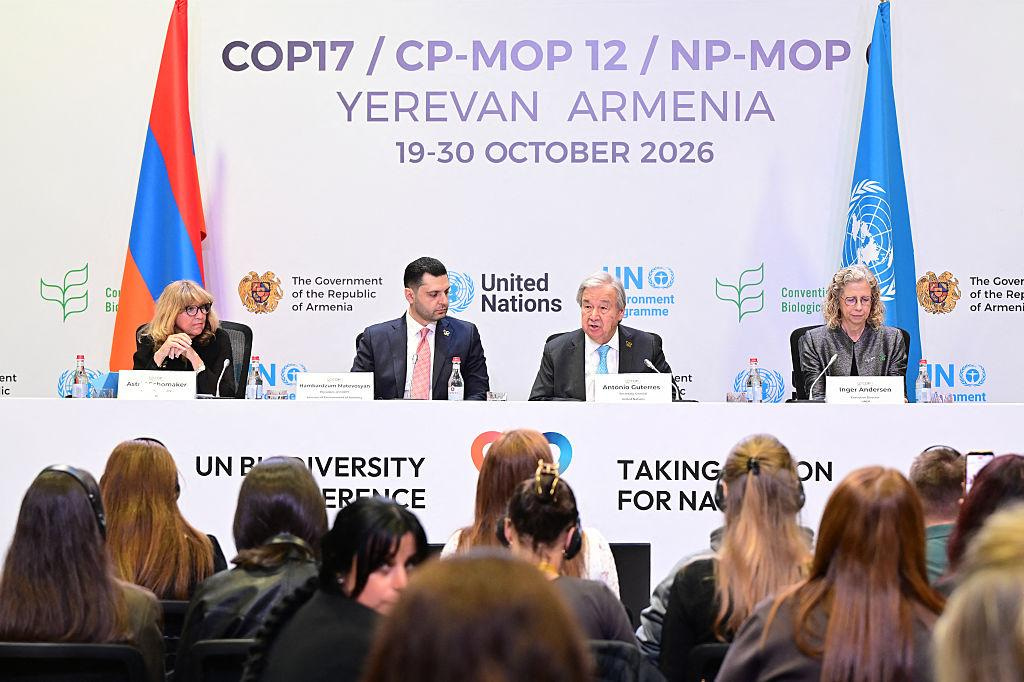
The COP17 biodiversity review in Yerevan is the first moment when governments must show, target by target, whether the Kunming-Montreal Global Biodiversity Framework is working. The conference runs from 19 to 30 October 2026 in Armenia, and the EU negotiating team arrives with a record it wants judged on delivery rather than ambition.

The Commission says the Union is making significant progress, yet it also calls for faster action on all 23 global targets. That mix of confidence and urgency frames the Brussels position for the high-level segment on 27 and 28 October, which Commissioner Jessika Roswall leads.

Why the COP17 biodiversity review matters

The Global Biodiversity Framework, agreed in 2022, set 23 targets for 2030. Its most visible goal, known as 30×30, commits countries to protect and manage 30% of land, inland waters, coastal areas and seas by the end of the decade. Until now, progress has been tracked through voluntary national plans with little comparison between countries.

The COP17 biodiversity review changes that. It is the first test of the framework’s planning, monitoring, reporting and review procedures, and the same exercise will return at CBD COP19 in 2030. A weak COP17 biodiversity review would set a low bar for every later one, which is why delegations are treating the technical language of the outcome text as seriously as the political headlines.

Armenia opened the diplomatic track early. A Leaders for Nature Summit on 16 October, attended for the Commission by Executive Vice-President Teresa Ribera, was expected to adopt a Yerevan Declaration titled Taking Action for Nature. The conference also hosts the meetings of the parties to the Cartagena Protocol and the Nagoya Protocol.

What the EU brings to Yerevan

The EU’s strongest card is money. In 2021, President Ursula von der Leyen pledged to double international biodiversity funding from 3.5 billion euros to 7 billion euros a year. The Commission now says the Union is on track to meet that pledge, with a focus on the most vulnerable developing countries.

Looking ahead, the Commission has proposed that 35% of the whole 2028 to 2034 EU budget, and 30% of international financing under the Global Europe instrument, support climate and environmental action. Negotiators from developing countries will read those percentages closely, because they signal whether European finance will keep pace with a more demanding review of the targets.

The EU also wants to broaden the funding base. On 27 October it launches a Friends of Credits for Nature and Biodiversity initiative at a side event, arguing that nature credits can draw private investment alongside public grants. Critics of such credits stress the need for credible measurement, so the quality rules attached to the initiative will matter as much as its launch.

Finance, genetic data and community rights

A second pillar of the Yerevan agenda is digital sequence information. COP16 created the Cali Fund in 2024 so that companies that use genetic sequence data, including pharmaceutical, agrifood and biotech firms, contribute to conservation. The EU co-hosts a session on the multilateral mechanism behind the fund, and the central question is whether voluntary payments can become predictable income.

The third pillar concerns Indigenous Peoples and local communities. COP16 created a subsidiary body for their participation, and COP17 must agree how it will work. The Commission says it backs their full and effective involvement, and it wants them at the centre of nature protection rather than at the margins of it.

What to watch in the COP17 biodiversity review

Three signals will show whether the COP17 biodiversity review has teeth. The first is whether the outcome text compares collective progress against the 23 targets with real figures, rather than a general statement of concern. The second is whether wealthy countries commit to a schedule for finance that developing countries can budget around. The third is whether the Cali Fund moves from principle to regular contributions.

For European readers, the result will feed directly into domestic debates. The Commission’s EU budget proposal for 2028 to 2034 and the next round of nature policy both depend on a credible global baseline. If the COP17 biodiversity review produces a clear scorecard, Brussels gains a benchmark for its own spending, and if it does not, the pressure to show results at home will grow.

The COP17 biodiversity review will not settle every dispute by 30 October, but it will show how seriously governments treat the framework they signed four years ago. The EU has staked its credibility on finance and delivery, and the final text will show whether partners accept that offer.