
Castellón: Free carbon allowances for Europe’s energy-intensive factories will rise by about 121 million permits for 2026 to 2030, after Council and European Parliament negotiators struck a provisional deal on the evening of 12 November 2026. The agreement revises the heat and fuel benchmarks of the EU Emissions Trading System (ETS) and softens cuts that many plants had already started to feel.
What the deal on free carbon allowances contains
The European Commission first proposed to hand about 88 million additional free carbon allowances to installations covered by the so-called fallback benchmarks. Negotiators then added 28 million permits that had stayed unallocated because some operators missed ETS conditions, such as energy audit duties or climate neutrality plans. That brings the main envelope to about 116 million.
A further 5 million permits form a reserve for the sectors most exposed to carbon leakage. Any permits left unused will flow to the Modernisation Fund and the Innovation Fund. One trade outlet, ESG Today, puts the package at roughly €10 billion, although other reports give only permit counts.
Why fallback benchmarks matter for ceramics and glass
Product benchmarks cover goods such as steel or cement. Fallback benchmarks, based on heat or fuel use, cover everything else, and they account for about a quarter of all free allocation. Chemicals, pulp and paper, food and drink, ceramics and glass depend heavily on them.
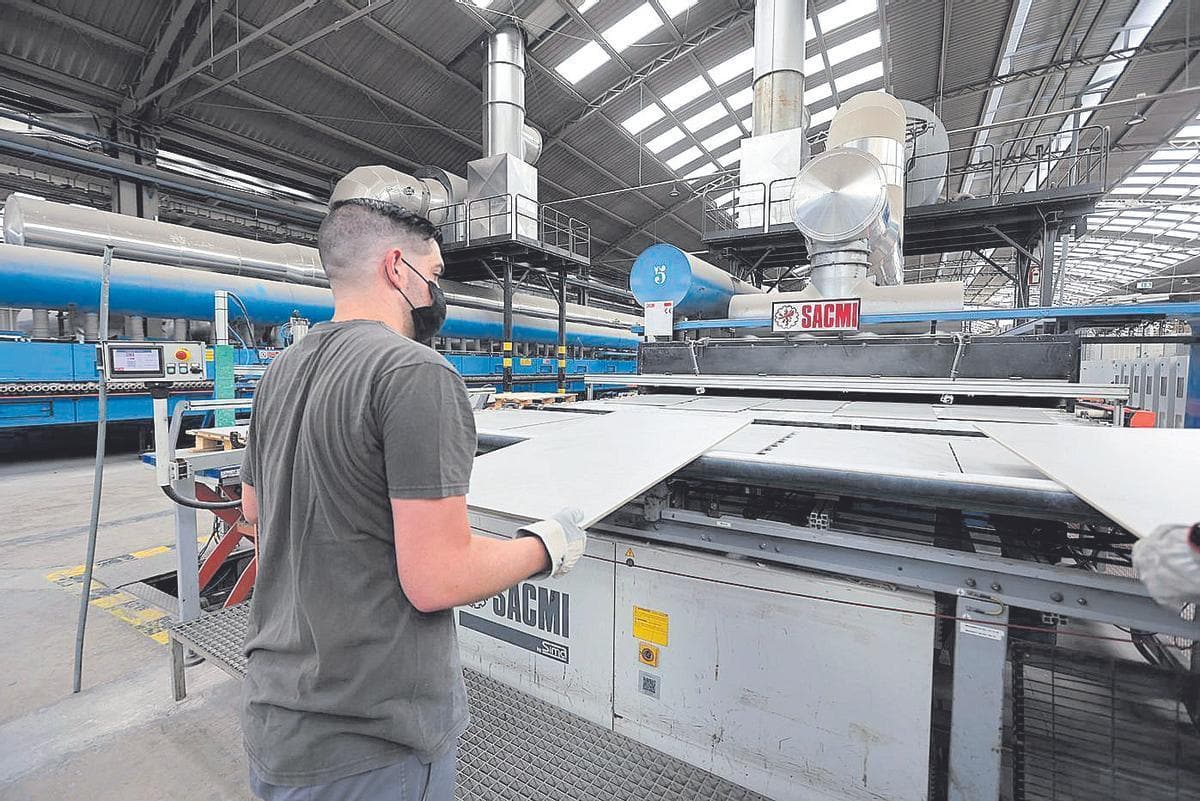
The 2026-2030 benchmark update cut allocations sharply for many of these firms. Rapporteur Adam Jarubas, a Polish EPP member, called the result “a good agreement”. The text also opens the way to sector-specific parameters, for example in ceramics, where the general fuel benchmark poorly reflects real plant performance. Tile makers around Castellón, the centre of Spain’s ceramics industry, have pressed that point for years.
Voices from Council and Commission
Darragh O’Brien, Ireland’s Minister for Climate, Energy and the Environment, said the deal “will provide the predictability industry needs for the sustainable transition”. Climate Commissioner Wopke Hoekstra described it as “great news for climate, competitiveness and independence”.
Does more free allocation weaken the carbon price signal?
This desk reads the deal as a targeted correction rather than a retreat. The cap itself does not change, so total emissions in the ETS stay bound by the same ceiling. What changes is who pays for the permits they surrender. Extra free carbon allowances shift that cost from industry back to the auction pot, which in turn reduces revenue for governments.
The trade-off is real. ETS auctions have raised more than €270 billion since 2005, according to ESG Today, and member states use that money for climate support. Each permit handed out free is one that no treasury sells.
The timing also tells a story. For steel, cement, aluminium and fertilisers, the carbon border adjustment mechanism (CBAM) is replacing free allocation step by step until 2034. Ceramics, glass, paper and most chemicals sit outside CBAM. For them, free carbon allowances remain the main shield against rivals that pay no carbon price, so lawmakers chose to protect that shield rather than let benchmark cuts erode it.
Industry pressure shaped the outcome. More than 100 European companies sent a joint letter this month warning that ETS reforms could sharply raise their costs. The extra free carbon allowances answer part of that complaint without reopening the wider ETS review.
What happens next
Parliament and Council must now formally endorse the agreement. Only then can the Commission update the fallback benchmarks and recalculate allocations for each installation.
Three signals will show whether the compromise works: how fast the Commission publishes the revised benchmarks, how much of the 5 million reserve sectors actually use, and whether ceramics gets its own parameter in 2027. If those steps move quickly, free carbon allowances will buy energy-intensive industry time to decarbonise rather than a reason to delay.


