August 10, 2026
LATEST
Europe’s Air Quality Improves but WHO Limits LoomTwelve New EU Medicines Win a Green Light from EMAFIFA Agent Rules Must Answer to Europe’s CourtsTachograph Rules Now Reach Vans Crossing Europe’s BordersNature Restoration Plans Come Due as a Hard Deadline NearsBrussels Opens a State Aid Probe Into Spain’s Renewables PayoutBrussels Extends Its Tariff Suspension on US Goods IndefinitelyFarmers Win Stronger Contract Rights Across the EU Supply ChainEurope Finally Locks In Its 348-Satellite Answer to StarlinkPlatform Work Rules Face a National Scramble Before DecemberDuty-Free Parcels Reach the End of the Line for EU ShoppersAfter Nine Years, Europe and Australia Seal a Trade PactBeijing Answers Europe’s Russia Sanctions in KindOne Year On, the EU-Japan Alliance Faces Its First TestEurope’s Chip Ambitions Still Run Through Taiwan’s FabsWhy South Korea Bet Its Research Future on Europe’s ProgrammeEurope and Japan Deepen Their Economic Alliance as Rivals CircleFive Joint Defence Projects Launch Europe’s Military ShieldElectrification Plan Aims to Make Europe First Electro ContinentHorizon Europe Budget Fight Heats Up as Ministers Push BackEurope’s Air Quality Improves but WHO Limits LoomTwelve New EU Medicines Win a Green Light from EMAFIFA Agent Rules Must Answer to Europe’s CourtsTachograph Rules Now Reach Vans Crossing Europe’s BordersNature Restoration Plans Come Due as a Hard Deadline NearsBrussels Opens a State Aid Probe Into Spain’s Renewables PayoutBrussels Extends Its Tariff Suspension on US Goods IndefinitelyFarmers Win Stronger Contract Rights Across the EU Supply ChainEurope Finally Locks In Its 348-Satellite Answer to StarlinkPlatform Work Rules Face a National Scramble Before DecemberDuty-Free Parcels Reach the End of the Line for EU ShoppersAfter Nine Years, Europe and Australia Seal a Trade PactBeijing Answers Europe’s Russia Sanctions in KindOne Year On, the EU-Japan Alliance Faces Its First TestEurope’s Chip Ambitions Still Run Through Taiwan’s FabsWhy South Korea Bet Its Research Future on Europe’s ProgrammeEurope and Japan Deepen Their Economic Alliance as Rivals CircleFive Joint Defence Projects Launch Europe’s Military ShieldElectrification Plan Aims to Make Europe First Electro ContinentHorizon Europe Budget Fight Heats Up as Ministers Push Back
August 10, 2026
LATEST
Europe’s Air Quality Improves but WHO Limits LoomTwelve New EU Medicines Win a Green Light from EMAFIFA Agent Rules Must Answer to Europe’s CourtsTachograph Rules Now Reach Vans Crossing Europe’s BordersNature Restoration Plans Come Due as a Hard Deadline NearsBrussels Opens a State Aid Probe Into Spain’s Renewables PayoutBrussels Extends Its Tariff Suspension on US Goods IndefinitelyFarmers Win Stronger Contract Rights Across the EU Supply ChainEurope Finally Locks In Its 348-Satellite Answer to StarlinkPlatform Work Rules Face a National Scramble Before DecemberDuty-Free Parcels Reach the End of the Line for EU ShoppersAfter Nine Years, Europe and Australia Seal a Trade PactBeijing Answers Europe’s Russia Sanctions in KindOne Year On, the EU-Japan Alliance Faces Its First TestEurope’s Chip Ambitions Still Run Through Taiwan’s FabsWhy South Korea Bet Its Research Future on Europe’s ProgrammeEurope and Japan Deepen Their Economic Alliance as Rivals CircleFive Joint Defence Projects Launch Europe’s Military ShieldElectrification Plan Aims to Make Europe First Electro ContinentHorizon Europe Budget Fight Heats Up as Ministers Push BackEurope’s Air Quality Improves but WHO Limits LoomTwelve New EU Medicines Win a Green Light from EMAFIFA Agent Rules Must Answer to Europe’s CourtsTachograph Rules Now Reach Vans Crossing Europe’s BordersNature Restoration Plans Come Due as a Hard Deadline NearsBrussels Opens a State Aid Probe Into Spain’s Renewables PayoutBrussels Extends Its Tariff Suspension on US Goods IndefinitelyFarmers Win Stronger Contract Rights Across the EU Supply ChainEurope Finally Locks In Its 348-Satellite Answer to StarlinkPlatform Work Rules Face a National Scramble Before DecemberDuty-Free Parcels Reach the End of the Line for EU ShoppersAfter Nine Years, Europe and Australia Seal a Trade PactBeijing Answers Europe’s Russia Sanctions in KindOne Year On, the EU-Japan Alliance Faces Its First TestEurope’s Chip Ambitions Still Run Through Taiwan’s FabsWhy South Korea Bet Its Research Future on Europe’s ProgrammeEurope and Japan Deepen Their Economic Alliance as Rivals CircleFive Joint Defence Projects Launch Europe’s Military ShieldElectrification Plan Aims to Make Europe First Electro ContinentHorizon Europe Budget Fight Heats Up as Ministers Push Back

Europe’s Migration Pact Faces Its First Real-World Stress Test

Brussels: The most ambitious overhaul of European migration policy in a generation is no longer a blueprint. On 12 June the Pact on Migration and Asylum entered into application, switching on a bundle of ten interlocking legislative acts that the bloc spent the better part of six years arguing over. The hard part begins now, and it will be measured not in Council conclusions but in queues at reception centres and in the willingness of capitals to honour promises they made on paper.

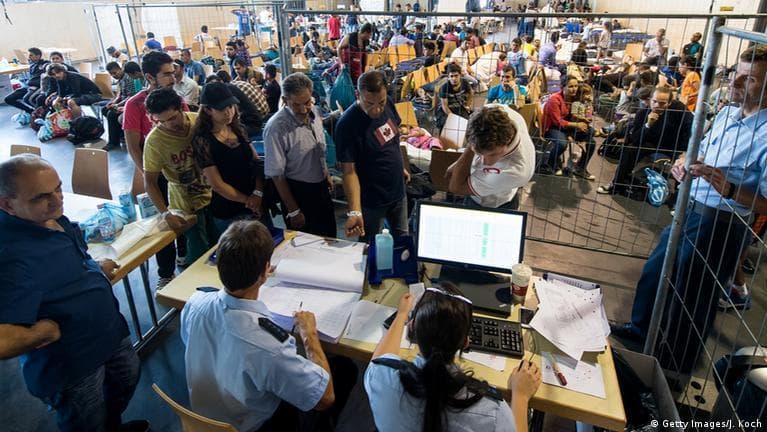
The architecture is recognisable to anyone who followed the negotiations. Everyone arriving irregularly is supposed to be screened within days, with identity, security, health and vulnerability checks recorded before a person formally enters the asylum system. Applicants judged unlikely to qualify, or flagged as security risks, are routed into accelerated border procedures and held in the border zone while their cases are decided. A clearer set of rules assigns responsibility for each claim, an attempt to bury the dysfunction that made the old Dublin system a byword for buck-passing.

The piece that will be watched most closely is solidarity. For the first time, every member state carries a binding obligation: take in a share of asylum seekers, send money or staff, or pay roughly 20,000 euros for each person it declines to relocate. The mechanism is designed to spread a burden that has fallen disproportionately on a handful of frontline states for a decade. Whether it actually does so depends on numbers the Commission has not yet had to enforce in anger, and on governments that fought relocation quotas tooth and nail.

Why it matters is straightforward. The Pact is the EU’s bet that it can be both orderly and lawful at once, deterring irregular arrivals while keeping its asylum obligations intact. If the system works, it removes one of the most corrosive arguments in European politics, the claim that Brussels cannot control its own borders. If it stalls, that argument hardens, and the populist right that has campaigned on migration for years gets a fresh grievance.

Critics are already loud. A coalition including Oxfam, Caritas, Amnesty International and Save the Children warned in an open letter that the new rules risk normalising detention and fast-track returns, and could leave vulnerable people, children among them, processed at the border with too few safeguards. Their fear is that speed becomes the priority and due process the casualty. Defenders counter that the previous status quo, with its overcrowded camps and years-long limbo, was hardly humane either.

The honest assessment is that nobody yet knows. Several member states were still finalising the physical infrastructure and staffing the Pact assumes, and the Commission’s own progress reporting has flagged uneven readiness. Laws that look coherent in a regulation can buckle when a sudden arrival spike hits an under-resourced border post.

What to watch next is implementation, not legislation. The first relocation cycles and the first invoices for the cash-instead-of-people option will reveal whether solidarity is real or rhetorical. Legal challenges are near certain, and national courts will test how the border procedures sit against fundamental rights guarantees. The Pact’s authors always said the system would be judged by its operation rather than its design. That judgment has now begun.