August 9, 2026
LATEST
New EU Gas Market Rules Take Effect With Consumer SafeguardsDeforestation Regulation Holds Its December Deadline Despite CutsDigital Omnibus Delays Europe’s High-Risk AI Deadline to 2027Europe’s Schools Confront a Widening Basic Skills GapRule of Law Report Finds Progress but Trust Still LagsIRIS2 Gains 66 Satellites as Brussels Signs the Rollout DealNature Restoration Plans Come Due as Member States Race a DeadlineECB Rates Hold at 2.25 Percent as Frankfurt Waits on the DataEU Budget Talks Turn to Cohesion as Ireland Takes OverWildfire Response Stretches Europe’s Emergency Fleet ThinCan Europe’s Quantum Plan Match Its Big Ambitions?Armenia Edges West as Moscow’s Grip Slips AwayEurope Inherits the World’s Aid Bill It Cannot Fully PayAir Passenger Rights Get Their First Overhaul in Two DecadesErasmus Opens a 5 Billion Euro Round for Skills and MobilityCeuta Crisis Pushes the EU Toward Faster Migrant ReturnsBulky Parcels Face a Packaging Crackdown From August 12Can Europe Build Its Drone Wall Before 2030 Arrives?Indonesia’s Trade Deal With Europe Nears Its Final SignatureEurope Leans on Beijing to Keep Climate Talks Alive Before AntalyaNew EU Gas Market Rules Take Effect With Consumer SafeguardsDeforestation Regulation Holds Its December Deadline Despite CutsDigital Omnibus Delays Europe’s High-Risk AI Deadline to 2027Europe’s Schools Confront a Widening Basic Skills GapRule of Law Report Finds Progress but Trust Still LagsIRIS2 Gains 66 Satellites as Brussels Signs the Rollout DealNature Restoration Plans Come Due as Member States Race a DeadlineECB Rates Hold at 2.25 Percent as Frankfurt Waits on the DataEU Budget Talks Turn to Cohesion as Ireland Takes OverWildfire Response Stretches Europe’s Emergency Fleet ThinCan Europe’s Quantum Plan Match Its Big Ambitions?Armenia Edges West as Moscow’s Grip Slips AwayEurope Inherits the World’s Aid Bill It Cannot Fully PayAir Passenger Rights Get Their First Overhaul in Two DecadesErasmus Opens a 5 Billion Euro Round for Skills and MobilityCeuta Crisis Pushes the EU Toward Faster Migrant ReturnsBulky Parcels Face a Packaging Crackdown From August 12Can Europe Build Its Drone Wall Before 2030 Arrives?Indonesia’s Trade Deal With Europe Nears Its Final SignatureEurope Leans on Beijing to Keep Climate Talks Alive Before Antalya
August 9, 2026
LATEST
New EU Gas Market Rules Take Effect With Consumer SafeguardsDeforestation Regulation Holds Its December Deadline Despite CutsDigital Omnibus Delays Europe’s High-Risk AI Deadline to 2027Europe’s Schools Confront a Widening Basic Skills GapRule of Law Report Finds Progress but Trust Still LagsIRIS2 Gains 66 Satellites as Brussels Signs the Rollout DealNature Restoration Plans Come Due as Member States Race a DeadlineECB Rates Hold at 2.25 Percent as Frankfurt Waits on the DataEU Budget Talks Turn to Cohesion as Ireland Takes OverWildfire Response Stretches Europe’s Emergency Fleet ThinCan Europe’s Quantum Plan Match Its Big Ambitions?Armenia Edges West as Moscow’s Grip Slips AwayEurope Inherits the World’s Aid Bill It Cannot Fully PayAir Passenger Rights Get Their First Overhaul in Two DecadesErasmus Opens a 5 Billion Euro Round for Skills and MobilityCeuta Crisis Pushes the EU Toward Faster Migrant ReturnsBulky Parcels Face a Packaging Crackdown From August 12Can Europe Build Its Drone Wall Before 2030 Arrives?Indonesia’s Trade Deal With Europe Nears Its Final SignatureEurope Leans on Beijing to Keep Climate Talks Alive Before AntalyaNew EU Gas Market Rules Take Effect With Consumer SafeguardsDeforestation Regulation Holds Its December Deadline Despite CutsDigital Omnibus Delays Europe’s High-Risk AI Deadline to 2027Europe’s Schools Confront a Widening Basic Skills GapRule of Law Report Finds Progress but Trust Still LagsIRIS2 Gains 66 Satellites as Brussels Signs the Rollout DealNature Restoration Plans Come Due as Member States Race a DeadlineECB Rates Hold at 2.25 Percent as Frankfurt Waits on the DataEU Budget Talks Turn to Cohesion as Ireland Takes OverWildfire Response Stretches Europe’s Emergency Fleet ThinCan Europe’s Quantum Plan Match Its Big Ambitions?Armenia Edges West as Moscow’s Grip Slips AwayEurope Inherits the World’s Aid Bill It Cannot Fully PayAir Passenger Rights Get Their First Overhaul in Two DecadesErasmus Opens a 5 Billion Euro Round for Skills and MobilityCeuta Crisis Pushes the EU Toward Faster Migrant ReturnsBulky Parcels Face a Packaging Crackdown From August 12Can Europe Build Its Drone Wall Before 2030 Arrives?Indonesia’s Trade Deal With Europe Nears Its Final SignatureEurope Leans on Beijing to Keep Climate Talks Alive Before Antalya

Europe’s Migration Pact Faces Its First Real-World Stress Test

Brussels: The most ambitious overhaul of European migration policy in a generation is no longer a blueprint. On 12 June the Pact on Migration and Asylum entered into application, switching on a bundle of ten interlocking legislative acts that the bloc spent the better part of six years arguing over. The hard part begins now, and it will be measured not in Council conclusions but in queues at reception centres and in the willingness of capitals to honour promises they made on paper.

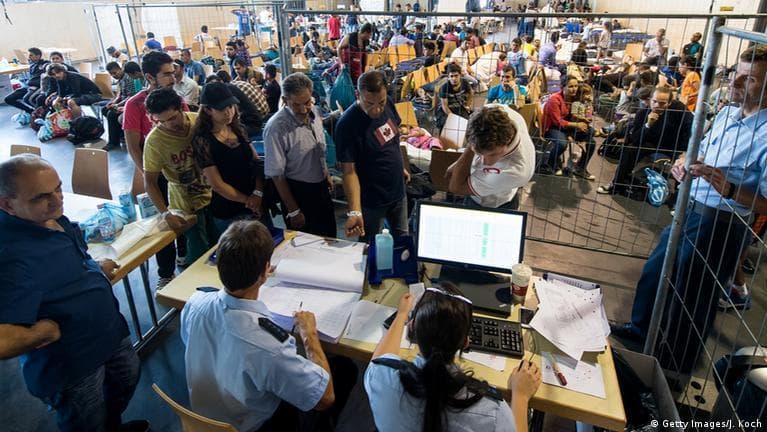
The architecture is recognisable to anyone who followed the negotiations. Everyone arriving irregularly is supposed to be screened within days, with identity, security, health and vulnerability checks recorded before a person formally enters the asylum system. Applicants judged unlikely to qualify, or flagged as security risks, are routed into accelerated border procedures and held in the border zone while their cases are decided. A clearer set of rules assigns responsibility for each claim, an attempt to bury the dysfunction that made the old Dublin system a byword for buck-passing.

The piece that will be watched most closely is solidarity. For the first time, every member state carries a binding obligation: take in a share of asylum seekers, send money or staff, or pay roughly 20,000 euros for each person it declines to relocate. The mechanism is designed to spread a burden that has fallen disproportionately on a handful of frontline states for a decade. Whether it actually does so depends on numbers the Commission has not yet had to enforce in anger, and on governments that fought relocation quotas tooth and nail.

Why it matters is straightforward. The Pact is the EU’s bet that it can be both orderly and lawful at once, deterring irregular arrivals while keeping its asylum obligations intact. If the system works, it removes one of the most corrosive arguments in European politics, the claim that Brussels cannot control its own borders. If it stalls, that argument hardens, and the populist right that has campaigned on migration for years gets a fresh grievance.

Critics are already loud. A coalition including Oxfam, Caritas, Amnesty International and Save the Children warned in an open letter that the new rules risk normalising detention and fast-track returns, and could leave vulnerable people, children among them, processed at the border with too few safeguards. Their fear is that speed becomes the priority and due process the casualty. Defenders counter that the previous status quo, with its overcrowded camps and years-long limbo, was hardly humane either.

The honest assessment is that nobody yet knows. Several member states were still finalising the physical infrastructure and staffing the Pact assumes, and the Commission’s own progress reporting has flagged uneven readiness. Laws that look coherent in a regulation can buckle when a sudden arrival spike hits an under-resourced border post.

What to watch next is implementation, not legislation. The first relocation cycles and the first invoices for the cash-instead-of-people option will reveal whether solidarity is real or rhetorical. Legal challenges are near certain, and national courts will test how the border procedures sit against fundamental rights guarantees. The Pact’s authors always said the system would be judged by its operation rather than its design. That judgment has now begun.