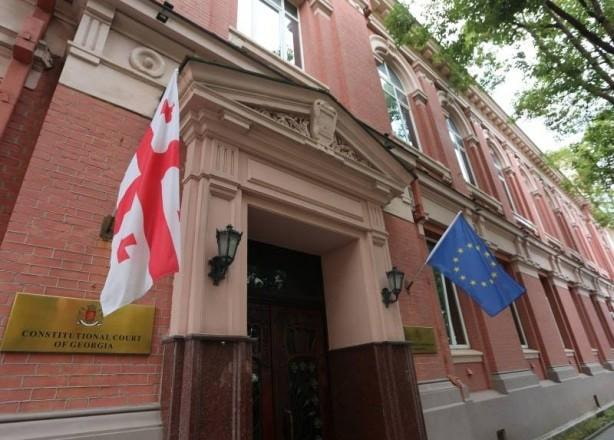
Tbilisi: The Georgia opposition ban moves into its decisive week on 21 October 2026, when the Constitutional Court opens three days of hearings on a request to outlaw the country’s main opposition parties. The hearings follow a Foreign Affairs Council in Luxembourg, where EU ministers discussed Georgia on 12 October and took no decision, leaving the file for a further review in January 2027.
The case began in October 2025, when the ruling Georgian Dream party asked the court to ban the United National Movement, Coalition for Change and Strong Georgia–Lelo. In September 2026 it widened the suit to cover For Georgia, the party led by former prime minister Giorgi Gakharia. Georgian Dream argues that the targets of the Georgia opposition ban threaten the constitutional order, while opposition leaders call the schedule rushed and politically driven.
High Representative Kaja Kallas told reporters after the ministers’ meeting that democratic backsliding is deepening and that the foreign agents legislation is stifling civil society. She also conceded that the current approach does not create enough pressure for change. Enlargement Commissioner Marta Kos added that the EU will not cooperate with the government until it takes steps toward European values, although support for civil society continues.
Independent legal advice on the Georgia opposition ban context points the same way. The Venice Commission examined the amendments Georgia adopted on 4 March 2026 to its grants law, the organic law on political associations and the criminal code. It found disproportionate restrictions on freedom of expression and association, criticised the fast-track procedure and noted that Georgian authorities declined to cooperate with its assessment.
That record explains why the Georgia opposition ban is more than a domestic dispute. A court ruling that removes four parties would hollow out the pluralism that candidate status was meant to protect, and it would leave the EU with no credible Georgian interlocutor outside the government. Brussels would then face the awkward choice between engaging a government it says is closing the path to membership and talking only to civil society.
The instruments available to the Union against the Georgia opposition ban are limited. Targeted sanctions and a suspension of visa-free travel for officials both require political agreement among member states, and Council discussions on Georgia have so far produced statements rather than measures. The EU Enlargement Forum on 15 and 16 November will not feature a single Georgian government speaker, and Georgia will be represented by a civil society panel instead, which signals the Union’s preferred channel.
What Brussels can do before January is prepare a menu of responses that it can adopt quickly if the court bans the parties. Foreign ministers could ask the Commission to map which pre-accession funds still reach state bodies, draft a list of officials tied to the hearings and coordinate a joint statement with the Council of Europe. Those steps cost little and would show that the January review is a decision point rather than another discussion.
For the Union, the stakes reach beyond Tbilisi because candidate countries watch how it treats a government that retreats from reform. If the Georgia opposition ban proceeds without a visible European response, other capitals will conclude that membership conditions carry no penalty. A prepared and coordinated reply would protect the credibility of enlargement and give Georgian citizens who back the European path a reason to keep believing in it.