Disaster risk management took a step into orbit on 14 October 2026, when the European Commission hosted the first cross-regional dialogue on using space technology to protect communities from natural hazards. The event, titled “From Space to Grassroots,” coincided with the International Day for Disaster Risk Management and brought together EU officials, United Nations representatives and practitioners from Latin America, the Caribbean, Asia and Africa.
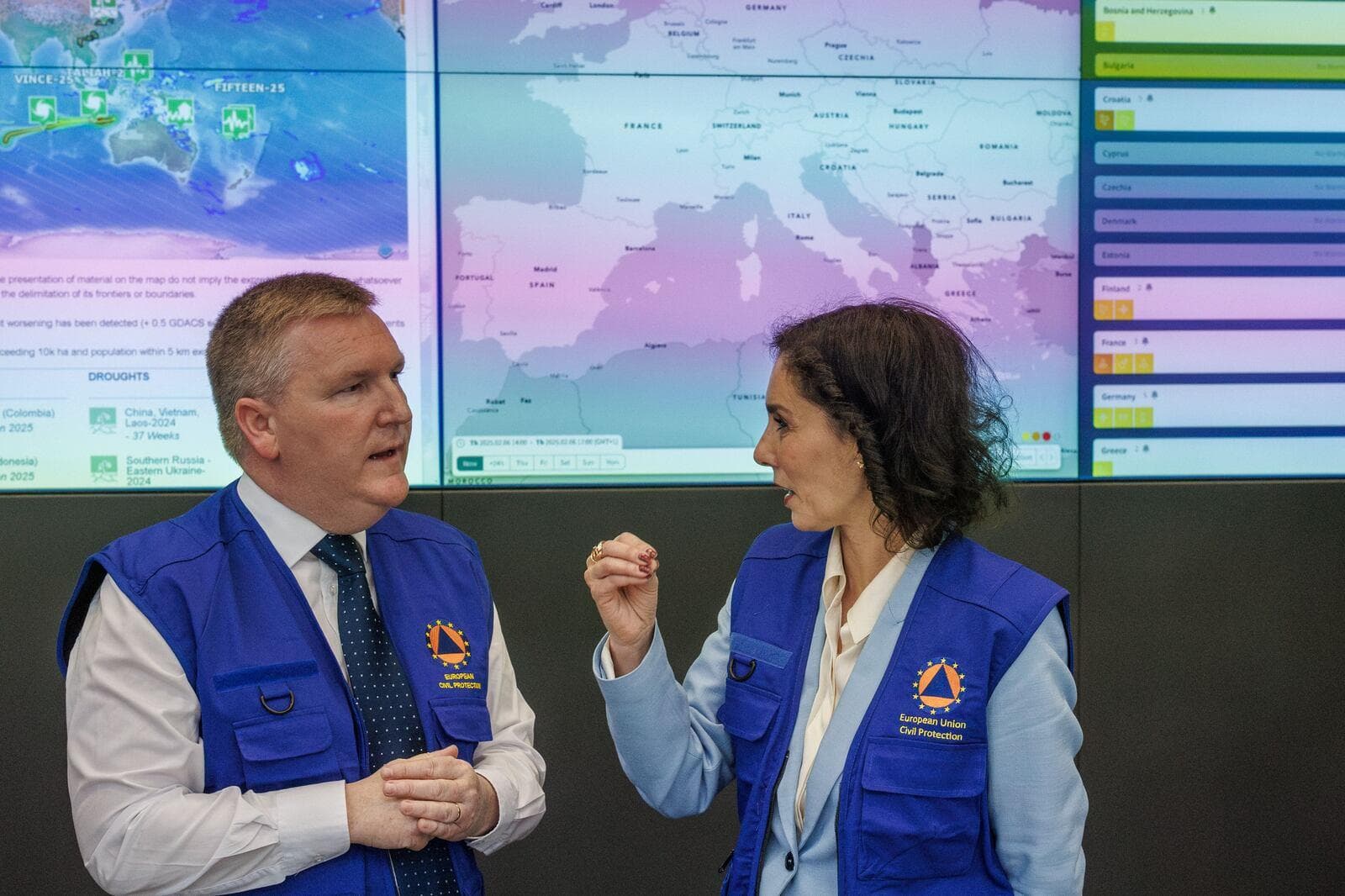
Two Commissioners led the discussion. Hadja Lahbib, who handles preparedness and crisis management, and Andrius Kubilius, who covers defence and space, joined Kamal Kishore, the UN Special Representative for Disaster Risk Reduction, and Irish Minister of State Thomas Byrne, whose country holds the Council presidency. Their message was that satellites already underpin Europe’s emergency work and could do more for partners elsewhere.
Space services cover the whole disaster cycle. Forecasts and early warnings support prevention and preparedness, while satellite mapping helps responders assess damage and plan recovery. The data feeds information systems that authorities use across Europe and beyond. Kubilius called space a strategic asset for Europe with a direct impact on citizens’ security and lives, and he named Copernicus, Galileo, GOVSATCOM and IRIS² among the EU services involved in disaster risk management.
The dialogue produced a document called the Compass on Space and Disaster Risk Management. It stresses turning raw data into information that local, national and international partners can act on, and it calls for more capacity to anticipate and reduce risks across borders. Lahbib said the real power of space technology lies in the lives it can protect below. The Compass reads as a statement of direction rather than a funding commitment, because the Commission’s summary names no budget.
Three opportunities stood out: better early warning systems, sharing of satellite data and expertise, and stronger national and local response capacities. Each one links to tools the EU already runs. The EU Civil Protection Mechanism lets countries request help when their own resources are overwhelmed, and the Emergency Response Coordination Centre coordinates the offers. The Commission can co-finance operational costs, including transport, so that aid reaches an affected country within hours while the burden on providing states stays lower.
The Commission has also set Union disaster resilience goals through a communication and a recommendation, which give member states a common agenda for prevention and preparedness. Disaster preparedness features in EU humanitarian aid programmes under DG ECHO guidance as well. Adding space services gives that framework sharper forecasts and faster maps, which strengthens disaster risk management at every stage.
Questions remain. The summary names no timetable and no list of partner countries, and it does not say how data would reach governments that lack the technical staff to use it. Those gaps matter because disaster risk management works only when information arrives at the village or district that must act on it. A flood warning that stays locked in raw imagery in a distant capital helps nobody.
The next step is the follow-up process the dialogue started. Watch for concrete pilot projects, for funding lines in the 2028 to 2034 budget and for the role of IRIS² once it begins operating. If those pieces materialise, disaster risk management could become one of the clearest examples of EU space policy delivering benefits to people far beyond Europe’s borders.