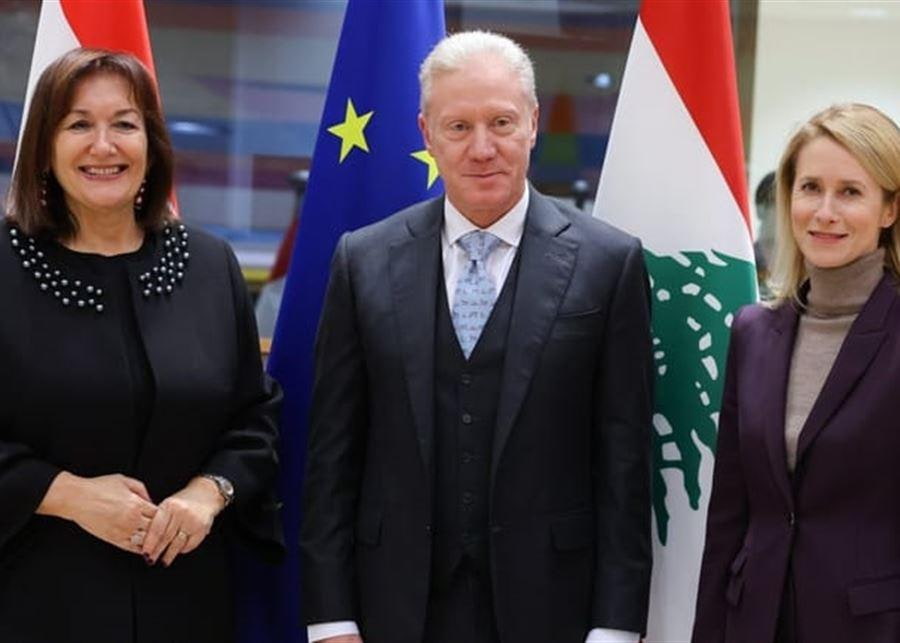
Beirut: The new Lebanon mission approved by EU foreign ministers on 12 October 2026 is designed to be small, civilian and military in character, and focused on the Lebanese state rather than on the southern border. Meeting in Luxembourg, ministers agreed a Common Security and Defence Policy mission with an initial term of up to three years. High Representative Kaja Kallas said that the local authorities welcome it.
The timing is set by the United Nations. The mandate of the UN peacekeeping force UNIFIL expires at the end of 2026, and the operation is preparing to leave. The Lebanon mission is not meant to replace it. Brussels is considering about 150 personnel, compared with roughly 7,500 UNIFIL peacekeepers, and none of them would deploy in southern Lebanon.
The tasks reflect that modest footprint. French Foreign Minister Jean-Noël Barrot described border security, maritime security and countering drones, together with training for Lebanese security forces, including the police. The Lebanon mission builds on the €100 million in assistance for the Lebanese Armed Forces that ministers approved in June to reinforce state authority and support the disarmament of Hezbollah.
Many details remain open. Staffing, command structure and the precise mandate are not finalised, and member state contributions are voluntary. Italy, France, Spain, Ireland, Germany, Austria, Finland and Poland, all former UNIFIL contributors, have shown interest, and one proposal would rotate leadership among Italy, France and Spain. Irish Foreign Minister Helen McEntee said Ireland will contribute to the civilian component, although legal reforms may complicate a military role.
Politics around the Lebanon mission matters as much as logistics. Lebanese President Joseph Aoun has called for the UNIFIL mandate to be extended, so the European mission arrives while Beirut still hopes for a longer UN presence. France and Italy also announced a separate international coalition in June to support Lebanon after UNIFIL leaves, and it remains unclear whether that effort will run alongside the EU mission or fold into it.
For the Union, the Lebanon mission is a test of credibility in a region where it has often paid for outcomes it did not shape. Kallas hopes the team can work on the ground within a couple of months, which leaves little time to settle command, funding and legal bases before the UN force departs. A mission that arrives late, or without clear rules for protecting its own staff, would add little to Lebanese security.
The practical advice is simple. Member states should name the lead nation and fix the budget quickly, tie the training to measurable benchmarks for Lebanese units, and coordinate with the French and Italian coalition from the start. If they do, the Lebanon mission can become a modest but useful bridge between UN withdrawal and Lebanese self-reliance.