November 12, 2026
LATEST
Gambia Presidential Election Draws EU Observers Across the CountryUK-EU Agri-Food Deal Nears Summit as British Farmers Seek GuaranteesMarine Protected Areas Shield Under 1 percent of EU Waters, Auditors WarnProtect What Matters Campaign Brings EU Defence Case to Ten StatesAgricultural Output Value Climbs to €562.5 Billion in Record 2025ENISA Cybersecurity Report Finds Response Teams LaggingEIC Work Programme 2027 Puts €1.8 Billion Into Deep TechLeaders Put AI Sovereignty at the Centre of Friday TalksWomen in Farming Platform Meets in Brussels to Tackle Funding GapsBeating Cancer Plan Review Tests EPP Unity on Tobacco and AlcoholEl Niño Anticipatory Aid Puts Somalia First in EU Crisis PlanningQatar Defence Cooperation Gives Brussels a Gulf Opening After DelayMongolia Geographical Indications Talks Test a Third Neighbour BetWang Yi Courts Paris as EU-China Trade Ties Near a November TestSouth China Sea Code Deadline Leaves Europe Watching the Manila SummitBrussels Weighs a New Zealand Climate Complaint Under Its Trade PactGenerational Renewal in Farming Moves Up Irish Presidency AgendaOACPS-EU Joint Parliamentary Assembly Presses Brussels on Fair TradeEIB Investment Survey Shows 85% of EU Firms Kept on SpendingDSA Election Guidelines Bring Deepfake Labels to Video FeedsGambia Presidential Election Draws EU Observers Across the CountryUK-EU Agri-Food Deal Nears Summit as British Farmers Seek GuaranteesMarine Protected Areas Shield Under 1 percent of EU Waters, Auditors WarnProtect What Matters Campaign Brings EU Defence Case to Ten StatesAgricultural Output Value Climbs to €562.5 Billion in Record 2025ENISA Cybersecurity Report Finds Response Teams LaggingEIC Work Programme 2027 Puts €1.8 Billion Into Deep TechLeaders Put AI Sovereignty at the Centre of Friday TalksWomen in Farming Platform Meets in Brussels to Tackle Funding GapsBeating Cancer Plan Review Tests EPP Unity on Tobacco and AlcoholEl Niño Anticipatory Aid Puts Somalia First in EU Crisis PlanningQatar Defence Cooperation Gives Brussels a Gulf Opening After DelayMongolia Geographical Indications Talks Test a Third Neighbour BetWang Yi Courts Paris as EU-China Trade Ties Near a November TestSouth China Sea Code Deadline Leaves Europe Watching the Manila SummitBrussels Weighs a New Zealand Climate Complaint Under Its Trade PactGenerational Renewal in Farming Moves Up Irish Presidency AgendaOACPS-EU Joint Parliamentary Assembly Presses Brussels on Fair TradeEIB Investment Survey Shows 85% of EU Firms Kept on SpendingDSA Election Guidelines Bring Deepfake Labels to Video Feeds

Dublin Summit Asks What the European Political Community Is For

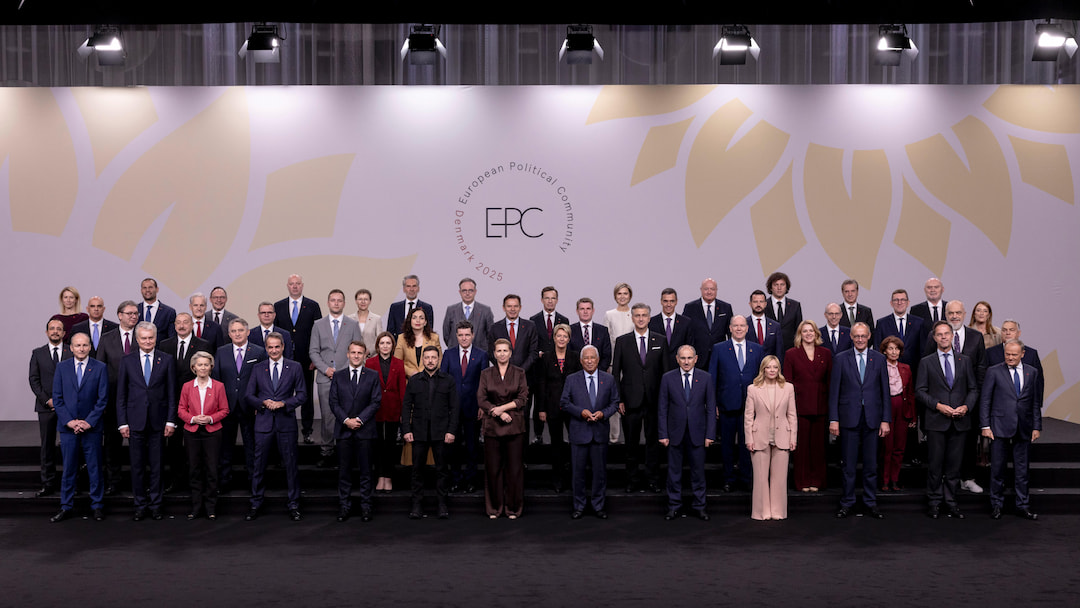
The European Political Community gathers in Dublin on 12 November 2026 for its ninth summit, with more than 50 heads of state or government expected. Ireland hosts the meeting under the theme of a strong, secure and connected Europe, and Taoiseach Micheál Martin welcomes the leaders.

Four years after its launch, the format faces a sharper question than attendance figures can answer. Leaders want to know whether it produces outcomes or only conversations.

Security dominates the European Political Community agenda

Ukraine sits at the centre of the Dublin programme. Organisers expect President Volodymyr Zelensky to attend, and a round table titled Ensuring the security and defence of a democratic Europe frames the main discussion.

French President Emmanuel Macron plans to table key principles for the future of European security. That move matters because the European Political Community has no treaty, no secretariat and no voting rules, so any principles it endorses carry political rather than legal force.

Working sessions on Armenia and Moldova round out the security focus. Both countries sit on the fault line between the EU’s neighbourhood and Russian pressure, and Moldova’s core group of supporters plans further meetings on the margins.

Why a loose format still holds value

The format’s strength lies in its breadth. It brings together EU members, candidates, the United Kingdom, Türkiye, Norway, Switzerland and the South Caucasus in a single room, something no other European institution achieves.

Canadian Prime Minister Mark Carney has again received an invitation, extending the format beyond the continent. The Council of Europe’s Secretary General, Alain Berset, will argue that democratic resilience and the rule of law form part of security itself, especially in the Western Balkans.

That argument points to the format’s real niche. The European Political Community offers a venue where leaders can discuss democratic standards and hard security together without the conditionality that accompanies EU accession.

Limits of summitry without institutions

Critics note that previous summits produced few binding outcomes. Since the first meeting in Prague in October 2022, the European Political Community has largely avoided formal joint communiqués, a choice that sidesteps the drafting fights that consume EU summits. Bilateral meetings on the margins often generate more news than the plenary sessions, and agendas shift with each host.

A third meeting of the International Alliance against Drugs, launched by Rome and Paris, also takes place on 12 November. Such side initiatives show the format working as an incubator for coalitions of the willing rather than as a decision-making body.

From Dublin to the informal EU27 meeting

The sequencing reveals the division of labour. On 13 November, EU leaders meet informally, and German Chancellor Friedrich Merz has asked European Council President António Costa to put the financing of military support for Ukraine on that agenda.

Money and legal commitments, in other words, remain an EU27 matter. The European Political Community can build consensus around a security doctrine, but it cannot raise funds, adopt sanctions or sign defence agreements on its members’ behalf. The wider circle supplies political alignment, while the Union supplies the instruments. For partners such as the United Kingdom and Norway, that split offers a way to shape European security without joining the EU’s legal order.

What happens next

Observers will judge Dublin on whether Macron’s security principles gain broad backing and whether Moldova and Armenia leave with concrete support. If they do, the European Political Community will have shown that a forum without rules can still shape the continent’s security debate in 2026.