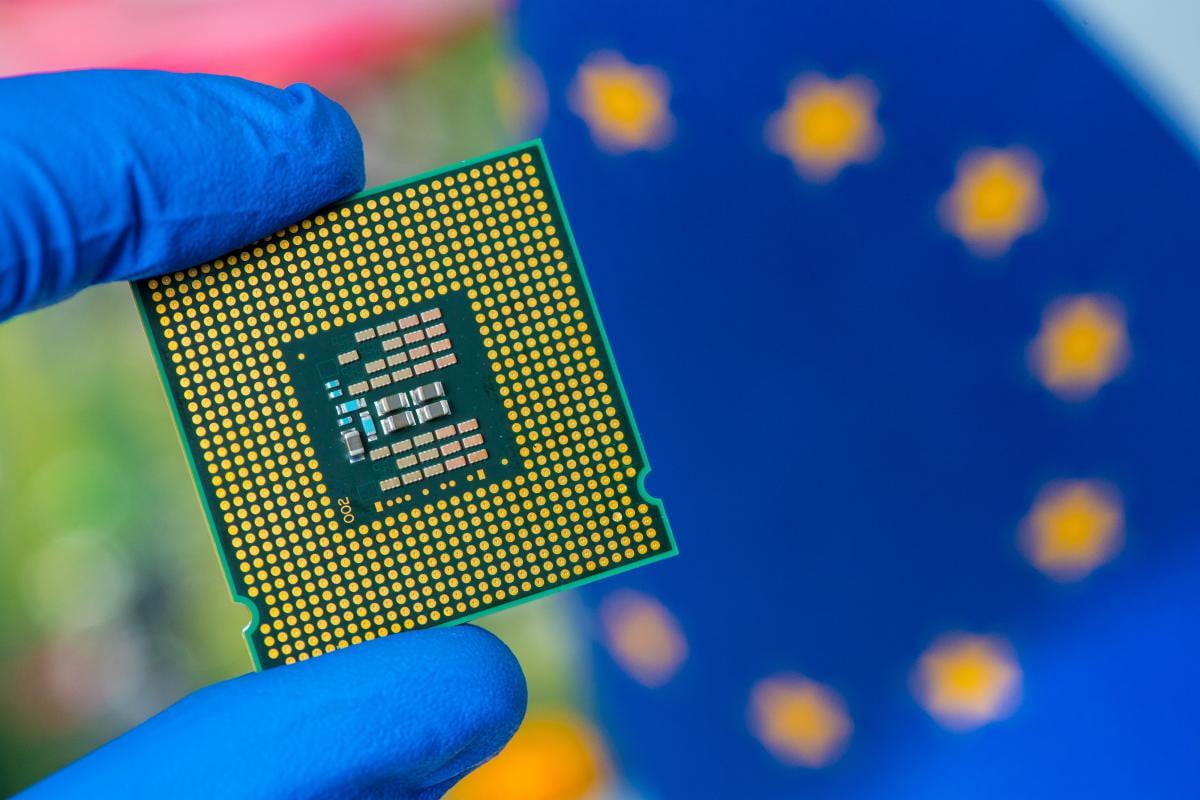
The European Chip Design Platform, launched on 5 November 2026 by Executive Vice-President Henna Virkkunen under the EU Chips Act, is meant to mobilise €525 million for start-ups that design semiconductors. The Commission announced the launch in its daily news of that day. This research note sets out what the platform offers, how its two grant tiers work and which questions the announcement leaves open.
What the European Chip Design Platform offers
According to the Commission, the platform gives young companies access to design tools, design support services, intellectual property blocks and manufacturing capacity. The Commission describes these as the most expensive and hardest-to-reach resources for early-stage firms.
That description matches how the sector works. A chip start-up cannot show investors a working product until it has licensed design software, drawn on proven circuit blocks and paid for a first manufacturing run. Each of those steps costs money before any revenue arrives, and the cost falls hardest on teams with a good idea but no balance sheet.
How the two grant tiers work
The platform pairs shared resources with direct grants. Early-stage start-ups can receive up to €100,000 for proof-of-concept prototyping. More developed start-ups can receive up to €16 million towards the substantial cost of bringing a chip to market.
The gap between the two tiers is large. The top grant is 160 times the bottom one, which suggests the Commission wants to fund a company across its whole path, from first prototype to commercial product. As an illustration only, the full €525 million would cover about 32 grants at the €16 million ceiling. The announcement does not say how the money will be divided, so this figure shows scale, not a plan.
Where the platform sits in EU chip policy
The EU Chips Act, which entered into force in September 2023, set the Union’s aim of strengthening its semiconductor base. Most public attention has gone to large factories and the subsidies they attract. The European Chip Design Platform aims at the other end of the value chain, where small teams create the designs that factories later produce.
This focus matters for competitiveness. Design is where European start-ups can compete without building a plant, but only if they can afford the tools and the first silicon. By pooling those resources, the European Chip Design Platform tries to lower the entry barrier for many firms at once instead of backing a few winners.
What the announcement does not say
The material reviewed for this note leaves several points open. It gives no application deadlines and no programme calendar. It does not name an operator beyond the Commission launch. It does not define which start-ups count as “more developed”, and it does not split the €525 million between grants, tool access and manufacturing support.
The source for these details is also secondary. It is a summary of the Commission’s daily news, not the original press release, so figures should be checked against the Commission text before anyone relies on them for funding decisions.
What happens next
Start-ups should watch for the first call, the eligibility rules for each tier and the process for requesting tool access. Member states and investors will want to know how the European Chip Design Platform links to national programmes and private venture funding.
The test of the European Chip Design Platform will be uptake and speed. If grants reach teams quickly and the shared tools remove real bottlenecks, the platform could widen the pool of European chip designers. If the rules prove slow or narrow, the €525 million may reach fewer companies than the headline suggests.