Military mobility funding now waits on an evaluation that will run until March 2027. The Commission’s final call for trans-European transport projects under the current long-term budget closed on 6 October 2026, and applicants will not learn their results before April 2027. The call, worth €1.1 billion through the Connecting Europe Facility, opened in June and carries a dedicated lane for dual-use infrastructure.
Military mobility funding has its own envelope within the package. The call document for the topic CEF-T-2026-MILMOB-WORKS states a budget of €130 million, although the Commission may exceed it or leave money unspent. The rest of the €1.1 billion covers other priorities, including high-speed rail, maritime connectivity, inland waterways, electrification of road haulage and airport ground operations, and charging in ports, according to the Commission’s announcement of 19 June.
Projects must serve both civilian and defence needs. Dual-use works must sit on the trans-European transport network and on the EU military mobility network, and priority goes to projects on the four priority corridors and to those spanning two or more member states. The call document caps the EU contribution at €20 million for a project in one member state and €40 million for a project in several. Tying military mobility funding to dual-use value limits it to projects that also help civilian transport.
Applicants submit through the Funding and Tenders Portal, and the call document says deadlines cannot be extended. That rule means promoters that missed 6 October have no second chance under this call, and the next opportunity depends on the following budget period.
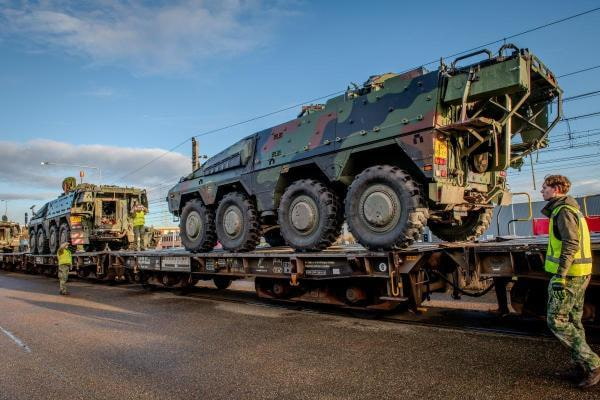
Rail and port operators have a particular stake. Dual-use works can include upgrades that serve commercial traffic as well as armed forces, and the Commission presents military mobility funding as a way to strengthen defence readiness without building parallel networks.
Scoring follows five criteria, each marked out of five points: priority and urgency, maturity, quality, impact and catalytic effect. Projects need at least three points on each criterion and 15 in total. The Commission says the call addresses military mobility bottlenecks, meaning transport constraints that slow the movement of personnel and equipment, as part of its wider military mobility package.
The timetable is long. Evaluation runs from October 2026 to March 2027, information on results follows in April 2027, and grant agreements are due in May or June 2027. An invitation to grant preparation is not a formal funding commitment, so promoters must wait for signed agreements before they count on the money.
Two details stay unclear. The Commission has not published a split of the €1.1 billion between its priorities beyond the €130 million military lane, and it has not said how many applications arrived. The Brussels Times reported that Ukraine and Moldova are included in the wider call, but the eligibility rules for the military topic should be checked in the call document itself.
For ports, rail operators and national transport ministries, the next six months are a waiting period. The Commission has framed this as its last call before the next budget period, so the outcome will show how much military mobility funding reaches projects that were ready now. Until April 2027, every project promoter is watching the same evaluation, and military mobility funding will stay a promise on paper.