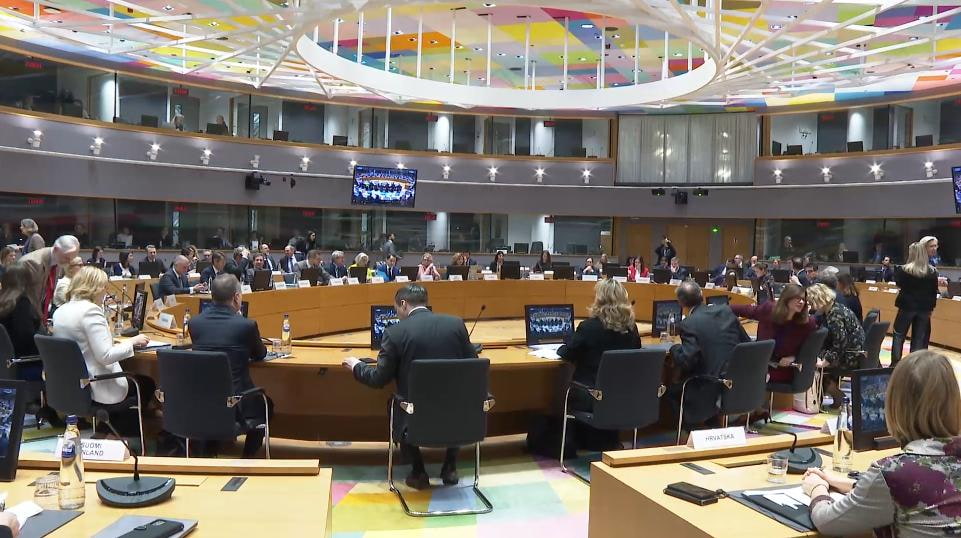
Copenhagen: Democratic participation joins the agenda of the General Affairs Council on 13 October 2026, when ministers meet in Luxembourg. The Council’s forward look lists “inclusive democratic participation” next to preparations for the European Council, the 2028-2034 budget and a rule-of-law update on Hungary.
The Irish Presidency brings its own experience to the table. Ireland opened a public consultation on its presidency priorities on 5 November 2025, ran it for five weeks and accepted late submissions, and it collected 484 contributions from individuals, civil society groups, businesses, academics and representative bodies, according to Euronews.
Respondents answered five questions on priorities, policy areas, EU impact and citizen engagement. Competitiveness drew 14.15 percent of the attention, values 12.32 percent and health 11.46 percent. Within competitiveness, 57.8 percent of respondents stressed simplification and 36.2 percent technological innovation.
Ireland then published a 30-page summary of who took part and what they said. That step matters for democratic participation, because it lets citizens see how their input shaped policy rather than leaving them to guess. Euronews argues that other member states could copy the model.
The Council’s own rules supply a second layer. A June 2026 Council note on draft agendas for the Irish Presidency lists the General Affairs Council dates and stresses public deliberation under Article 16(8) of the Treaty on European Union for legislative items. Open votes and open debates are the baseline for legitimacy.
The October discussion on democratic participation will not rewrite the treaties. Ministers will more likely compare practices, from consultations and citizens’ panels to youth engagement, and ask which of them work across 27 different political cultures. Turnout figures in recent national votes give the debate urgency.
The agenda also pairs the topic with the rule of law. A functioning democracy needs independent courts, free media and safe space for civil society, and ministers will hear the Hungary update on the same day. Inclusive participation and rule-of-law enforcement reinforce each other, and weakness in one tends to expose weakness in the other.
The practical test is simple. If capitals leave Luxembourg with a shared list of tools that raise participation, the Irish model could become a template for later presidencies. If they leave with only general statements, the 484 submissions will remain a local success rather than an EU habit.
Democratic participation will not be settled in a single meeting. Yet by putting it on the General Affairs Council agenda, the presidency signals that citizens’ voices belong in the same room as budgets and enlargement.