Brussels: EUBAM Rafah and its sister mission in the West Bank received new mandates on 28 September 2026, extending both until 30 June 2027. The decision confirms that the European Union wants a seat at the table when a Gaza peace plan moves from paper to practice, and that it is willing to keep unarmed civilian staff on the ground to prove it.
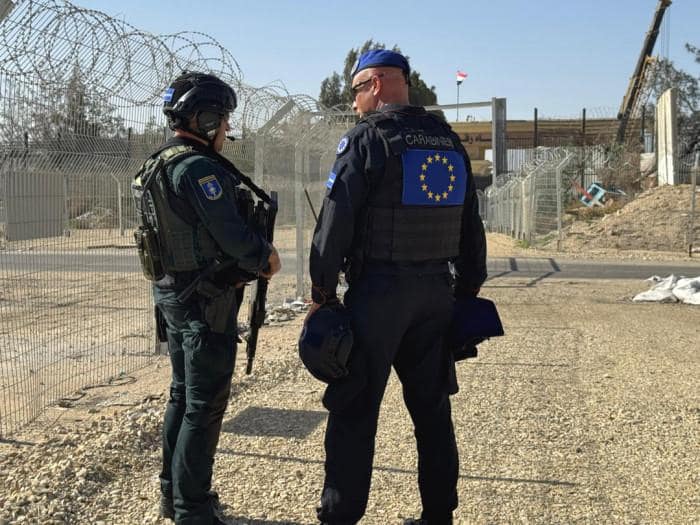
EUBAM Rafah has operated since November 2005 and provides technical assistance to Palestinian border personnel at the Rafah Crossing Point between Gaza and Egypt. Its value lies in a third-party presence that builds confidence between Israel and the Palestinian Authority. EUPOL COPPS, active since January 2006, supports Palestinian civil police and justice institutions, mainly in the West Bank.
The renewal followed a short technical extension of three months on 29 June 2026, which kept both missions alive while member states negotiated. Reports indicated that Israel gave a green light for the extension, a prerequisite for any mission operating near the crossing. That consent shows how much EUBAM Rafah depends on diplomacy as well as logistics.
The timing links to wider events. The European Council reaffirmed its commitment to international law and to a peace based on the two-state solution, and it said the Union was ready to support a comprehensive Gaza peace plan through these missions. In practical terms, the crossing is the gateway for people and goods, so whoever monitors it shapes the daily reality of reconstruction.
The record so far is modest but real. EUBAM Rafah reopened the crossing point in early 2025, and more than 13,000 travellers have passed through so far. Nataliya Apostolova heads the Rafah mission, while Felix Andåker leads EUPOL COPPS, and both will carry the responsibility of scaling up if a ceasefire framework produces clearer rules.
Several questions remain open. The first is security, because civilian monitors cannot operate where fighting resumes, and the missions depend on guarantees from the parties. The second is coordination, since Egypt, Israel, the Palestinian Authority and other international actors all claim a role at the border, and EUBAM Rafah must avoid becoming a symbol without authority.
The third question concerns money and mandate length. A renewal until June 2027 offers nine months of planning certainty, but a larger role would need more personnel and a clearer legal framework. Member states will have to decide whether to expand the mission or keep it as a small confidence-building instrument.
For European diplomacy, the renewal is a low-cost way to stay relevant in a region where the Union often pays for outcomes it does not control. If a Gaza settlement takes shape, EUBAM Rafah will be among the first tools Brussels can deploy, and its past work at the crossing gives the Union a practical credential that statements alone cannot supply.