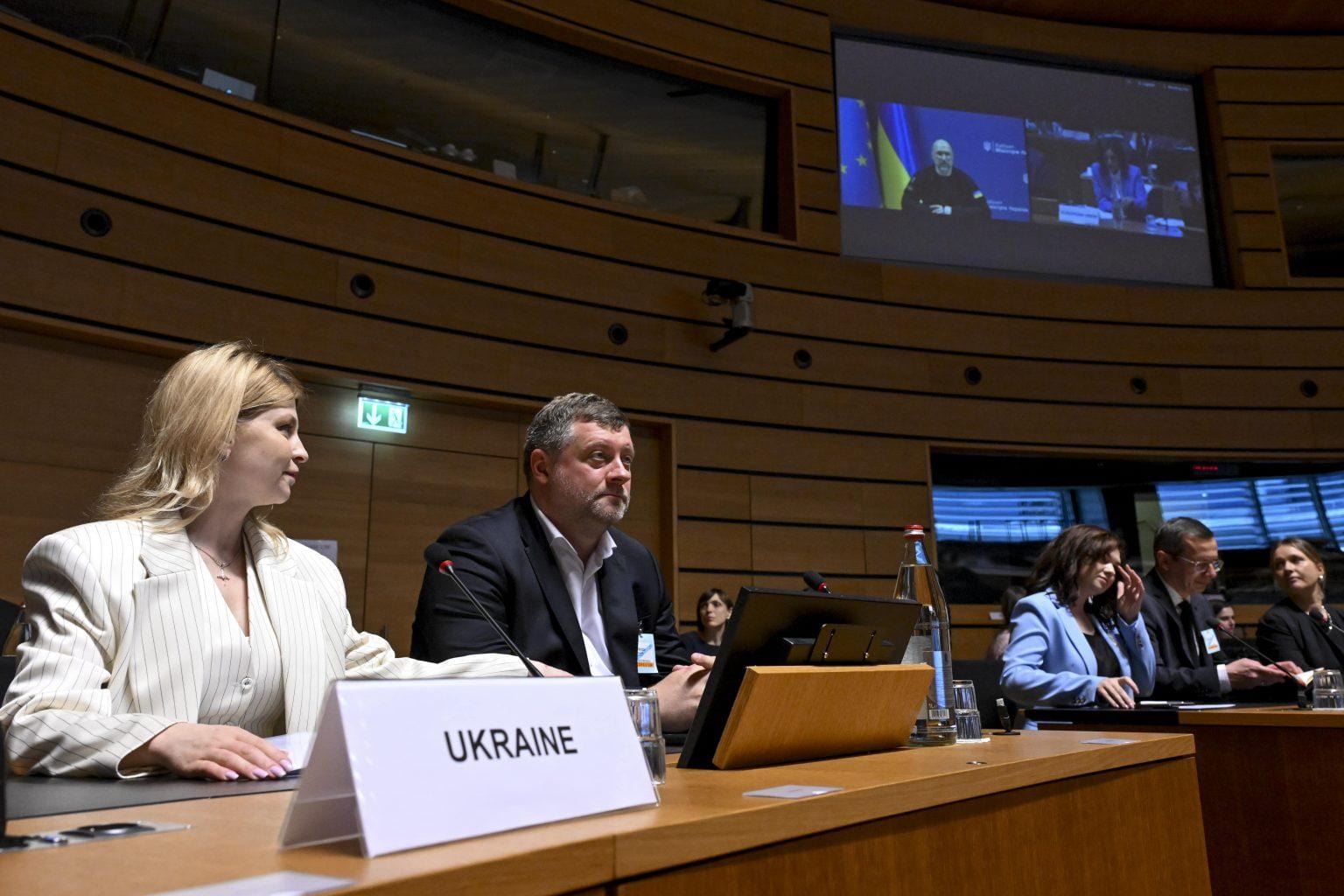
Luxembourg: The Ukraine accession clusters on the Green Agenda and on agriculture remain closed, almost four weeks after the EU opened two more clusters on 13 October 2026 when Hungary lifted its veto. European Pravda reports that Cluster 2 on the internal market and Cluster 3 on competitiveness and inclusive growth opened at intergovernmental conferences in Luxembourg. Euronews counts four of six clusters now open.
Hungary’s price for unblocking the Ukraine accession clusters was a change to Ukraine’s education law. The Verkhovna Rada approved the amendments on 12 October, and Commissioner for Enlargement Marta Kos welcomed “the unity shown across the political spectrum” and said “this is crucial to keep reforms moving.” Euronews describes the law as giving special status to schools where more than half of pupils learn in a minority language that is also an official EU language. Budapest, now under Prime Minister Péter Magyar, had asked for concrete guarantees for the Hungarian minority.
Moldova and Albania also received a green light on 13 October, European Pravda reports. Kos said it is “technically possible to conclude accession negotiations as early as the first or second quarter of 2028” for Moldova. The same article says Ukraine has 24 of the 33 main negotiating chapters open, and that Moldova could begin its interim benchmark assessment process as early as November.
Of the Ukraine accession clusters still shut, Cluster 4 covers the Green Agenda and sustainable connectivity, including transport and the single market for services, which are sensitive for Poland. Cluster 5 covers agriculture and is described as even more sensitive, because current common agricultural policy rules could not accommodate Ukraine’s integration. Kos told reporters that “Ukraine will become part of the European agricultural policy, but under a special model.”
Hungary will no longer be the main obstacle, but the author of European Pravda’s analysis expects further concessions from Kyiv. Poland and France could become centres of resistance as their election campaigns begin. Opening any cluster needs unanimity, and Euronews notes that agriculture is expected to be among the most contentious issues.
Ukrainian Deputy Prime Minister for European Integration Vsevolod Chentsov stays optimistic about the Ukraine accession clusters. He said: “I see no reason why we should not be able to reach an agreement and open the clusters by the end of this year.” Irish Minister of State for European Affairs Thomas Byrne, speaking for the Council presidency, said: “We encourage Ukraine to continue to implement necessary reforms, particularly in the area of Fundamentals.”
The sources reviewed give no date for the next conference on the Ukraine accession clusters, so the year-end target remains an aim, not a schedule. Readers can follow the detail in Euronews coverage of the 13 October decision and in the European Pravda analysis.
The test for the Ukraine accession clusters now moves from Budapest to the Council table. If Warsaw and Paris accept a special agricultural model and the transport and services chapters, clusters four and five could open before the end of 2026; if not, Ukraine will enter 2027 with two clusters still shut.