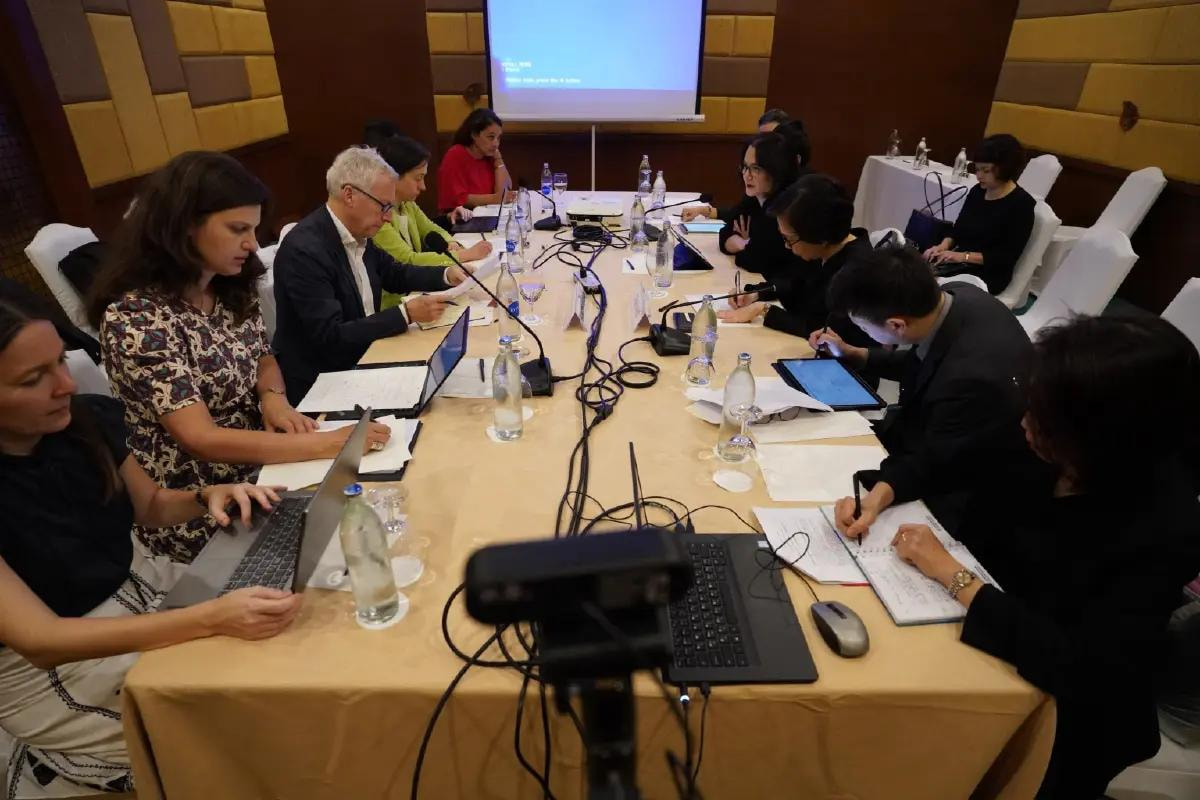
Bangkok: The Thai-EU FTA has entered its decisive phase, and both sides now talk openly about closing the deal before the end of 2026. Negotiators met for a tenth round in Phuket from 28 September to 6 October. Thai Commerce Minister Suphajee Suthumpun said afterwards that the talks had made significant progress and that most chapters were closed.
Those closed chapters cover raw materials, rules of origin, energy and sanitary and phytosanitary measures. The harder files remain open. Market access for goods, services and investment still divides the two teams, together with a handful of sensitive policy questions that each government must sell at home.
The economic logic behind the Thai-EU FTA is clear. EU-Thailand trade in goods reached about 44 billion euros in 2025, and services added roughly 14 billion euros more. European companies hold an investment stock of around 40 billion euros in Thailand, which makes the EU its third-largest investor. These firms employ about 22,000 people directly in the kingdom.
EU Ambassador Luisa Ragher set out the case at an economic forum in Bangkok on 4 November. She described the agreement as comprehensive, covering goods, services, investment, public procurement and sustainability. She presented the EU as a trusted, long-term partner and argued that Thailand could serve as Europe’s platform in Southeast Asia.
An EU-commissioned study puts numbers on that promise. It projects that the deal could lift Thai GDP by 1.25 percent and Thai exports by 2.8 percent. Thailand already runs a large surplus with Europe, so Bangkok sees the agreement as a way to protect that position as competitors sign their own deals with Brussels.
That competitive pressure explains the urgency behind the Thai-EU FTA. Vietnam and Singapore already trade with the EU under free trade agreements. Indonesia has concluded its own comprehensive pact, and Malaysia is negotiating in parallel. A Thai-EU FTA would stop Thailand from falling behind its neighbours in the European market, especially in autos, electronics, processed food and fisheries.
For Brussels, the motive is diversification. The Commission wants reliable partners in Asia as tensions with China and the United States reshape supply chains. Thailand offers a manufacturing base, a large consumer market and a central location in mainland Southeast Asia.
The remaining obstacles to a Thai-EU FTA are real, however. European negotiators want deeper access to Thai public procurement, stronger protection for geographical indications and enforceable labour and environmental commitments. Thai officials, in turn, want generous quotas for rice, sugar and poultry, and they worry about the cost of meeting EU deforestation and carbon border rules.
Ragher framed three priorities for Thailand: moving up the value chain, strengthening the investment climate and using openness to drive growth. Those goals match the reforms that the agreement would lock in, from intellectual property standards to competition rules and digital trade.
The calendar is tight. Any deal concluded this winter must still pass legal scrubbing, translation and approval by the Council and the European Parliament. Thai ratification will follow its own domestic procedure, and civil society groups on both sides will scrutinise the sustainability chapter closely.
If negotiators close the final gaps, the Thai-EU FTA would become one of the EU’s most significant trade openings in Southeast Asia. It would also test whether Brussels can sign modern, values-based agreements quickly enough to keep pace with a fast-changing Asian trade map.