
August 23, 2026
LATEST
Europe Now Runs Trade Defence Against China One Product at a TimeWhat Seoul Must Sign Before Korean Firms Can Touch SAFE MoneyNorth Korea’s Money Moves Faster Than Europe Can List Its OwnersNew Zealand Is Still Waiting for the Pact Japan and Korea SignedFarmers Won a CAP Budget Floor and Lost the Second PillarAustralia Wants Into Horizon Europe Before the Money DoublesOcean Act Drafters Face a Deadline and Two Rival DirectivesFive Joint Defence Projects Start With 325 Million in Seed MoneyVehicle Circularity Rules Now Land on Suppliers, Not Just CarmakersArmenia Is Halfway Through a Visa Roadmap of 74 BenchmarksSyria Regained a Trade Agreement While Sanctions Remain in PlaceHeatwave Preparedness Now Needs a Law, Not Another PlanEurope’s Tobacco Tax Overhaul Now Doubles as an EU Budget FixCrypto Rules Reopened Two Years After They Took EffectETIAS Has Quietly Lost the Only Launch Date It Ever Committed ToSteel Quotas Fell 47 Percent and Buyers Are Still AdjustingWill the Space Act Survive Its Second Half of Negotiations in CouncilFishermen Want More Herring While Scientists Advise Zero CodDestroying Unsold Clothes Became Illegal and Little Has ChangedCivil Society Gets Double the Money and Loses Its ProgrammeEurope Now Runs Trade Defence Against China One Product at a TimeWhat Seoul Must Sign Before Korean Firms Can Touch SAFE MoneyNorth Korea’s Money Moves Faster Than Europe Can List Its OwnersNew Zealand Is Still Waiting for the Pact Japan and Korea SignedFarmers Won a CAP Budget Floor and Lost the Second PillarAustralia Wants Into Horizon Europe Before the Money DoublesOcean Act Drafters Face a Deadline and Two Rival DirectivesFive Joint Defence Projects Start With 325 Million in Seed MoneyVehicle Circularity Rules Now Land on Suppliers, Not Just CarmakersArmenia Is Halfway Through a Visa Roadmap of 74 BenchmarksSyria Regained a Trade Agreement While Sanctions Remain in PlaceHeatwave Preparedness Now Needs a Law, Not Another PlanEurope’s Tobacco Tax Overhaul Now Doubles as an EU Budget FixCrypto Rules Reopened Two Years After They Took EffectETIAS Has Quietly Lost the Only Launch Date It Ever Committed ToSteel Quotas Fell 47 Percent and Buyers Are Still AdjustingWill the Space Act Survive Its Second Half of Negotiations in CouncilFishermen Want More Herring While Scientists Advise Zero CodDestroying Unsold Clothes Became Illegal and Little Has ChangedCivil Society Gets Double the Money and Loses Its Programme
August 23, 2026
LATEST
Europe Now Runs Trade Defence Against China One Product at a TimeWhat Seoul Must Sign Before Korean Firms Can Touch SAFE MoneyNorth Korea’s Money Moves Faster Than Europe Can List Its OwnersNew Zealand Is Still Waiting for the Pact Japan and Korea SignedFarmers Won a CAP Budget Floor and Lost the Second PillarAustralia Wants Into Horizon Europe Before the Money DoublesOcean Act Drafters Face a Deadline and Two Rival DirectivesFive Joint Defence Projects Start With 325 Million in Seed MoneyVehicle Circularity Rules Now Land on Suppliers, Not Just CarmakersArmenia Is Halfway Through a Visa Roadmap of 74 BenchmarksSyria Regained a Trade Agreement While Sanctions Remain in PlaceHeatwave Preparedness Now Needs a Law, Not Another PlanEurope’s Tobacco Tax Overhaul Now Doubles as an EU Budget FixCrypto Rules Reopened Two Years After They Took EffectETIAS Has Quietly Lost the Only Launch Date It Ever Committed ToSteel Quotas Fell 47 Percent and Buyers Are Still AdjustingWill the Space Act Survive Its Second Half of Negotiations in CouncilFishermen Want More Herring While Scientists Advise Zero CodDestroying Unsold Clothes Became Illegal and Little Has ChangedCivil Society Gets Double the Money and Loses Its ProgrammeEurope Now Runs Trade Defence Against China One Product at a TimeWhat Seoul Must Sign Before Korean Firms Can Touch SAFE MoneyNorth Korea’s Money Moves Faster Than Europe Can List Its OwnersNew Zealand Is Still Waiting for the Pact Japan and Korea SignedFarmers Won a CAP Budget Floor and Lost the Second PillarAustralia Wants Into Horizon Europe Before the Money DoublesOcean Act Drafters Face a Deadline and Two Rival DirectivesFive Joint Defence Projects Start With 325 Million in Seed MoneyVehicle Circularity Rules Now Land on Suppliers, Not Just CarmakersArmenia Is Halfway Through a Visa Roadmap of 74 BenchmarksSyria Regained a Trade Agreement While Sanctions Remain in PlaceHeatwave Preparedness Now Needs a Law, Not Another PlanEurope’s Tobacco Tax Overhaul Now Doubles as an EU Budget FixCrypto Rules Reopened Two Years After They Took EffectETIAS Has Quietly Lost the Only Launch Date It Ever Committed ToSteel Quotas Fell 47 Percent and Buyers Are Still AdjustingWill the Space Act Survive Its Second Half of Negotiations in CouncilFishermen Want More Herring While Scientists Advise Zero CodDestroying Unsold Clothes Became Illegal and Little Has ChangedCivil Society Gets Double the Money and Loses Its Programme

Critical Minerals in Mongolia Still Have to Cross Two Borders

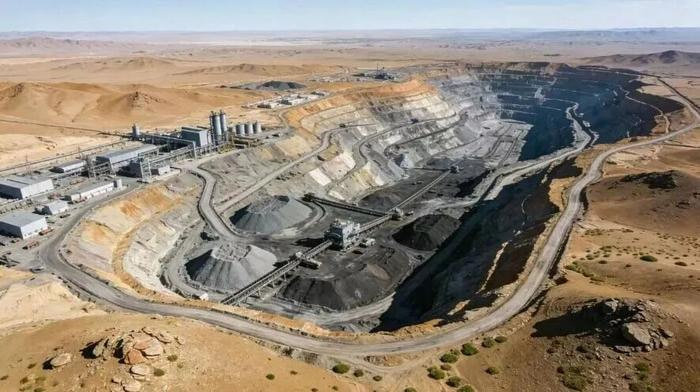
Ulaanbaatar: Mongolia sits on copper, fluorspar, tungsten and rare earth deposits that European industry now says it wants. Officials here have spent three years telling Brussels the same thing. The critical minerals are real, the geology is documented, and every tonne must still cross either Russia or China before it reaches a European port.

That single fact governs the whole relationship. Mongolia is landlocked between the two countries the European Union spends most of its economic security effort trying to depend on less. Rail gauge changes at both borders. Port access on the Chinese side runs through Tianjin, and transit terms are renegotiated periodically. A supply arrangement that reduces exposure to Beijing by routing through Beijing solves nothing on paper, whatever the tonnage.

Brussels knows this. The Commission has advanced strategic partnerships on raw materials with more than a dozen countries, and analysts have argued for two years that Mongolia belongs on the list, building on the Partnership and Cooperation Agreement already in force. The Centre for European Policy Studies published a case for exactly that step in its assessment of where the relationship could go. The logistics question sits unresolved underneath every version of the argument.

One route exists and nobody has costed it properly. Concentrate could move west by rail to Kazakhstan, join the Trans Caspian corridor, cross the Caspian by ferry, then travel through the South Caucasus to the Black Sea. The European Union has pledged three billion euro to that corridor and a further 2.5 billion euro for critical raw materials projects under its Central Asia package. Adding a Mongolian spur would extend the corridor by roughly two thousand kilometres and still requires a Chinese or Russian transit segment at the eastern end.

Processing changes the calculation more than transport does. Shipping raw ore over that distance makes no commercial sense at current prices. Shipping separated oxides or refined metal does, because value per tonne rises by an order of magnitude. Mongolia has almost no separation capacity, and building it demands power, water and chemical inputs that the country imports. Whoever finances the plant also decides where the output goes.

Mongolia’s own doctrine helps European negotiators. Successive governments have pursued what they call the third neighbour policy, deliberately courting partners beyond the two states on their borders. Japan, South Korea and the United States all have agreements. Europe arrives late and with a reputation for slow disbursement, which Mongolian officials mention politely and repeatedly.

The honest European offer is narrow and useful. Technical assistance on resource classification, so deposits become bankable under international reporting standards. Environmental and governance conditions that raise the price Mongolian producers can charge elsewhere. Equity participation through European development finance in one separation facility rather than fourteen memoranda. That package would take five years to show results and would survive a change of government in Ulaanbaatar.

The unhelpful version is already visible in the language. Framing Mongolia as an alternative to Chinese supply invites Beijing to price transit accordingly, and Mongolia absorbs the cost. Framing it as diversification of processing capacity, which is where the actual chokepoint lies, invites less retaliation and delivers more. European officials should pick one framing and stay with it.