August 10, 2026
LATEST
Europe’s Air Quality Improves but WHO Limits LoomTwelve New EU Medicines Win a Green Light from EMAFIFA Agent Rules Must Answer to Europe’s CourtsTachograph Rules Now Reach Vans Crossing Europe’s BordersNature Restoration Plans Come Due as a Hard Deadline NearsBrussels Opens a State Aid Probe Into Spain’s Renewables PayoutBrussels Extends Its Tariff Suspension on US Goods IndefinitelyFarmers Win Stronger Contract Rights Across the EU Supply ChainEurope Finally Locks In Its 348-Satellite Answer to StarlinkPlatform Work Rules Face a National Scramble Before DecemberDuty-Free Parcels Reach the End of the Line for EU ShoppersAfter Nine Years, Europe and Australia Seal a Trade PactBeijing Answers Europe’s Russia Sanctions in KindOne Year On, the EU-Japan Alliance Faces Its First TestEurope’s Chip Ambitions Still Run Through Taiwan’s FabsWhy South Korea Bet Its Research Future on Europe’s ProgrammeEurope and Japan Deepen Their Economic Alliance as Rivals CircleFive Joint Defence Projects Launch Europe’s Military ShieldElectrification Plan Aims to Make Europe First Electro ContinentHorizon Europe Budget Fight Heats Up as Ministers Push BackEurope’s Air Quality Improves but WHO Limits LoomTwelve New EU Medicines Win a Green Light from EMAFIFA Agent Rules Must Answer to Europe’s CourtsTachograph Rules Now Reach Vans Crossing Europe’s BordersNature Restoration Plans Come Due as a Hard Deadline NearsBrussels Opens a State Aid Probe Into Spain’s Renewables PayoutBrussels Extends Its Tariff Suspension on US Goods IndefinitelyFarmers Win Stronger Contract Rights Across the EU Supply ChainEurope Finally Locks In Its 348-Satellite Answer to StarlinkPlatform Work Rules Face a National Scramble Before DecemberDuty-Free Parcels Reach the End of the Line for EU ShoppersAfter Nine Years, Europe and Australia Seal a Trade PactBeijing Answers Europe’s Russia Sanctions in KindOne Year On, the EU-Japan Alliance Faces Its First TestEurope’s Chip Ambitions Still Run Through Taiwan’s FabsWhy South Korea Bet Its Research Future on Europe’s ProgrammeEurope and Japan Deepen Their Economic Alliance as Rivals CircleFive Joint Defence Projects Launch Europe’s Military ShieldElectrification Plan Aims to Make Europe First Electro ContinentHorizon Europe Budget Fight Heats Up as Ministers Push Back
August 10, 2026
LATEST
Europe’s Air Quality Improves but WHO Limits LoomTwelve New EU Medicines Win a Green Light from EMAFIFA Agent Rules Must Answer to Europe’s CourtsTachograph Rules Now Reach Vans Crossing Europe’s BordersNature Restoration Plans Come Due as a Hard Deadline NearsBrussels Opens a State Aid Probe Into Spain’s Renewables PayoutBrussels Extends Its Tariff Suspension on US Goods IndefinitelyFarmers Win Stronger Contract Rights Across the EU Supply ChainEurope Finally Locks In Its 348-Satellite Answer to StarlinkPlatform Work Rules Face a National Scramble Before DecemberDuty-Free Parcels Reach the End of the Line for EU ShoppersAfter Nine Years, Europe and Australia Seal a Trade PactBeijing Answers Europe’s Russia Sanctions in KindOne Year On, the EU-Japan Alliance Faces Its First TestEurope’s Chip Ambitions Still Run Through Taiwan’s FabsWhy South Korea Bet Its Research Future on Europe’s ProgrammeEurope and Japan Deepen Their Economic Alliance as Rivals CircleFive Joint Defence Projects Launch Europe’s Military ShieldElectrification Plan Aims to Make Europe First Electro ContinentHorizon Europe Budget Fight Heats Up as Ministers Push BackEurope’s Air Quality Improves but WHO Limits LoomTwelve New EU Medicines Win a Green Light from EMAFIFA Agent Rules Must Answer to Europe’s CourtsTachograph Rules Now Reach Vans Crossing Europe’s BordersNature Restoration Plans Come Due as a Hard Deadline NearsBrussels Opens a State Aid Probe Into Spain’s Renewables PayoutBrussels Extends Its Tariff Suspension on US Goods IndefinitelyFarmers Win Stronger Contract Rights Across the EU Supply ChainEurope Finally Locks In Its 348-Satellite Answer to StarlinkPlatform Work Rules Face a National Scramble Before DecemberDuty-Free Parcels Reach the End of the Line for EU ShoppersAfter Nine Years, Europe and Australia Seal a Trade PactBeijing Answers Europe’s Russia Sanctions in KindOne Year On, the EU-Japan Alliance Faces Its First TestEurope’s Chip Ambitions Still Run Through Taiwan’s FabsWhy South Korea Bet Its Research Future on Europe’s ProgrammeEurope and Japan Deepen Their Economic Alliance as Rivals CircleFive Joint Defence Projects Launch Europe’s Military ShieldElectrification Plan Aims to Make Europe First Electro ContinentHorizon Europe Budget Fight Heats Up as Ministers Push Back

Dresden’s New Fab Ties Europe’s Chip Future To Taiwan

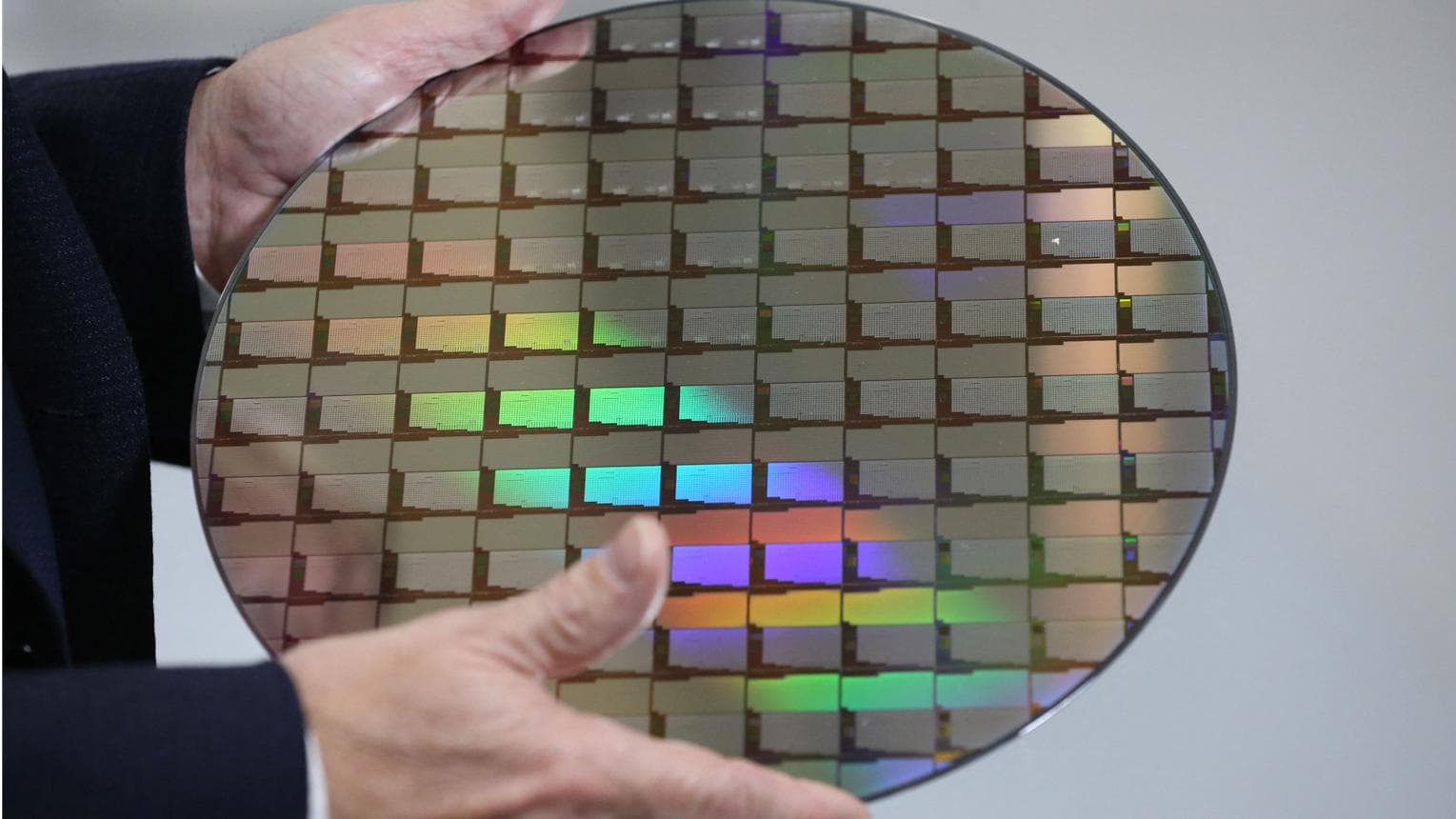
Dresden: On the edge of the Saxon city that has become Germany’s semiconductor heartland, a joint venture led by Taiwan’s TSMC is raising a factory that European policymakers describe, without quite saying so, as an insurance policy. The European Semiconductor Manufacturing Company — TSMC alongside Bosch, Infineon, and NXP — plans to produce 28- and 22-nanometre chips, and later 16- and 12-nanometre parts, by 2027, aimed squarely at the European automotive industry that the chip shortages of the early decade left badly exposed. It is the most concrete thing to emerge from a relationship that runs deeper than either Brussels or Taipei usually advertises.

Semiconductors now account for roughly 23 percent of everything Taiwan sells to the European Union, while Europe remains an important supplier of the high-end machinery and materials that Taiwanese fabs depend on. The interdependence is genuine, but it is also lopsided. By 2026 Taiwan produces close to 90 percent of the world’s most advanced chips, those below seven nanometres, and TSMC’s revenue has climbed past 120 billion dollars on the back of demand for artificial-intelligence processors. The Dresden plant, by contrast, will make mature and mid-range nodes — essential for cars, industrial equipment, and weapons, but several generations behind the frontier that still sits, almost entirely, on a single island in the western Pacific.

That gap defines the strategic problem. Europe’s Chips Act was written to reduce dependence and pull production onshore, yet the most sophisticated manufacturing remains beyond its reach, and the partner best placed to help is itself one of the most geopolitically exposed economies on earth. A blockade or conflict in the Taiwan Strait would not merely interrupt European supply; it would freeze the global economy in ways no stockpile could cushion. Bringing a TSMC line to Saxony hedges the mature-node risk without touching the deeper one.

Around that flagship, a wider European courtship is taking shape. The Czech Republic, Poland, and Slovakia have emerged as energetic partners, building government-backed research centres, talent programmes, and supplier-localisation schemes to bind themselves into Taiwan’s ecosystem. For Taipei, this diplomacy of chips is among its most effective tools, turning industrial indispensability into political relationships with countries that maintain no formal ties. Each fab, each research partnership, deepens a stake in Taiwan’s security that Beijing cannot ignore.

The Union and Taiwan share an uncomfortable position between an American administration tightening its own export rules and a China ready with countermeasures. Neither can fully insulate itself, and both know it. The Dresden venture will not make Europe self-sufficient in silicon, and it was never going to. What it offers is a measure of resilience in the chips that keep European factories running, and a working template for cooperation with a partner Europe needs but cannot defend. For now, that is the realistic ceiling of ambition — and quietly building toward it beats pretending the dependency can be wished away.