August 10, 2026
LATEST
Europe’s Air Quality Improves but WHO Limits LoomTwelve New EU Medicines Win a Green Light from EMAFIFA Agent Rules Must Answer to Europe’s CourtsTachograph Rules Now Reach Vans Crossing Europe’s BordersNature Restoration Plans Come Due as a Hard Deadline NearsBrussels Opens a State Aid Probe Into Spain’s Renewables PayoutBrussels Extends Its Tariff Suspension on US Goods IndefinitelyFarmers Win Stronger Contract Rights Across the EU Supply ChainEurope Finally Locks In Its 348-Satellite Answer to StarlinkPlatform Work Rules Face a National Scramble Before DecemberDuty-Free Parcels Reach the End of the Line for EU ShoppersAfter Nine Years, Europe and Australia Seal a Trade PactBeijing Answers Europe’s Russia Sanctions in KindOne Year On, the EU-Japan Alliance Faces Its First TestEurope’s Chip Ambitions Still Run Through Taiwan’s FabsWhy South Korea Bet Its Research Future on Europe’s ProgrammeEurope and Japan Deepen Their Economic Alliance as Rivals CircleFive Joint Defence Projects Launch Europe’s Military ShieldElectrification Plan Aims to Make Europe First Electro ContinentHorizon Europe Budget Fight Heats Up as Ministers Push BackEurope’s Air Quality Improves but WHO Limits LoomTwelve New EU Medicines Win a Green Light from EMAFIFA Agent Rules Must Answer to Europe’s CourtsTachograph Rules Now Reach Vans Crossing Europe’s BordersNature Restoration Plans Come Due as a Hard Deadline NearsBrussels Opens a State Aid Probe Into Spain’s Renewables PayoutBrussels Extends Its Tariff Suspension on US Goods IndefinitelyFarmers Win Stronger Contract Rights Across the EU Supply ChainEurope Finally Locks In Its 348-Satellite Answer to StarlinkPlatform Work Rules Face a National Scramble Before DecemberDuty-Free Parcels Reach the End of the Line for EU ShoppersAfter Nine Years, Europe and Australia Seal a Trade PactBeijing Answers Europe’s Russia Sanctions in KindOne Year On, the EU-Japan Alliance Faces Its First TestEurope’s Chip Ambitions Still Run Through Taiwan’s FabsWhy South Korea Bet Its Research Future on Europe’s ProgrammeEurope and Japan Deepen Their Economic Alliance as Rivals CircleFive Joint Defence Projects Launch Europe’s Military ShieldElectrification Plan Aims to Make Europe First Electro ContinentHorizon Europe Budget Fight Heats Up as Ministers Push Back
August 10, 2026
LATEST
Europe’s Air Quality Improves but WHO Limits LoomTwelve New EU Medicines Win a Green Light from EMAFIFA Agent Rules Must Answer to Europe’s CourtsTachograph Rules Now Reach Vans Crossing Europe’s BordersNature Restoration Plans Come Due as a Hard Deadline NearsBrussels Opens a State Aid Probe Into Spain’s Renewables PayoutBrussels Extends Its Tariff Suspension on US Goods IndefinitelyFarmers Win Stronger Contract Rights Across the EU Supply ChainEurope Finally Locks In Its 348-Satellite Answer to StarlinkPlatform Work Rules Face a National Scramble Before DecemberDuty-Free Parcels Reach the End of the Line for EU ShoppersAfter Nine Years, Europe and Australia Seal a Trade PactBeijing Answers Europe’s Russia Sanctions in KindOne Year On, the EU-Japan Alliance Faces Its First TestEurope’s Chip Ambitions Still Run Through Taiwan’s FabsWhy South Korea Bet Its Research Future on Europe’s ProgrammeEurope and Japan Deepen Their Economic Alliance as Rivals CircleFive Joint Defence Projects Launch Europe’s Military ShieldElectrification Plan Aims to Make Europe First Electro ContinentHorizon Europe Budget Fight Heats Up as Ministers Push BackEurope’s Air Quality Improves but WHO Limits LoomTwelve New EU Medicines Win a Green Light from EMAFIFA Agent Rules Must Answer to Europe’s CourtsTachograph Rules Now Reach Vans Crossing Europe’s BordersNature Restoration Plans Come Due as a Hard Deadline NearsBrussels Opens a State Aid Probe Into Spain’s Renewables PayoutBrussels Extends Its Tariff Suspension on US Goods IndefinitelyFarmers Win Stronger Contract Rights Across the EU Supply ChainEurope Finally Locks In Its 348-Satellite Answer to StarlinkPlatform Work Rules Face a National Scramble Before DecemberDuty-Free Parcels Reach the End of the Line for EU ShoppersAfter Nine Years, Europe and Australia Seal a Trade PactBeijing Answers Europe’s Russia Sanctions in KindOne Year On, the EU-Japan Alliance Faces Its First TestEurope’s Chip Ambitions Still Run Through Taiwan’s FabsWhy South Korea Bet Its Research Future on Europe’s ProgrammeEurope and Japan Deepen Their Economic Alliance as Rivals CircleFive Joint Defence Projects Launch Europe’s Military ShieldElectrification Plan Aims to Make Europe First Electro ContinentHorizon Europe Budget Fight Heats Up as Ministers Push Back

Europe Tightens Its Steel Defences Against Chinese Oversupply

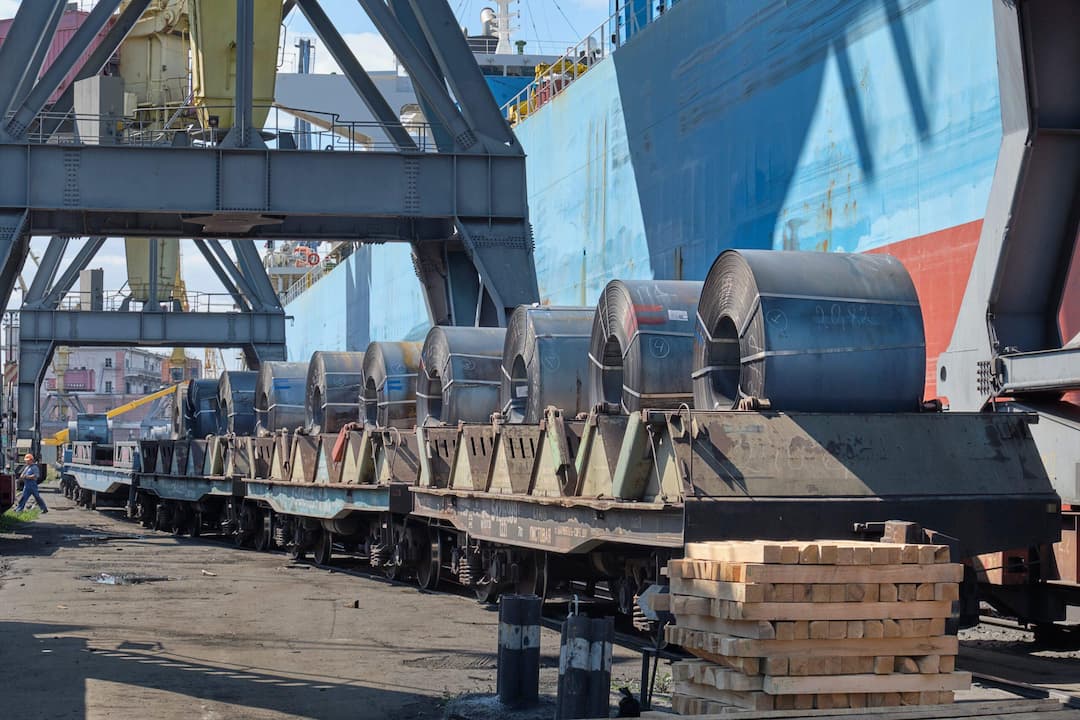
Brussels: The European Union has quietly delivered one of its sharpest moves against Chinese steel imports in years, and it did so without a single headline-grabbing summit. From July, Brussels slashed the volume of steel that can enter the bloc duty free and sharply raised the penalty on everything above that line.

The new safeguard cuts tariff-free steel quotas by roughly 47 percent, from about 33 million tonnes to 18.3 million. Any steel arriving above the quota now faces a 50 percent duty, double the previous 25 percent, and the regime is meant to run until 2031. Officials frame the move as protection for a European industry that employs hundreds of thousands and anchors supply chains from cars to wind turbines.

China sits at the centre of the calculation, even if the Commission rarely names it so bluntly. Chinese mills produce more steel than their domestic market can absorb, and the surplus has fanned out across global markets at prices European producers say they cannot match. The Commission’s own language of managing China’s export surge tells the story plainly enough.

Member states pushed for the tightening after years of complaints that the earlier quota regime leaked. Producers in Italy and Spain, alongside Germany’s giant mills, argued that generous duty-free volumes had become a backdoor for the very imports the safeguard was meant to curb. The Commission listened, and the new numbers reflect a bloc that has run out of patience with half measures.

The deeper question is whether tariffs alone can hold. Europe learned from its electric-vehicle fight that duties reshape trade flows without ending them. Chinese producers reroute, absorb costs, or shift finished goods through third countries, and the surge finds another door. A steel wall high enough to matter also raises input costs for the European manufacturers Brussels wants to protect.

Trade analysts caution that enforcement will decide the outcome. A review of the EV tariffs found that duties cut the market share of Chinese-made cars while Chinese brands kept growing through local production and clever routing. Steel could follow the same script unless customs authorities track origin closely and close the transhipment gaps.

That tension defines the whole de-risking project. The bloc insists it is reducing dangerous dependencies, not decoupling from its largest trading partner. Yet each defensive measure narrows the space for the cooperative relationship European exporters still depend on, and Beijing rarely lets a trade barrier pass without a response of its own.

For now the safeguard buys European mills time rather than a settlement. Whether they use it to modernise and decarbonise, or simply to survive another cycle of oversupply, will decide if this July’s measure looks like strategy or merely delay. The Commission has chosen its ground. The harder work of making European steel competitive on its own terms still lies ahead.