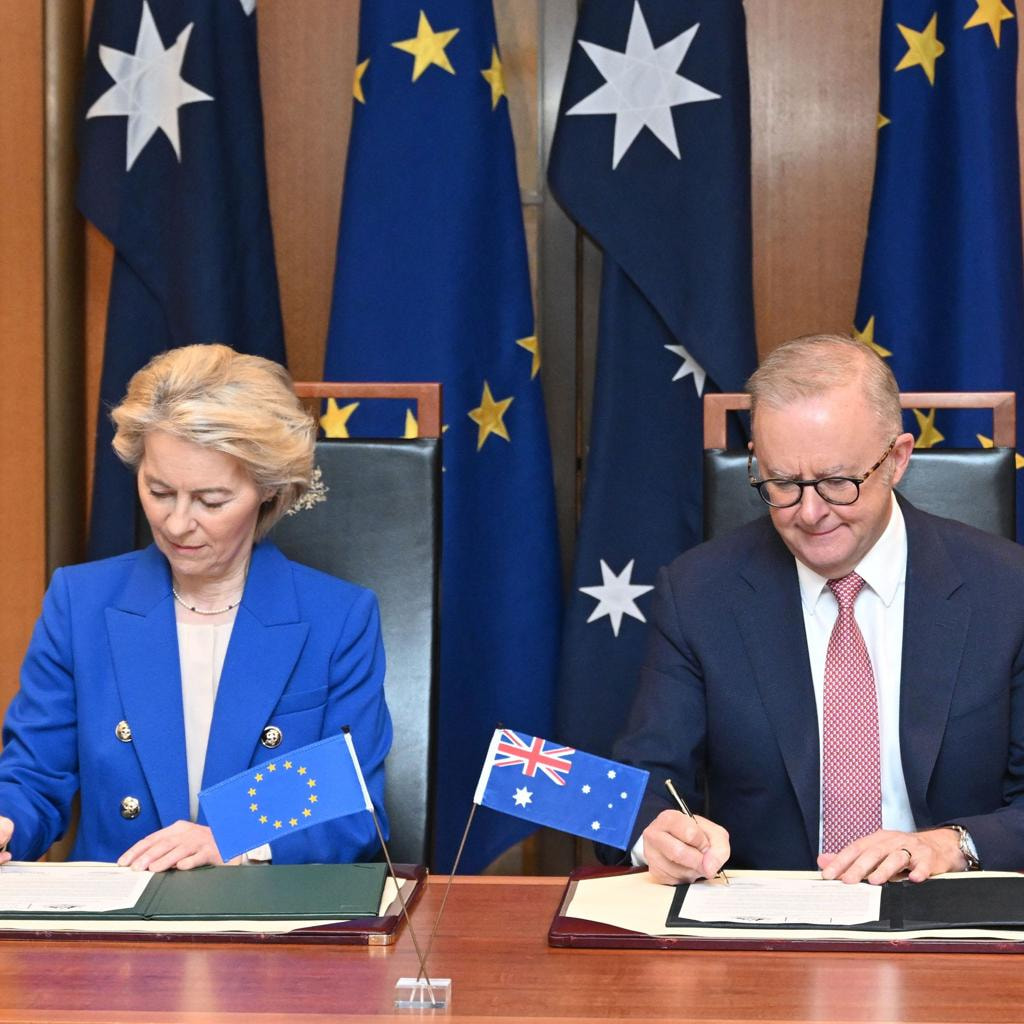
Singapore: With little of the fanfare that surrounds tariff deals, the European Union switched on a new kind of trade agreement on 1 February 2026. The EU-Singapore Digital Trade Agreement, the bloc’s first-ever standalone pact of its type, entered into force, setting rules for the data flows, electronic contracts and online transactions that now underpin much of modern commerce. There were no quotas to haggle over and no customs schedules to phase in, because the agreement governs trade that crosses borders as code rather than cargo.
The choice of partner is telling. Singapore was the first Southeast Asian country to sign a free trade agreement with the EU, and it now becomes the first to anchor a digital one. The negotiations, launched in mid-2023 and concluded in 2024 before signature in May 2025, produced a text that bans unjustified barriers to digital trade, guarantees the validity of electronic signatures and contracts, and commits both sides to transparent rules that make cross-border transactions more predictable for businesses and more trustworthy for consumers.
What the agreement deliberately leaves flexible is as important as what it fixes. Rather than dictating a single model for data governance, it sets a framework that other partners can plug into, which is why Brussels frames it as a template as much as a bilateral deal. Singapore’s role as a regional hub gives the text reach far beyond its small domestic market, offering European firms a tested set of digital rules they hope to extend across the wider ASEAN bloc.
That ambition reflects a shift in how the EU thinks about trade power. Tariffs are falling in relevance for an economy that increasingly sells services, software and cloud capacity, and the rules that govern data have become the new battleground. By striking the first standalone digital agreement with a trusted Asian partner, the EU is trying to shape those rules before less liberal models, whether Beijing’s data-localisation approach or a fragmented patchwork of national regimes, set the terms for it.
For European companies, the practical gains are immediate if unglamorous: legal certainty that data can move, that e-signatures will hold up, and that arbitrary localisation demands will not appear overnight. For Singapore, the deal burnishes its status as the digital gateway between Europe and Asia. And for the EU, the quiet entry into force is a proof of concept. If the Singapore model travels, as Brussels intends it to, the bloc’s most consequential trade deals of the coming decade may be measured not in tonnes or tariffs but in the freedom of data to cross a border.