August 7, 2026
LATEST
Europe Locks Chinese Medical Devices Out of Its Public TendersHow Far Can Europe and Japan Take Their New Security Pact NowSeoul’s Gamble on Europe’s Research Money Is Starting to Pay OffEurope Freezes Its Retaliatory Tariffs on the US IndefinitelyAir Passenger Rights Get Their First Big Rewrite in 20 YearsFive Joint Defence Projects Win Brussels Backing and Shared CashTobacco Tax Overhaul Stalls as Governments Block UnanimityCritical Medicines Act Heads for Final Adoption This AutumnMoldova Accession Reaches Its Foreign-Policy ChapterMercosur Tariffs Fall as Europe’s Farmers Watch the GaugesWhy Europe’s Digital Fairness Act Worries Online RetailersErasmus+ Faces a Budget Fight Before Its 2028 RelaunchMedia Freedom Rules Turn One as Enforcement LagsPlatform Work Rules Push Member States Toward a December ReckoningSingle Ticket Plan Would Let One Booking Cover Europe by RailHungary Races an August Deadline to Unlock Its Recovery FundsCapitals Race a September Deadline to Restore NatureEuro-Zone Inflation Nudges Back Up as Energy Bills ClimbRed Bull Case Tests a New Frontier in EU AntitrustNew EU Packaging Rules Reach Shoppers as August Deadline HitsEurope Locks Chinese Medical Devices Out of Its Public TendersHow Far Can Europe and Japan Take Their New Security Pact NowSeoul’s Gamble on Europe’s Research Money Is Starting to Pay OffEurope Freezes Its Retaliatory Tariffs on the US IndefinitelyAir Passenger Rights Get Their First Big Rewrite in 20 YearsFive Joint Defence Projects Win Brussels Backing and Shared CashTobacco Tax Overhaul Stalls as Governments Block UnanimityCritical Medicines Act Heads for Final Adoption This AutumnMoldova Accession Reaches Its Foreign-Policy ChapterMercosur Tariffs Fall as Europe’s Farmers Watch the GaugesWhy Europe’s Digital Fairness Act Worries Online RetailersErasmus+ Faces a Budget Fight Before Its 2028 RelaunchMedia Freedom Rules Turn One as Enforcement LagsPlatform Work Rules Push Member States Toward a December ReckoningSingle Ticket Plan Would Let One Booking Cover Europe by RailHungary Races an August Deadline to Unlock Its Recovery FundsCapitals Race a September Deadline to Restore NatureEuro-Zone Inflation Nudges Back Up as Energy Bills ClimbRed Bull Case Tests a New Frontier in EU AntitrustNew EU Packaging Rules Reach Shoppers as August Deadline Hits
August 7, 2026
LATEST
Europe Locks Chinese Medical Devices Out of Its Public TendersHow Far Can Europe and Japan Take Their New Security Pact NowSeoul’s Gamble on Europe’s Research Money Is Starting to Pay OffEurope Freezes Its Retaliatory Tariffs on the US IndefinitelyAir Passenger Rights Get Their First Big Rewrite in 20 YearsFive Joint Defence Projects Win Brussels Backing and Shared CashTobacco Tax Overhaul Stalls as Governments Block UnanimityCritical Medicines Act Heads for Final Adoption This AutumnMoldova Accession Reaches Its Foreign-Policy ChapterMercosur Tariffs Fall as Europe’s Farmers Watch the GaugesWhy Europe’s Digital Fairness Act Worries Online RetailersErasmus+ Faces a Budget Fight Before Its 2028 RelaunchMedia Freedom Rules Turn One as Enforcement LagsPlatform Work Rules Push Member States Toward a December ReckoningSingle Ticket Plan Would Let One Booking Cover Europe by RailHungary Races an August Deadline to Unlock Its Recovery FundsCapitals Race a September Deadline to Restore NatureEuro-Zone Inflation Nudges Back Up as Energy Bills ClimbRed Bull Case Tests a New Frontier in EU AntitrustNew EU Packaging Rules Reach Shoppers as August Deadline HitsEurope Locks Chinese Medical Devices Out of Its Public TendersHow Far Can Europe and Japan Take Their New Security Pact NowSeoul’s Gamble on Europe’s Research Money Is Starting to Pay OffEurope Freezes Its Retaliatory Tariffs on the US IndefinitelyAir Passenger Rights Get Their First Big Rewrite in 20 YearsFive Joint Defence Projects Win Brussels Backing and Shared CashTobacco Tax Overhaul Stalls as Governments Block UnanimityCritical Medicines Act Heads for Final Adoption This AutumnMoldova Accession Reaches Its Foreign-Policy ChapterMercosur Tariffs Fall as Europe’s Farmers Watch the GaugesWhy Europe’s Digital Fairness Act Worries Online RetailersErasmus+ Faces a Budget Fight Before Its 2028 RelaunchMedia Freedom Rules Turn One as Enforcement LagsPlatform Work Rules Push Member States Toward a December ReckoningSingle Ticket Plan Would Let One Booking Cover Europe by RailHungary Races an August Deadline to Unlock Its Recovery FundsCapitals Race a September Deadline to Restore NatureEuro-Zone Inflation Nudges Back Up as Energy Bills ClimbRed Bull Case Tests a New Frontier in EU AntitrustNew EU Packaging Rules Reach Shoppers as August Deadline Hits

Europe’s Sudan Aid Pledge Runs Into a Harder War

Berlin: The pledges came fast and they came large. Meeting in Berlin for the third international conference on Sudan, the European Union and its member states promised more than 811 million euros to a war now entering its fourth year, the strongest signal yet that Europe intends to stay engaged in a crisis much of the world has stopped watching.

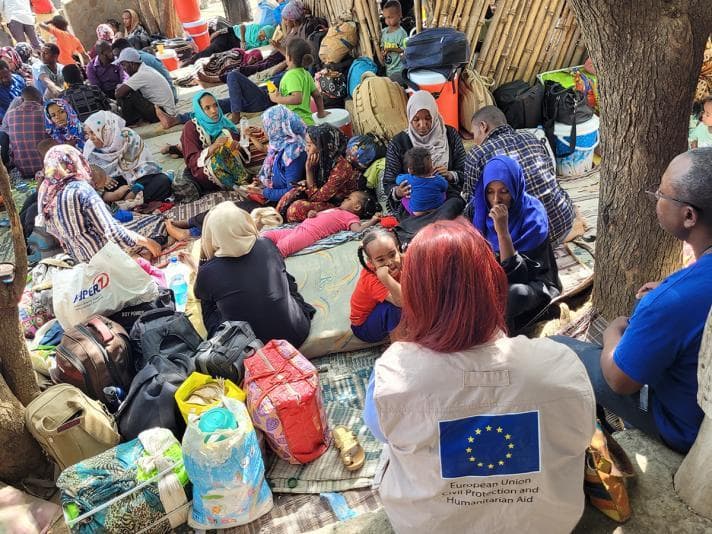
The European Commission accounts for 360.8 million euros of that total. It has earmarked 215.5 million for people trapped inside Sudan and 145.3 million for the refugees who have poured across borders into Chad, South Sudan, Ethiopia, Uganda, Egypt, Libya and the Central African Republic. The money will buy food, medicine, clean water, shelter and schooling, the basics that collapse first when a state tears itself apart.

The scale reflects the emergency. Fighting between the Sudanese army and the Rapid Support Forces has driven the largest displacement crisis on the planet, emptying cities and pushing several regions to the edge of famine. Aid agencies describe a war that has quietly outrun the world’s attention even as its human toll keeps climbing.

Brussels frames the pledge as part of a broader effort. Its humanitarian budget for 2026 reaches 1.9 billion euros, and the Commission has promised to route at least a quarter of that funding through local organisations, which often reach communities that international convoys cannot.

Money, however, buys little where lorries cannot pass. Both warring sides have blocked convoys, taxed relief goods and turned starvation into a weapon, and no European cheque changes that on its own. The gap between a pledge announced in Berlin and a sack of grain delivered in Darfur remains the real measure of this response, and it is a gap that diplomacy, not generosity, must close.

The Berlin conference also exposed a quieter European worry. Officials in several capitals fear that a collapsing Sudan will push fresh waves of refugees toward Egypt and Libya, and from there toward the Mediterranean, tying a distant African war directly to Europe’s own migration politics. Funding the response near its source, they calculate, costs less than managing its consequences on European shores.

That is the uncomfortable lesson beneath the headline figure. Europe can fund the relief effort, and it has, but it cannot deliver a ceasefire from a conference hall in Germany. Until the guns quiet, the 811 million euros will treat the symptoms of Sudan’s catastrophe while its cause burns on, a reminder that humanitarian aid is a bandage, never a cure.