August 10, 2026
LATEST
Europe’s Air Quality Improves but WHO Limits LoomTwelve New EU Medicines Win a Green Light from EMAFIFA Agent Rules Must Answer to Europe’s CourtsTachograph Rules Now Reach Vans Crossing Europe’s BordersNature Restoration Plans Come Due as a Hard Deadline NearsBrussels Opens a State Aid Probe Into Spain’s Renewables PayoutBrussels Extends Its Tariff Suspension on US Goods IndefinitelyFarmers Win Stronger Contract Rights Across the EU Supply ChainEurope Finally Locks In Its 348-Satellite Answer to StarlinkPlatform Work Rules Face a National Scramble Before DecemberDuty-Free Parcels Reach the End of the Line for EU ShoppersAfter Nine Years, Europe and Australia Seal a Trade PactBeijing Answers Europe’s Russia Sanctions in KindOne Year On, the EU-Japan Alliance Faces Its First TestEurope’s Chip Ambitions Still Run Through Taiwan’s FabsWhy South Korea Bet Its Research Future on Europe’s ProgrammeEurope and Japan Deepen Their Economic Alliance as Rivals CircleFive Joint Defence Projects Launch Europe’s Military ShieldElectrification Plan Aims to Make Europe First Electro ContinentHorizon Europe Budget Fight Heats Up as Ministers Push BackEurope’s Air Quality Improves but WHO Limits LoomTwelve New EU Medicines Win a Green Light from EMAFIFA Agent Rules Must Answer to Europe’s CourtsTachograph Rules Now Reach Vans Crossing Europe’s BordersNature Restoration Plans Come Due as a Hard Deadline NearsBrussels Opens a State Aid Probe Into Spain’s Renewables PayoutBrussels Extends Its Tariff Suspension on US Goods IndefinitelyFarmers Win Stronger Contract Rights Across the EU Supply ChainEurope Finally Locks In Its 348-Satellite Answer to StarlinkPlatform Work Rules Face a National Scramble Before DecemberDuty-Free Parcels Reach the End of the Line for EU ShoppersAfter Nine Years, Europe and Australia Seal a Trade PactBeijing Answers Europe’s Russia Sanctions in KindOne Year On, the EU-Japan Alliance Faces Its First TestEurope’s Chip Ambitions Still Run Through Taiwan’s FabsWhy South Korea Bet Its Research Future on Europe’s ProgrammeEurope and Japan Deepen Their Economic Alliance as Rivals CircleFive Joint Defence Projects Launch Europe’s Military ShieldElectrification Plan Aims to Make Europe First Electro ContinentHorizon Europe Budget Fight Heats Up as Ministers Push Back
August 10, 2026
LATEST
Europe’s Air Quality Improves but WHO Limits LoomTwelve New EU Medicines Win a Green Light from EMAFIFA Agent Rules Must Answer to Europe’s CourtsTachograph Rules Now Reach Vans Crossing Europe’s BordersNature Restoration Plans Come Due as a Hard Deadline NearsBrussels Opens a State Aid Probe Into Spain’s Renewables PayoutBrussels Extends Its Tariff Suspension on US Goods IndefinitelyFarmers Win Stronger Contract Rights Across the EU Supply ChainEurope Finally Locks In Its 348-Satellite Answer to StarlinkPlatform Work Rules Face a National Scramble Before DecemberDuty-Free Parcels Reach the End of the Line for EU ShoppersAfter Nine Years, Europe and Australia Seal a Trade PactBeijing Answers Europe’s Russia Sanctions in KindOne Year On, the EU-Japan Alliance Faces Its First TestEurope’s Chip Ambitions Still Run Through Taiwan’s FabsWhy South Korea Bet Its Research Future on Europe’s ProgrammeEurope and Japan Deepen Their Economic Alliance as Rivals CircleFive Joint Defence Projects Launch Europe’s Military ShieldElectrification Plan Aims to Make Europe First Electro ContinentHorizon Europe Budget Fight Heats Up as Ministers Push BackEurope’s Air Quality Improves but WHO Limits LoomTwelve New EU Medicines Win a Green Light from EMAFIFA Agent Rules Must Answer to Europe’s CourtsTachograph Rules Now Reach Vans Crossing Europe’s BordersNature Restoration Plans Come Due as a Hard Deadline NearsBrussels Opens a State Aid Probe Into Spain’s Renewables PayoutBrussels Extends Its Tariff Suspension on US Goods IndefinitelyFarmers Win Stronger Contract Rights Across the EU Supply ChainEurope Finally Locks In Its 348-Satellite Answer to StarlinkPlatform Work Rules Face a National Scramble Before DecemberDuty-Free Parcels Reach the End of the Line for EU ShoppersAfter Nine Years, Europe and Australia Seal a Trade PactBeijing Answers Europe’s Russia Sanctions in KindOne Year On, the EU-Japan Alliance Faces Its First TestEurope’s Chip Ambitions Still Run Through Taiwan’s FabsWhy South Korea Bet Its Research Future on Europe’s ProgrammeEurope and Japan Deepen Their Economic Alliance as Rivals CircleFive Joint Defence Projects Launch Europe’s Military ShieldElectrification Plan Aims to Make Europe First Electro ContinentHorizon Europe Budget Fight Heats Up as Ministers Push Back

Japan And Europe Knit Their Chip And Quantum Agendas Together

Tokyo: When officials from the European Commission and Japan’s digital ministry closed the fourth meeting of their Digital Partnership Council in early May, they produced the kind of document that rarely makes headlines and yet quietly redraws the map of technological power. The joint statement committed the two sides to deeper work on semiconductors, artificial intelligence, quantum computing, high-performance computing and the unglamorous plumbing of submarine cables and Arctic connectivity. None of it is a treaty. All of it is a hedge.

The logic is easy to miss because it is defensive rather than triumphant. Neither Brussels nor Tokyo can match the scale of American hyperscalers or the manufacturing depth that China has assembled in mature chips and rare-earth processing. What they can do is pool standards. By aligning rules on data flows, digital identity and the transparency of content-moderation systems, the European Union and Japan are trying to ensure that the technical norms of the coming decade are written by democracies that already trust each other’s regulators, rather than imposed by whichever government controls the largest market.

That ambition runs into an awkward asymmetry. The Union legislates first and exports its rules afterward; its General Data Protection Regulation and Digital Services Act have become reference points far beyond Europe. Japan tends to prefer industrial coordination over sweeping statute, nurturing national champions and letting practice settle before law hardens. The partnership therefore asks each side to borrow from a tradition it does not naturally inhabit. Europe is learning to talk about supply-chain resilience and production capacity in the language of economic security; Japan is being drawn into conversations about platform accountability and fundamental rights that its own parliament has approached cautiously.

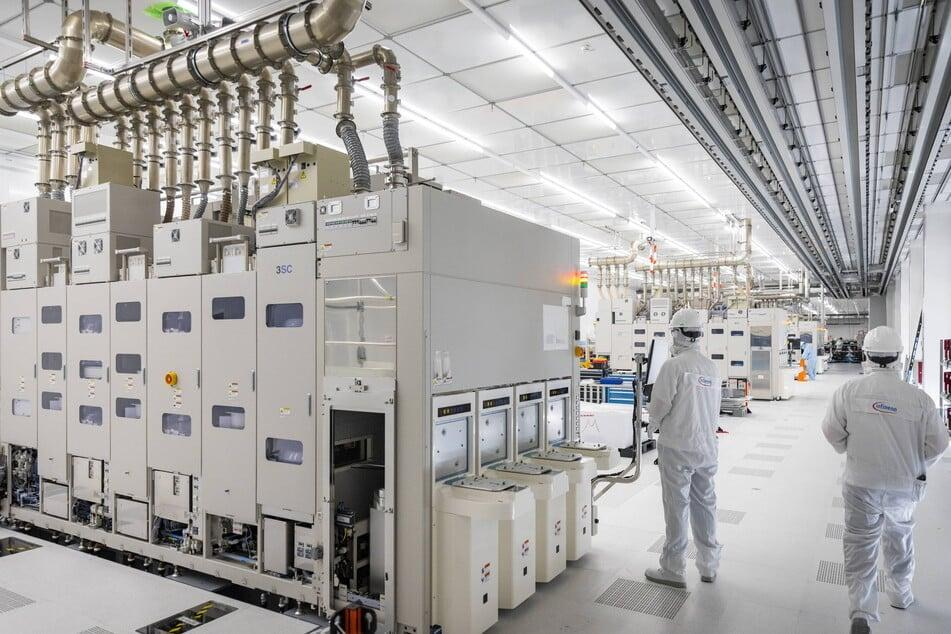
Semiconductors are where the rhetoric meets the hardest test. Europe’s chip ambitions still depend heavily on a single advanced lithography supplier and on fabrication that mostly happens in Asia. Japan retains world-class strength in materials, equipment and packaging but has watched its own foundry base erode for years. A genuine partnership would mean joint research that flows in both directions, shared early access to scarce tools, and a willingness to coordinate on export controls even when a lucrative contract argues otherwise. So far the commitments are about pilot projects and policy dialogues, not about the painful trade-offs that real interdependence requires.

The connectivity agenda may prove more consequential than the headline technologies. Agreements on submarine cables and Arctic routes sound technical, yet they decide whose infrastructure carries the world’s data and whose security services can inspect it. By cooperating here, Brussels and Tokyo are making a strategic statement about routing critical traffic through trusted hands. It is the digital equivalent of choosing which ports a navy can use, and it will matter long after the current excitement about generative models has faded.

What should temper any enthusiasm is the gap between communique and capability. The Union has signed digital partnerships with several Indo-Pacific governments, and each arrives wrapped in similar promises about interoperability and resilience. Turning them into shared laboratories, common procurement and reciprocal market access demands money, institutional patience and a tolerance for friction that summit statements cannot supply. The danger is a thickening file of agreements that flatter both governments while leaving the underlying dependencies untouched.

Still, the direction is deliberate, and it reflects a sober reading of the decade ahead. Europe and Japan have concluded, separately and now together, that no middle power secures its technological future alone. The partnership will be judged not by the warmth of its declarations but by whether a European researcher and a Japanese engineer can, five years from now, build something neither could have built apart. That is a modest test. It is also the only one that counts.