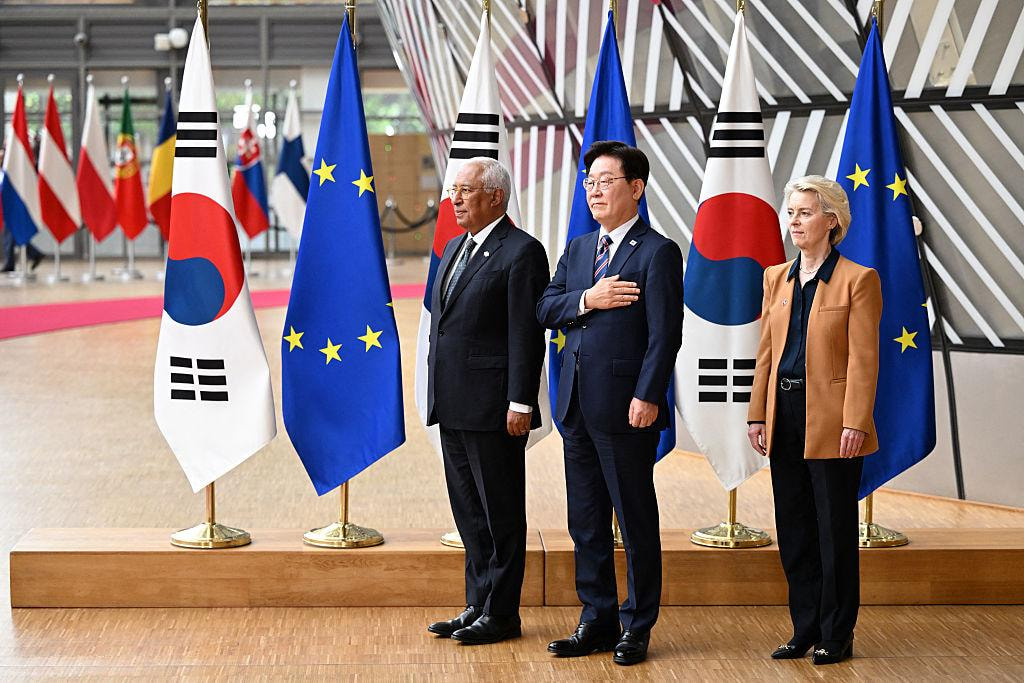
Tokyo: The Japan defence partnership that the European Union signed in November 2024 has a framework, a political mandate and a growing agenda, yet it still lacks the legal tool that would let both sides share classified material. That tool is the Agreement on the Security of Information, which analysts describe as planned and essential for deeper cooperation. Without it, the Japan defence partnership risks staying a diplomatic statement rather than an operational link.
The first signs of ambition for the Japan defence partnership are visible. EU and Japanese foreign ministers held strategic contacts in March 2026, including a meeting in Tokyo and a session on the margins of the G7, according to Danish and Japanese government listings. Their discussions covered the Indo-Pacific, Ukraine and the Middle East. These meetings keep Brussels and Tokyo aligned on rules-based order, but listings of this kind do not describe any decision on defence industry.
An analysis published by EDR Magazine, written by two advisers at FGS Global, argues that the Union cannot yet engage Japan as a defence industrial partner at the speed and scale the moment requires. It proposes fast-track mechanisms for trusted non-EU partners to join specific European defence projects, and it names missile defence, unmanned systems and maritime surveillance as areas for co-development. This is an opinion piece, not an official plan, so readers should treat the proposals as arguments.
Japan’s own direction supports the case for a stronger Japan defence partnership. The analysis notes that Prime Minister Sanae Takaichi’s party won a two-thirds majority in the lower house in February 2026, that Japan reached its target of 2 percent of GDP for defence spending ahead of schedule, and that Tokyo is revising its core security documents by the end of 2026. A government with that mandate can make long industrial commitments, which makes the Japan defence partnership more credible for European planners.
Obstacles are real. European producers such as Airbus, Leonardo and Thales will resist sharing work that they regard as their own, and technology transfer rules differ on both sides. Japan’s pacifist constitution, in particular Article 9, shapes how it can export equipment. The same analysis points to joint development of the sixth-generation GCAP fighter, due by 2035, as proof that Tokyo already works with European partners on complex programmes.
For the EU, the diplomatic case is clear. Defence ties with Japan show that European security policy reaches beyond the continent, and they help to balance an uncertain relationship with Washington. Yet an agreement on information security would be the first step, because industrial projects involve sensitive data that governments will not share without legal protection.
Three markers will show progress. The first is a negotiating mandate for the information security agreement, the second is a list of joint projects open to Japanese firms, and the third is the next strategic dialogue. If these appear, the Japan defence partnership will move from declaration to delivery; if not, it will remain an agenda waiting for its legal foundation.