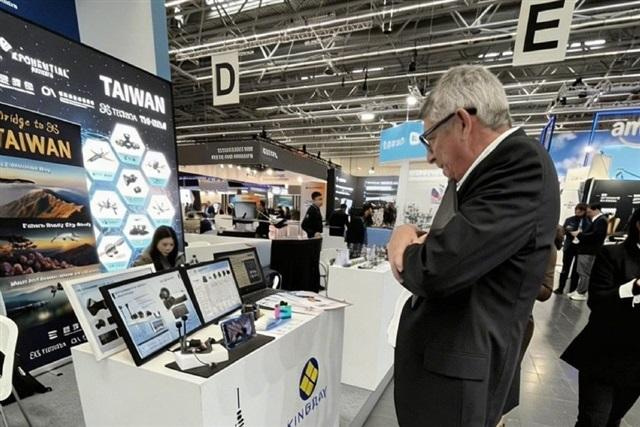
Berlin: Taiwan used the 25th Berlin Security Conference to ask Europe for a new industrial bargain, and the phrase it chose was Made with Taiwan. Deputy Foreign Minister François Wu made the pitch on Wednesday 4 November 2026 at the gathering, which ran from 3 to 4 November and focused on European defence capabilities, Russian threats and the war in Ukraine.
Wu argued that Europe should move beyond buying goods labelled Made in Taiwan and instead pair European research and design strengths with Taiwanese manufacturing capacity. He said Taiwan’s semiconductor and manufacturing base could lift European competitiveness and serve the economic and security interests of both sides. He also called Taiwan an important democratic partner in Asia.
The Made with Taiwan idea lands in a Europe that already talks about economic security every week. Governments worry about dependence on a single supplier for chips and critical materials, and they look for partners who can add capacity without adding coercion risk. Wu spoke directly to that worry. He said Taiwan has no geopolitical ambitions and would not use economic ties as a pressure tool, and he contrasted this with what he described as China weaponising economic relations.
The setting was deliberate. Wu spoke at a side event chaired by retired German Major General Reinhard Wolski, and the discussion covered China’s security threat to Taiwan, Taiwan’s defence resilience and cooperation between Taiwan and Europe. Wu told Taiwan’s national news agency that he has attended the conference for 11 years, which shows how patiently Taipei builds its European network.
Still, the pitch faces limits that the speech did not resolve. The reports name no EU institution, no European government and no investment figure, so the Made with Taiwan offer remains a concept rather than a programme. European capitals also keep to their one China policies, and they weigh every step with Taiwan against their trade and diplomatic ties with Beijing. Any Made with Taiwan partnership would need to fit inside those limits, which favours industrial and research links over political gestures.
The strongest argument for engagement is practical. Europe designs advanced technology but depends on outside manufacturing for the most advanced chips, and Taiwanese firms already operate in Germany, including the TSMC joint venture in Dresden. Deeper Made with Taiwan cooperation in research, design and critical infrastructure would reduce risk without changing diplomatic positions.
The strongest argument for caution is political. Beijing reads every European overture to Taipei closely, and Brussels must decide whether closer industrial ties are worth that friction. For now, Made with Taiwan gives European officials an easy phrase and a hard question. Economic security policy in 2026 will show whether the Union answers with concrete projects or with polite interest.