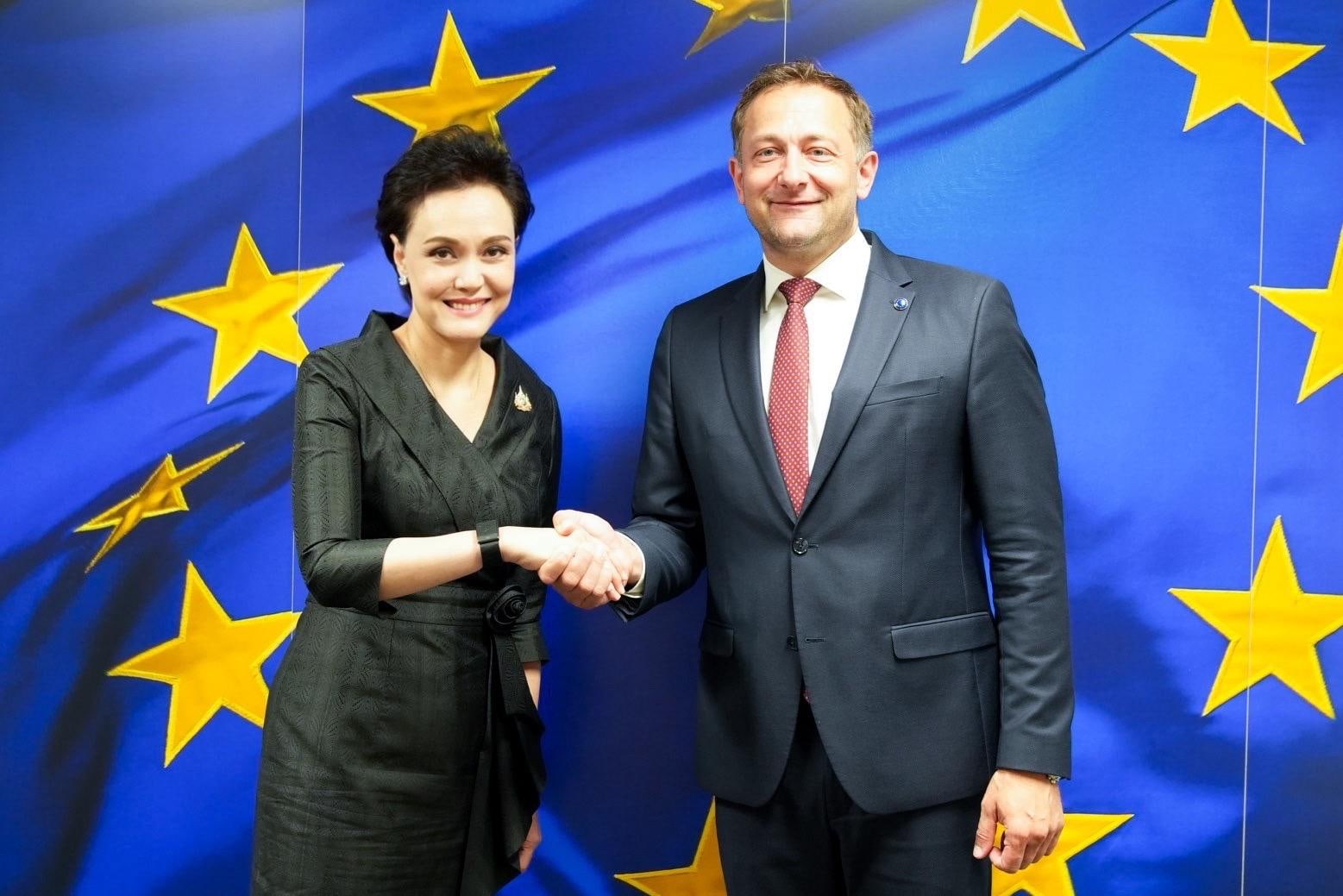
Kuala Lumpur: Malaysia EU trade talks now have a target date, and it is June 2027. Investment, Trade and Industry Minister Johari Abdul Ghani said on 13 October that negotiators should finish the free trade agreement by then, while admitting that a few issues remain unresolved. He spoke at the third EU-Malaysia Business Day, which drew about 700 people to the Malaysian capital ahead of the Selangor International Business Summit.
The timetable matters because it sets a public benchmark for both capitals. Business voices quoted in regional media have suggested the deal could slip towards late 2027, so the minister’s June goal is the more ambitious reading. He did not name the open chapters, which leaves observers guessing where the final bargaining will take place during the Malaysia EU trade talks.
Jozef Síkela, the European Commissioner for International Partnerships, framed the Malaysia EU trade talks as a partnership between two sides that share a commitment to multilateralism, the international rule of law and free trade. His line that the EU wants to “partner, not plunder” was aimed at an audience that has grown wary of one-sided resource deals. The message carries weight in Kuala Lumpur, where officials want investment that moves the economy towards higher-value work.
Semiconductors give the Malaysia EU trade talks their strongest commercial logic. Síkela noted that Malaysia handles about 13 percent of global chip assembly, testing and packaging and accounts for over 7 percent of semiconductor trade. For European manufacturers worried about supply chains, a predictable route to those services is worth real money. Malaysia, for its part, wants European capital and know-how for the more advanced stages of the value chain.
Energy and infrastructure sit beside chips on the agenda. Síkela pointed to renewable energy, digitalisation and infrastructure, including green ports and cross-border electricity systems, as areas where European finance can help. Johari added that foreign labour will remain available mainly for what he called 3D jobs, meaning dirty, dangerous and difficult work, a signal that Malaysian labour policy is moving in step with its trade ambitions.
Malaysia also joins a crowded field of Southeast Asian partners. Indonesia, the Philippines and Thailand are all negotiating with Brussels, and each deal sets a reference point that the others will watch. A balanced Malaysia EU trade agreement would let European firms compete on equal terms with rivals that already enjoy preferential access across the region.
For now, the Malaysia EU trade talks depend on political will more than technical drafting. If both sides hold to June 2027, the text would then enter the EU’s ratification process, and the debate would turn from schedules to what the tariff cuts deliver for chipmakers, exporters and workers on both sides.