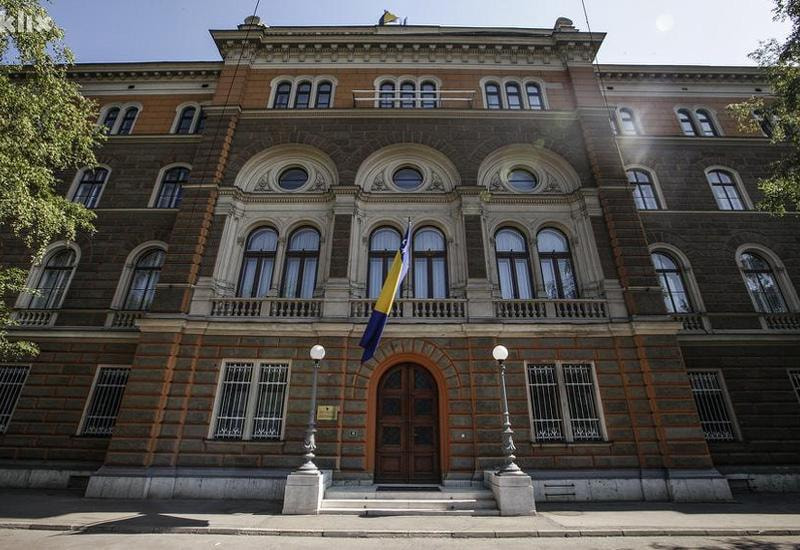
Sarajevo: Bosnia EU accession has stalled again, and the general election held on 4 October did little to change the picture. Turnout reached about 42 percent, roughly eight points below 2022 and the lowest ever recorded, which tells Brussels that many voters no longer expect the state to deliver.
The ballot kept the familiar names in place, which leaves Bosnia EU accession in the hands of the same coalition builders. Denis Bećirović and Željka Cvijanović returned to the three-member presidency, while Darijana Filipović of the HDZ BiH took the Croat seat from Željko Komšić, who could not run for a third term. Milorad Dodik, barred from public office after his conviction for defying the international envoy, saw his SNSD party keep control in Republika Srpska and said it would not change course.
That continuity matters because Bosnia EU accession depends on laws that the state parliament has not passed. The European Council agreed on 21 March 2024 to open negotiations, yet the negotiating framework cannot be adopted until Sarajevo meets three conditions: a new State Court law, a new law on the High Judicial and Prosecutorial Council, and an operational chief negotiator to start the stalled screening process. The European Parliament noted in June 2026 that the country had not even entered the chapter-by-chapter phase more than two years after that decision.
The money now sharpens the argument. Bosnia has already lost €108 million under the Western Balkans Growth Plan because it was late in adopting its Reform Agenda. EU sources cited in recent reporting say the first tranche is at risk if a December deadline passes, and that Sarajevo could forfeit up to €373.9 million without the required reforms. For a country with a weak economy, that is a concrete cost of political paralysis for Bosnia EU accession.
A second problem sits outside the EU’s toolbox. High Representative Christian Schmidt resigned in May, and no successor has been named, leaving the office that oversees the Dayton settlement without a leader while a dispute over the succession exposes a transatlantic rift. Republika Srpska’s leaders, who keep close ties with Moscow, have little reason to hurry, and Croat nationalist parties are pushing for electoral law changes that could complicate government formation further.
Brussels has choices on Bosnia EU accession, though they are narrow. It can keep the Growth Plan conditions strict so that reformers inside Bosnia can point to a clear price for delay. It can also press the new presidency and the governing coalitions in the Federation to pass the two judicial laws quickly, since those are the items a coalition can actually deliver. Montenegro, which has closed 21 chapters, and Albania, which aims to finish talks by the end of 2027, show what progress looks like when governments act.
The next few weeks will test whether the vote produces a government willing to move. If the December deadline slips, Bosnia EU accession will fall further behind its neighbours, and the Union will have to decide whether its own credibility is better served by patience or by a harder line on funding.