Bangkok: The Thailand EU trade deal is now more than half written, with 15 of 24 chapters closed after the ninth negotiating round held in Brussels from 22 to 30 June 2026. Thai Minister Suphajee Suthumpun described the result as roughly two thirds of the deal settled. Both sides say they want to conclude as soon as possible, and Bangkok has set itself the goal of finishing within 2026.
The latest round closed chapters on competition and subsidies, state-owned enterprises, dispute settlement and administration of the agreement. Negotiators also closed three annexes and one protocol, including an automotive annex and a protocol on mutual administrative assistance in customs matters. Anti-fraud provisions and the final provisions are close to completion, which leaves the political bargaining for the hardest files.
Those files are substantial. Agricultural goods, industrial products, government procurement, energy and raw materials, digital trade, services and investment, and legal questions including intellectual property all remain open. In practice that is where the Thailand EU trade deal will be won or lost, because each of these chapters touches a domestic constituency in Europe or in Thailand, from farmers to utilities to technology firms.
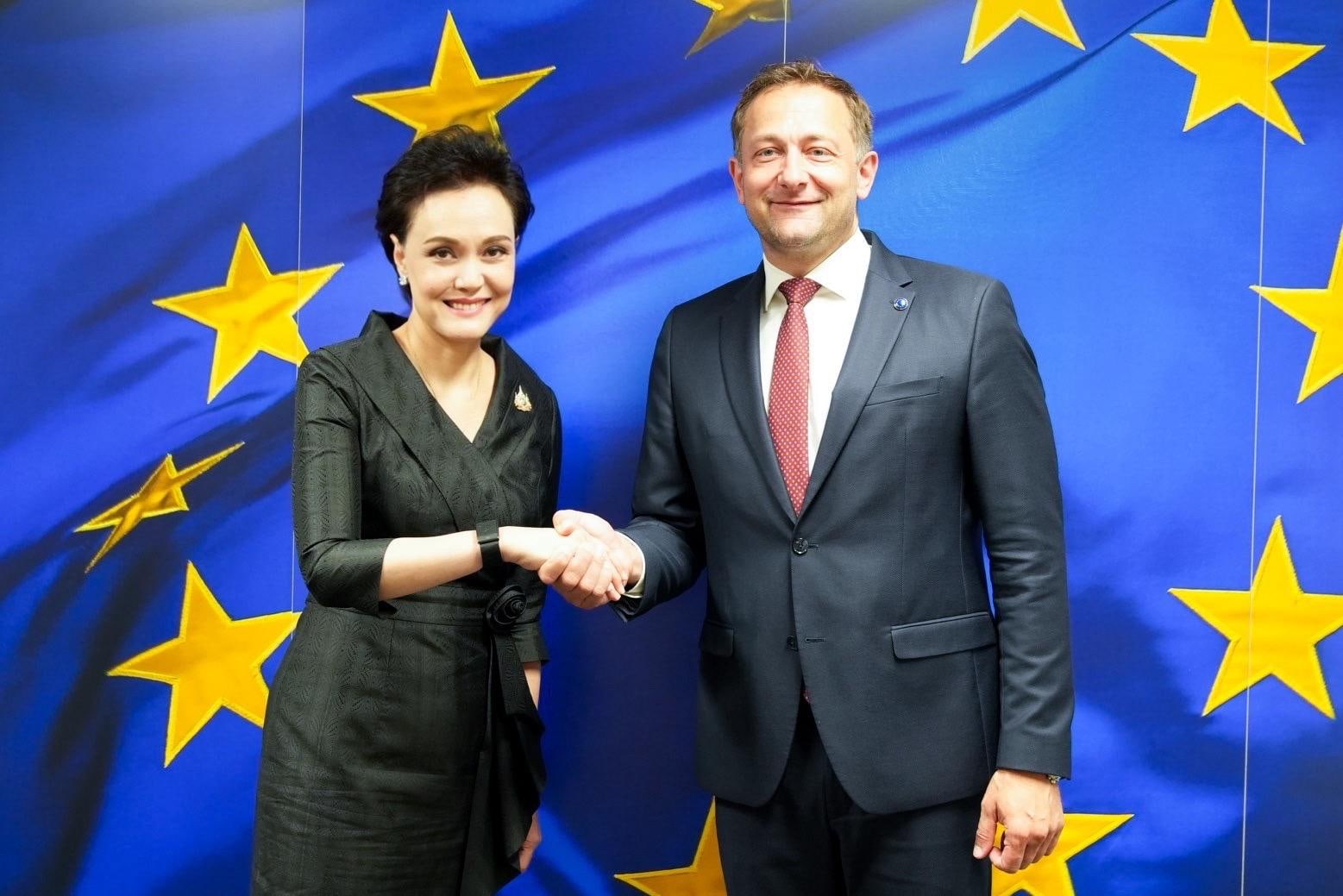
The political track has run alongside the technical one. On 24 June, Suphajee and Thai Trade Representative Werapong Prapha met Trade Commissioner Maros Sefcovic and Agriculture Commissioner Christophe Hansen in Brussels. The presence of the agriculture portfolio at that meeting is telling, since farm access is usually the last obstacle in EU trade deals. A tenth round was scheduled in Thailand for late September, and Sefcovic was expected to visit the country beforehand.
The economic stakes of the Thailand EU trade deal are clear from the 2025 figures. Two-way trade reached 45.03 billion US dollars, up 3.44 percent, with Thai exports at 26.45 billion dollars and imports at 18.58 billion dollars, giving Thailand a surplus of 7.86 billion dollars. The European Union was Thailand’s fourth largest trading partner. A Thailand EU trade deal would lock in access at a time when regional rivals are moving ahead.
That competitive pressure is real. The EU is negotiating or has advanced deals with several Southeast Asian economies, and Ditte Juul Jorgensen, the Commission’s Director-General for Trade and Economic Security, has described these bilateral agreements as stepping stones towards an eventual region-to-region deal with ASEAN. For Bangkok, the lesson is that speed matters.
The next milestone to watch is the result of the tenth round and whether negotiators can close the agriculture and procurement chapters before the end of the year. If they do, the Thailand EU trade deal could reach signature in 2027. If not, it risks slipping behind its regional peers.