October 3, 2026
LATEST
Climate Insurance Alliance Targets A 75 percent Gap In Disaster CoverSatellite Firms Await EU Space Act Verdict On NIS2 OverlapErasmus+ Budget Demand Leaves €6.6 Billion Gap To CommissionRaw Materials Corporation Would Stockpile Metals Europe Needs MostKallas Defence Group Collapse Shows Limits Of Her RoleEU Development Cooperation Meets Its Dublin Moment Of TruthG7 Energy Security Pledge Releases 100 Million BarrelsYabloko Sanctions Hit Ten Russian Judges And OfficialsConsultation On EU KIDS Act Tests Under-13 Social Media BanLeaders Await Irish 2028-2034 Budget Draft Before October 15 SummitMedical Devices Regulation Revision Draws 130 Amendments In ParliamentAGILE Defence Programme Heads For Final Vote With Four Month ClockSafe Countries Of Origin List Speeds Asylum Cases From JuneETS2 Delay To 2028 Gives Households A Longer Carbon ReprieveAir Passenger Rights Overhaul Keeps €600 Cap For Long TripsImplementation And Consolidation Year Splits Brussels On Red TapePhilippines Free Trade Agreement Opens 94 percent Of Tariff Lines To EuropeSaudi Arabia EU Summit Revives The Case For A Gulf Trade DealPacific Islands Forum Consensus Rules Test Europe’s Pacific StrategyTunisia Migration Deal Faces Rewrite Demands As Libya Takes The LeadClimate Insurance Alliance Targets A 75 percent Gap In Disaster CoverSatellite Firms Await EU Space Act Verdict On NIS2 OverlapErasmus+ Budget Demand Leaves €6.6 Billion Gap To CommissionRaw Materials Corporation Would Stockpile Metals Europe Needs MostKallas Defence Group Collapse Shows Limits Of Her RoleEU Development Cooperation Meets Its Dublin Moment Of TruthG7 Energy Security Pledge Releases 100 Million BarrelsYabloko Sanctions Hit Ten Russian Judges And OfficialsConsultation On EU KIDS Act Tests Under-13 Social Media BanLeaders Await Irish 2028-2034 Budget Draft Before October 15 SummitMedical Devices Regulation Revision Draws 130 Amendments In ParliamentAGILE Defence Programme Heads For Final Vote With Four Month ClockSafe Countries Of Origin List Speeds Asylum Cases From JuneETS2 Delay To 2028 Gives Households A Longer Carbon ReprieveAir Passenger Rights Overhaul Keeps €600 Cap For Long TripsImplementation And Consolidation Year Splits Brussels On Red TapePhilippines Free Trade Agreement Opens 94 percent Of Tariff Lines To EuropeSaudi Arabia EU Summit Revives The Case For A Gulf Trade DealPacific Islands Forum Consensus Rules Test Europe’s Pacific StrategyTunisia Migration Deal Faces Rewrite Demands As Libya Takes The Lead
October 3, 2026
LATEST
Climate Insurance Alliance Targets A 75 percent Gap In Disaster CoverSatellite Firms Await EU Space Act Verdict On NIS2 OverlapErasmus+ Budget Demand Leaves €6.6 Billion Gap To CommissionRaw Materials Corporation Would Stockpile Metals Europe Needs MostKallas Defence Group Collapse Shows Limits Of Her RoleEU Development Cooperation Meets Its Dublin Moment Of TruthG7 Energy Security Pledge Releases 100 Million BarrelsYabloko Sanctions Hit Ten Russian Judges And OfficialsConsultation On EU KIDS Act Tests Under-13 Social Media BanLeaders Await Irish 2028-2034 Budget Draft Before October 15 SummitMedical Devices Regulation Revision Draws 130 Amendments In ParliamentAGILE Defence Programme Heads For Final Vote With Four Month ClockSafe Countries Of Origin List Speeds Asylum Cases From JuneETS2 Delay To 2028 Gives Households A Longer Carbon ReprieveAir Passenger Rights Overhaul Keeps €600 Cap For Long TripsImplementation And Consolidation Year Splits Brussels On Red TapePhilippines Free Trade Agreement Opens 94 percent Of Tariff Lines To EuropeSaudi Arabia EU Summit Revives The Case For A Gulf Trade DealPacific Islands Forum Consensus Rules Test Europe’s Pacific StrategyTunisia Migration Deal Faces Rewrite Demands As Libya Takes The LeadClimate Insurance Alliance Targets A 75 percent Gap In Disaster CoverSatellite Firms Await EU Space Act Verdict On NIS2 OverlapErasmus+ Budget Demand Leaves €6.6 Billion Gap To CommissionRaw Materials Corporation Would Stockpile Metals Europe Needs MostKallas Defence Group Collapse Shows Limits Of Her RoleEU Development Cooperation Meets Its Dublin Moment Of TruthG7 Energy Security Pledge Releases 100 Million BarrelsYabloko Sanctions Hit Ten Russian Judges And OfficialsConsultation On EU KIDS Act Tests Under-13 Social Media BanLeaders Await Irish 2028-2034 Budget Draft Before October 15 SummitMedical Devices Regulation Revision Draws 130 Amendments In ParliamentAGILE Defence Programme Heads For Final Vote With Four Month ClockSafe Countries Of Origin List Speeds Asylum Cases From JuneETS2 Delay To 2028 Gives Households A Longer Carbon ReprieveAir Passenger Rights Overhaul Keeps €600 Cap For Long TripsImplementation And Consolidation Year Splits Brussels On Red TapePhilippines Free Trade Agreement Opens 94 percent Of Tariff Lines To EuropeSaudi Arabia EU Summit Revives The Case For A Gulf Trade DealPacific Islands Forum Consensus Rules Test Europe’s Pacific StrategyTunisia Migration Deal Faces Rewrite Demands As Libya Takes The Lead

Tunisia Migration Deal Faces Rewrite Demands As Libya Takes The Lead

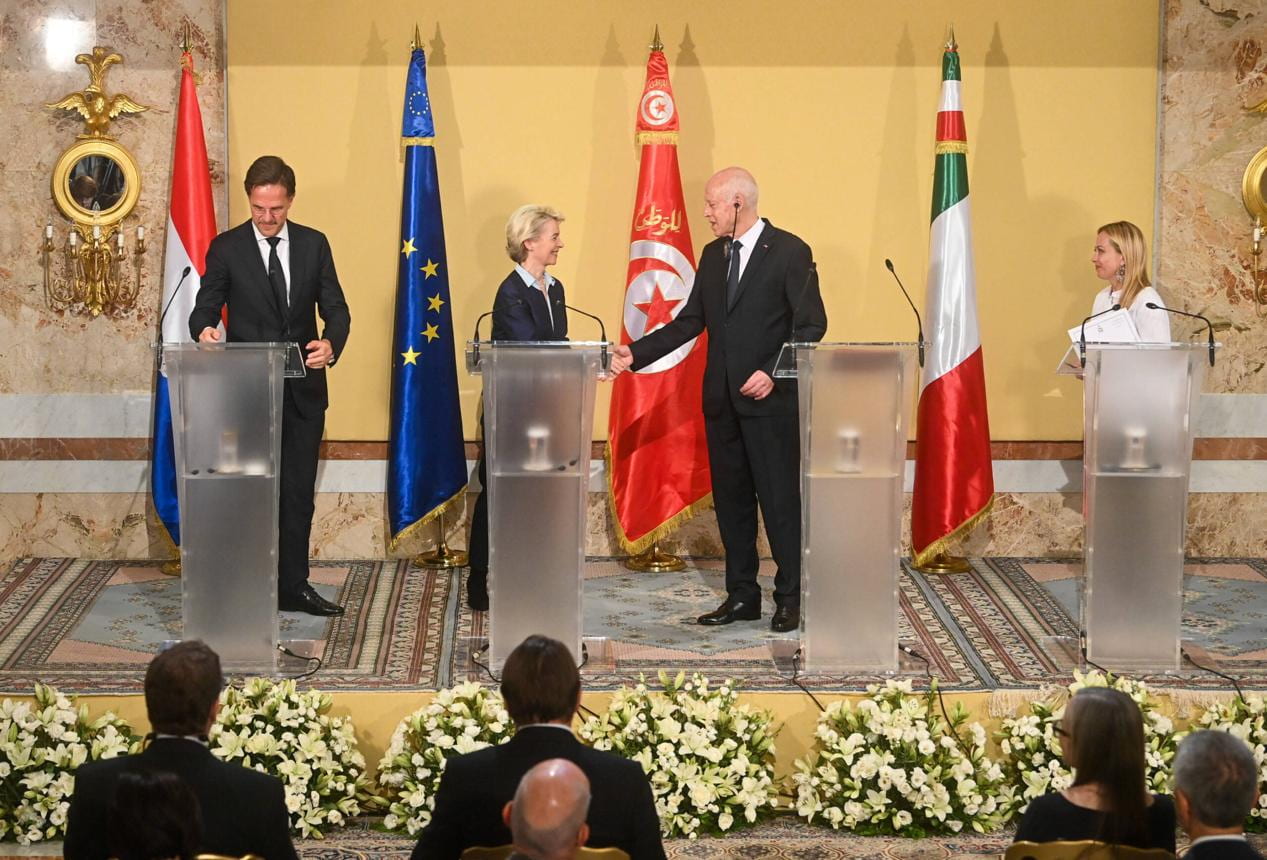
Tunis: The Tunisia migration deal was meant to be the template for Europe’s external migration policy, and three years on it is being challenged from both sides of the Mediterranean. Signed in 2023 as a memorandum of understanding, it promised 105 million euros in immediate border support, 900 million euros in macro-financial assistance and 150 million euros in budget support. Tunisian officials now call the arrangement imbalanced and want investment and jobs, not only help with border control.

The numbers explain why Brussels counted the arrangement a success. Reporting based on Italian figures indicates that arrivals from Tunisia fell by roughly 77 to 80 percent in 2024 compared with 2023, and kept falling in early 2025. In the first quarter of 2026 only 458 people reached Italy from Tunisia, about 7 percent of the total. Political leaders in several capitals have pointed to those figures when arguing that partnership with transit countries delivers faster results than any internal reform.

The same figures contain a warning. In the first quarter of 2026 Libya accounted for about 87 percent of arrivals, with 5,373 people, and departures from Algeria rose by 94 percent year on year. Migration routes shift when one door closes, so the Tunisia migration deal has displaced movement rather than ended it. That pattern should shape how the Commission judges its spending, because a drop on one route says little about total flows or the human cost along the way.

Human rights concerns add a second pressure. In July 2026 Amnesty International argued that EU support has contributed to serious abuses against migrants in Tunisia, and noted that the country dismantled its asylum system in 2024 while European cooperation continued. Rights groups have long criticised the lack of conditionality and monitoring in the arrangement.

Meanwhile the Commission is extending the model, with a package of about 675 million euros for 2025 to 2027 covering Tunisia and other partners, and a separate package for Mauritania. Statewatch reported in May 2026 on contracts to expand cooperation with Libya’s eastern authorities, which raises sharper questions about who controls the forces receiving support. Each new agreement modelled on the Tunisia migration deal widens the political exposure of the EU, since partners learn that their cooperation on migration commands a premium.

Tunis also has leverage. Its request to renegotiate shows that a partner can use the Tunisia migration deal to extract commitments on trade access, energy links and youth employment that Brussels would otherwise discuss at a slower pace. A credible rewrite of the Tunisia migration deal would link funding to published benchmarks on search and rescue, access to asylum procedures and independent monitoring, while giving Tunisia a real stake in a broader economic agenda. That would be harder to deliver than a cheque, but it would be more durable.

The test for the next phase of the EU’s Mediterranean policy is whether it can move from transactional deals to agreements that survive scrutiny. If the Tunisia migration deal is rewritten with rights safeguards and investment attached, it could still serve as a model. If it is simply renewed, Europe will keep paying for a model whose results move to other routes and whose costs fall on the people it claims to protect.