September 16, 2026
LATEST
Six Billion in Promised Savings Rests on a Digital WalletAuditors Question the rescEU Budget Before the Fleet ArrivesDuty-Free Access for Armenian Exports Comes With a Conditions ListA Mirror Measure Closed Europe to Brazilian Meat in One DayEurope’s Creative Sectors Wait on an AI Strategy DraftSoftware Makers Face Europe’s Product Liability Deadline in DecemberMetro 3 Overran by 477 Percent and the Line Sits FrozenCage-Free Promises Land Before the Transport File Is FinishedTwo New Calls Will Test How Flexible Horizon Europe Really IsEurope’s Innovation Act Counts 10 Billion It Has Not Found YetProcurement Is the Chapter That Could Stall the Thailand DealMobility Week Returns With a Test of Intergenerational FairnessMinisters Debate the Chips Act Next Week With No Money AttachedTaiwan Wants Tax Treaties That Brussels Has No Power to SignNorth Korea Now Earns From Europe Without Shipping AnythingPalm Oil Is the Last Hard Question Before the Indonesia SigningCan One Year Deliver Both a Trade Deal and a Sea CodeVietnam Reached Europe’s Top Partnership Tier With Little DetailLeaked Draft Puts Europe’s Social Media Age Limit at FifteenFP10 Clears Committee and the Budget Gap Stays Wide OpenSix Billion in Promised Savings Rests on a Digital WalletAuditors Question the rescEU Budget Before the Fleet ArrivesDuty-Free Access for Armenian Exports Comes With a Conditions ListA Mirror Measure Closed Europe to Brazilian Meat in One DayEurope’s Creative Sectors Wait on an AI Strategy DraftSoftware Makers Face Europe’s Product Liability Deadline in DecemberMetro 3 Overran by 477 Percent and the Line Sits FrozenCage-Free Promises Land Before the Transport File Is FinishedTwo New Calls Will Test How Flexible Horizon Europe Really IsEurope’s Innovation Act Counts 10 Billion It Has Not Found YetProcurement Is the Chapter That Could Stall the Thailand DealMobility Week Returns With a Test of Intergenerational FairnessMinisters Debate the Chips Act Next Week With No Money AttachedTaiwan Wants Tax Treaties That Brussels Has No Power to SignNorth Korea Now Earns From Europe Without Shipping AnythingPalm Oil Is the Last Hard Question Before the Indonesia SigningCan One Year Deliver Both a Trade Deal and a Sea CodeVietnam Reached Europe’s Top Partnership Tier With Little DetailLeaked Draft Puts Europe’s Social Media Age Limit at FifteenFP10 Clears Committee and the Budget Gap Stays Wide Open
September 16, 2026
LATEST
Six Billion in Promised Savings Rests on a Digital WalletAuditors Question the rescEU Budget Before the Fleet ArrivesDuty-Free Access for Armenian Exports Comes With a Conditions ListA Mirror Measure Closed Europe to Brazilian Meat in One DayEurope’s Creative Sectors Wait on an AI Strategy DraftSoftware Makers Face Europe’s Product Liability Deadline in DecemberMetro 3 Overran by 477 Percent and the Line Sits FrozenCage-Free Promises Land Before the Transport File Is FinishedTwo New Calls Will Test How Flexible Horizon Europe Really IsEurope’s Innovation Act Counts 10 Billion It Has Not Found YetProcurement Is the Chapter That Could Stall the Thailand DealMobility Week Returns With a Test of Intergenerational FairnessMinisters Debate the Chips Act Next Week With No Money AttachedTaiwan Wants Tax Treaties That Brussels Has No Power to SignNorth Korea Now Earns From Europe Without Shipping AnythingPalm Oil Is the Last Hard Question Before the Indonesia SigningCan One Year Deliver Both a Trade Deal and a Sea CodeVietnam Reached Europe’s Top Partnership Tier With Little DetailLeaked Draft Puts Europe’s Social Media Age Limit at FifteenFP10 Clears Committee and the Budget Gap Stays Wide OpenSix Billion in Promised Savings Rests on a Digital WalletAuditors Question the rescEU Budget Before the Fleet ArrivesDuty-Free Access for Armenian Exports Comes With a Conditions ListA Mirror Measure Closed Europe to Brazilian Meat in One DayEurope’s Creative Sectors Wait on an AI Strategy DraftSoftware Makers Face Europe’s Product Liability Deadline in DecemberMetro 3 Overran by 477 Percent and the Line Sits FrozenCage-Free Promises Land Before the Transport File Is FinishedTwo New Calls Will Test How Flexible Horizon Europe Really IsEurope’s Innovation Act Counts 10 Billion It Has Not Found YetProcurement Is the Chapter That Could Stall the Thailand DealMobility Week Returns With a Test of Intergenerational FairnessMinisters Debate the Chips Act Next Week With No Money AttachedTaiwan Wants Tax Treaties That Brussels Has No Power to SignNorth Korea Now Earns From Europe Without Shipping AnythingPalm Oil Is the Last Hard Question Before the Indonesia SigningCan One Year Deliver Both a Trade Deal and a Sea CodeVietnam Reached Europe’s Top Partnership Tier With Little DetailLeaked Draft Puts Europe’s Social Media Age Limit at FifteenFP10 Clears Committee and the Budget Gap Stays Wide Open

What Korea’s First Year Inside Horizon Europe Actually Produced

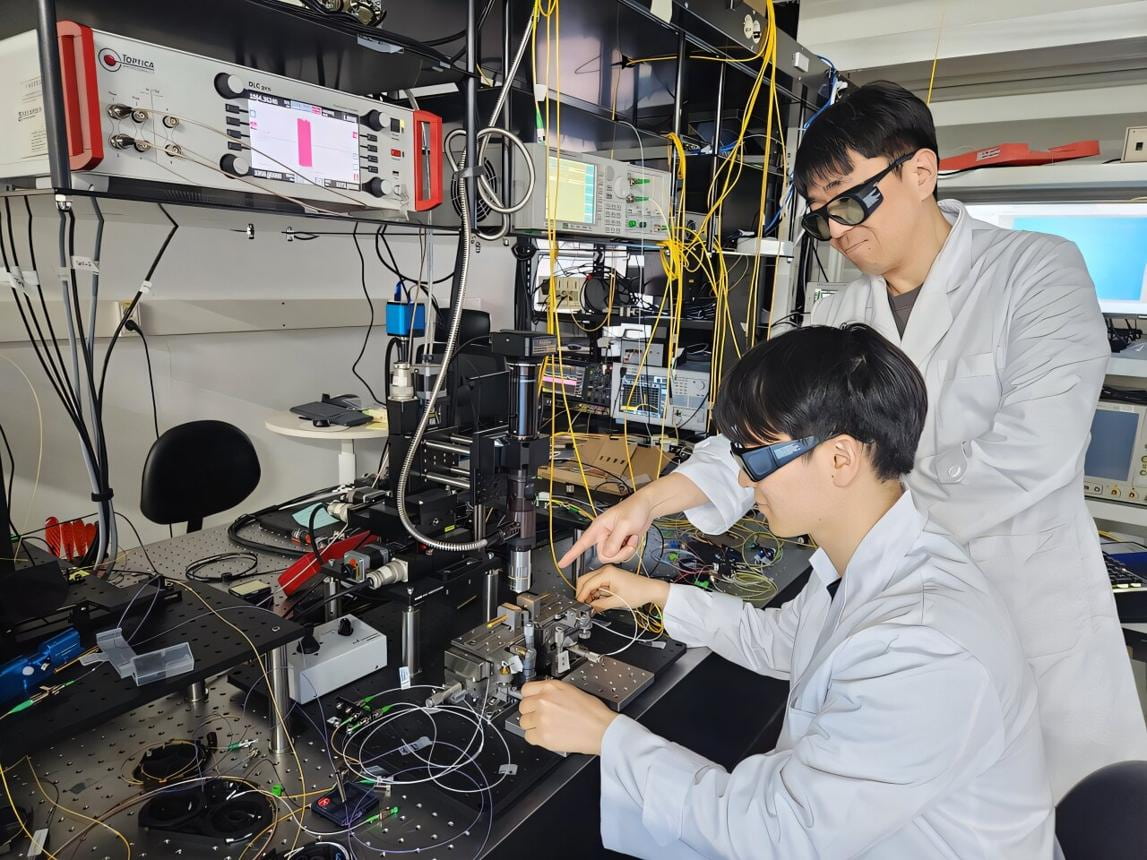
Daejeon: The government research campus an hour south of Seoul concentrates more public laboratory capacity than anywhere else in South Korea, and it offers the clearest view of a question Brussels rarely asks out loud. Association agreements look like diplomatic achievements on the day of signature. They only mean something when researchers use them.

South Korea began participating in Horizon Europe under a transitional arrangement on 1 January 2025 and signed the association agreement that July, becoming the first Asian country to associate with the Union’s 95.5 billion euro research programme. The symbolism travelled well. Brussels had spent years arguing that its research budget should anchor partnerships with advanced democracies rather than function as an internal subsidy, and Seoul supplied the proof.

The substance is narrower than the symbolism. Association covers Pillar II, the collaborative industrial and societal-challenge strand that holds most of the money. It does not extend equal access to the European Research Council, which funds individual investigators on curiosity-driven work. Korean scientists can therefore join European consortia solving applied problems. They cannot compete for the grants that European researchers treat as the programme’s highest prize.

That boundary reflects a deliberate European choice rather than an oversight. The ERC guards its status as an internal instrument, and every association negotiation since the United Kingdom’s return to the programme has drawn the same line. Partners pay in, work inside consortia, and stay outside the frontier-science pot.

Uptake tells the more interesting story. Korean institutions hold formal eligibility, yet the number of teams that reach a signed grant agreement remains small relative to the country’s research output. The obstacle is procedural rather than scientific. Horizon consortium building rewards people who already know which European partners to call, who understands the work programme language, and who has sat through a proposal that failed.

Seoul recognised the gap and responded with plumbing. The National Research Foundation of Korea created a dedicated multilateral cooperation team, funded pre-planning projects so groups can afford the months of unpaid consortium work that precede a submission, and ran briefing sessions and a researchers networking forum. The European Union Delegation and the Ministry of Science and ICT co-hosted an EU-Korea Research and Innovation Day in Seoul on 24 March 2026 for the same reason.

None of this is glamorous, and all of it decides the outcome. Countries that associate without building matchmaking capacity contribute money and harvest disappointing statistics, which then feeds a domestic argument that the whole arrangement wastes public funds. Israel, Norway and Switzerland each learned this at different speeds.

Korea brings assets that should shorten the learning curve. Its semiconductor, battery, shipbuilding and robotics sectors match European industrial priorities almost item for item, and its corporate research spending as a share of output ranks among the highest in the world. European consortia working on advanced materials or grid storage have clear reasons to want a Korean partner in the room.

The useful metric arrives with the next round of calls. If Korean participation concentrates in a handful of large institutes with existing European ties, association will have formalised relationships that already existed. If it spreads to universities and smaller firms in Daejeon, Pohang and Ulsan, the agreement will have created something. Brussels should measure that carefully, because the next Asian partner is already watching the numbers.