August 10, 2026
LATEST
Europe’s Air Quality Improves but WHO Limits LoomTwelve New EU Medicines Win a Green Light from EMAFIFA Agent Rules Must Answer to Europe’s CourtsTachograph Rules Now Reach Vans Crossing Europe’s BordersNature Restoration Plans Come Due as a Hard Deadline NearsBrussels Opens a State Aid Probe Into Spain’s Renewables PayoutBrussels Extends Its Tariff Suspension on US Goods IndefinitelyFarmers Win Stronger Contract Rights Across the EU Supply ChainEurope Finally Locks In Its 348-Satellite Answer to StarlinkPlatform Work Rules Face a National Scramble Before DecemberDuty-Free Parcels Reach the End of the Line for EU ShoppersAfter Nine Years, Europe and Australia Seal a Trade PactBeijing Answers Europe’s Russia Sanctions in KindOne Year On, the EU-Japan Alliance Faces Its First TestEurope’s Chip Ambitions Still Run Through Taiwan’s FabsWhy South Korea Bet Its Research Future on Europe’s ProgrammeEurope and Japan Deepen Their Economic Alliance as Rivals CircleFive Joint Defence Projects Launch Europe’s Military ShieldElectrification Plan Aims to Make Europe First Electro ContinentHorizon Europe Budget Fight Heats Up as Ministers Push BackEurope’s Air Quality Improves but WHO Limits LoomTwelve New EU Medicines Win a Green Light from EMAFIFA Agent Rules Must Answer to Europe’s CourtsTachograph Rules Now Reach Vans Crossing Europe’s BordersNature Restoration Plans Come Due as a Hard Deadline NearsBrussels Opens a State Aid Probe Into Spain’s Renewables PayoutBrussels Extends Its Tariff Suspension on US Goods IndefinitelyFarmers Win Stronger Contract Rights Across the EU Supply ChainEurope Finally Locks In Its 348-Satellite Answer to StarlinkPlatform Work Rules Face a National Scramble Before DecemberDuty-Free Parcels Reach the End of the Line for EU ShoppersAfter Nine Years, Europe and Australia Seal a Trade PactBeijing Answers Europe’s Russia Sanctions in KindOne Year On, the EU-Japan Alliance Faces Its First TestEurope’s Chip Ambitions Still Run Through Taiwan’s FabsWhy South Korea Bet Its Research Future on Europe’s ProgrammeEurope and Japan Deepen Their Economic Alliance as Rivals CircleFive Joint Defence Projects Launch Europe’s Military ShieldElectrification Plan Aims to Make Europe First Electro ContinentHorizon Europe Budget Fight Heats Up as Ministers Push Back
August 10, 2026
LATEST
Europe’s Air Quality Improves but WHO Limits LoomTwelve New EU Medicines Win a Green Light from EMAFIFA Agent Rules Must Answer to Europe’s CourtsTachograph Rules Now Reach Vans Crossing Europe’s BordersNature Restoration Plans Come Due as a Hard Deadline NearsBrussels Opens a State Aid Probe Into Spain’s Renewables PayoutBrussels Extends Its Tariff Suspension on US Goods IndefinitelyFarmers Win Stronger Contract Rights Across the EU Supply ChainEurope Finally Locks In Its 348-Satellite Answer to StarlinkPlatform Work Rules Face a National Scramble Before DecemberDuty-Free Parcels Reach the End of the Line for EU ShoppersAfter Nine Years, Europe and Australia Seal a Trade PactBeijing Answers Europe’s Russia Sanctions in KindOne Year On, the EU-Japan Alliance Faces Its First TestEurope’s Chip Ambitions Still Run Through Taiwan’s FabsWhy South Korea Bet Its Research Future on Europe’s ProgrammeEurope and Japan Deepen Their Economic Alliance as Rivals CircleFive Joint Defence Projects Launch Europe’s Military ShieldElectrification Plan Aims to Make Europe First Electro ContinentHorizon Europe Budget Fight Heats Up as Ministers Push BackEurope’s Air Quality Improves but WHO Limits LoomTwelve New EU Medicines Win a Green Light from EMAFIFA Agent Rules Must Answer to Europe’s CourtsTachograph Rules Now Reach Vans Crossing Europe’s BordersNature Restoration Plans Come Due as a Hard Deadline NearsBrussels Opens a State Aid Probe Into Spain’s Renewables PayoutBrussels Extends Its Tariff Suspension on US Goods IndefinitelyFarmers Win Stronger Contract Rights Across the EU Supply ChainEurope Finally Locks In Its 348-Satellite Answer to StarlinkPlatform Work Rules Face a National Scramble Before DecemberDuty-Free Parcels Reach the End of the Line for EU ShoppersAfter Nine Years, Europe and Australia Seal a Trade PactBeijing Answers Europe’s Russia Sanctions in KindOne Year On, the EU-Japan Alliance Faces Its First TestEurope’s Chip Ambitions Still Run Through Taiwan’s FabsWhy South Korea Bet Its Research Future on Europe’s ProgrammeEurope and Japan Deepen Their Economic Alliance as Rivals CircleFive Joint Defence Projects Launch Europe’s Military ShieldElectrification Plan Aims to Make Europe First Electro ContinentHorizon Europe Budget Fight Heats Up as Ministers Push Back

Why Japan Has Become Europe’s Most Comfortable Tech Partner

Tokyo: When officials from the European Commission and Japan’s industry ministry closed the fourth meeting of their Digital Partnership Council in Brussels in May, the communique read less like a diplomatic courtesy and more like a work plan. Semiconductors, quantum computing, 5G and 6G networks, artificial intelligence, data governance and submarine connectivity were all assigned future deliverables. For a relationship that long ran on goodwill and free-trade rhetoric, the shift toward concrete engineering is the real story.

The logic is straightforward. Europe and Japan share the same uncomfortable position in the global technology map: both are advanced manufacturing economies that depend on suppliers and customers they no longer fully trust. Both watched the United States and China weaponise export controls and subsidies, and both concluded that standing alone leaves them exposed. The answer has been to knit their industrial bases together where it is legally and commercially possible.

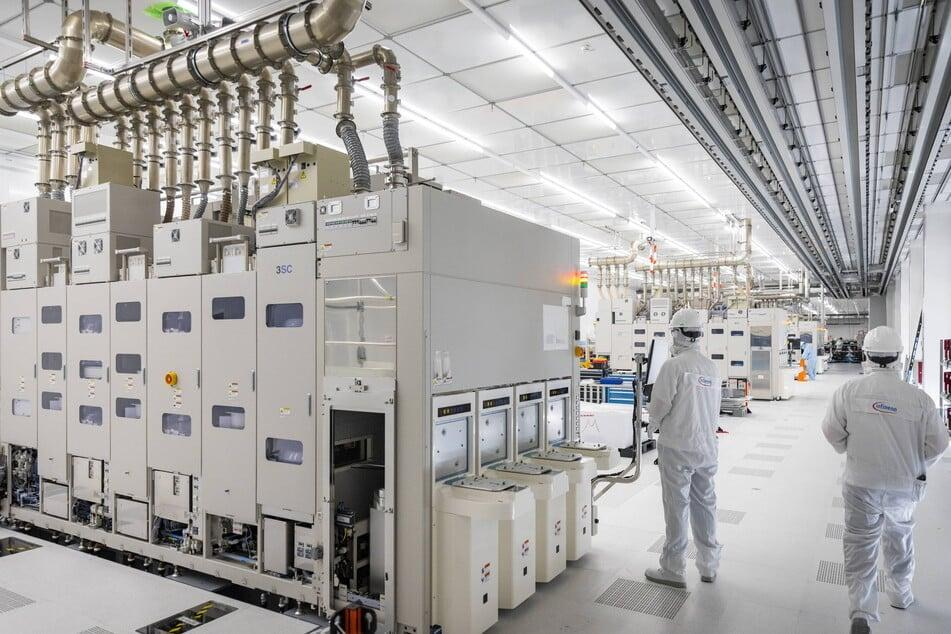
Semiconductors sit at the centre of that effort. Rather than chase the fantasy of full self-sufficiency, Brussels and Tokyo have agreed to pool research and, more importantly, to build early-warning mechanisms that flag supply disruptions before they become shortages. It is an unglamorous form of cooperation, but the 2021 chip crunch taught both sides that information sharing during a crisis is worth more than any single new fabrication plant.

The defence dimension has moved faster than many expected. In April, European and Japanese industry bodies convened their first Defence Industry Dialogue, pledging cooperation on dual-use technologies. That follows the Security and Defence Partnership the two signed in late 2024, which covers cybersecurity, maritime security, space and countering hybrid threats. A decade ago, the idea of Japanese and European defence firms comparing notes would have seemed exotic. Today it reflects a sober reading of how quickly the technological and military domains have fused.

What makes the partnership durable is that it rests on revealed preference rather than slogans. Japan does not ask Europe to choose sides in Asia, and Europe does not ask Tokyo to underwrite its quarrels with Washington. Each treats the other as a low-drama partner in a high-drama world, which is precisely why the relationship keeps deepening while flashier alliances stall.

There are limits worth naming. Regulatory cultures differ, and Europe’s instinct to legislate first can grate against Japan’s preference for industry-led standards. The new Competitiveness Alliance launched at the Tokyo summit will only matter if it survives contact with national budgets and corporate caution. Cooperation councils are cheap; co-investment is not, and neither side has yet committed the kind of money that would make supply chains genuinely resilient.

For now, though, the trajectory is clear. Europe has found in Japan a partner that shares its anxieties without amplifying them, and that is a rarer commodity than any single technology. If the next phase converts memoranda into jointly funded projects, the EU-Japan track may quietly become the most productive technology relationship Brussels maintains anywhere.