Tirana: Albania has opened every one of its thirty-three negotiating chapters and provisionally closed three of them, a ratio that tells you most of what you need to know about how accession works.
The EU held four accession conferences in a single day on 14 July, with Ukraine, Montenegro, Moldova and Albania. Diplomats presented the choreography as momentum. It also reflects a calculation that grouping the conferences limits the chance for any single capital to stage a veto in isolation.
Albania’s ninth conference provisionally closed science and research, education and culture, and external relations. Those chapters close early in every enlargement round because they demand the least institutional change. The chapters that decide membership, meaning judiciary and fundamental rights, justice freedom and security, public procurement, competition and agriculture, remain open. They will stay open until Albanian courts and prosecutors produce a track record rather than a legislative package.
Moldova moved on a different clock. The country opened cluster one, the fundamentals, at its second accession conference in Luxembourg on 15 June, then opened the external relations cluster in July. Two clusters in a month reads well in a press release. Fundamentals opens first and closes last by design, so Chisinau has begun the longest part of the process rather than finished anything.
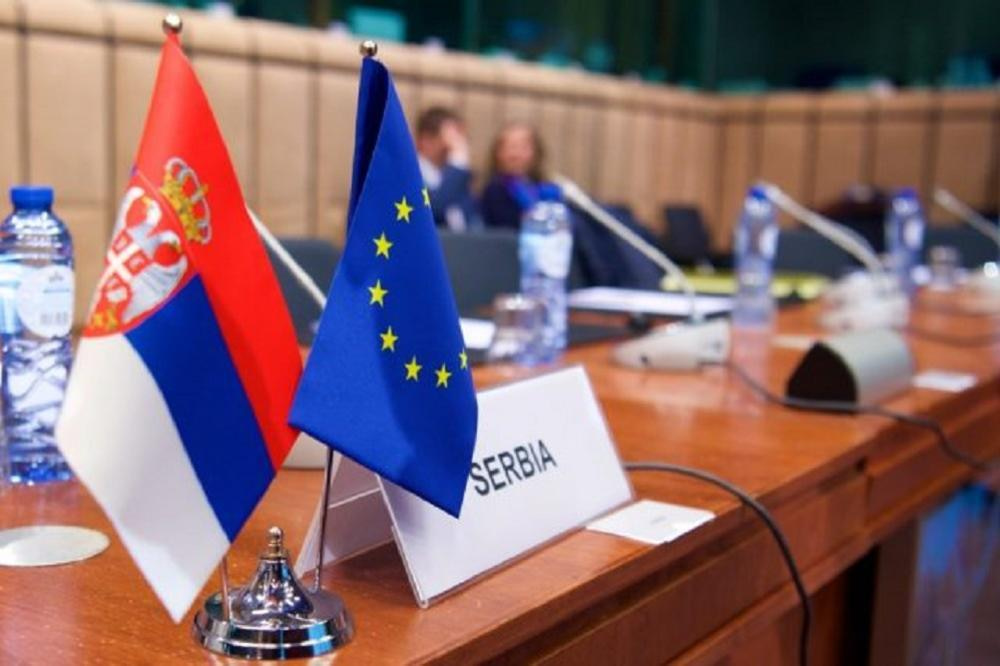
The wider picture has shifted. Assessments this year place Ukraine and Moldova ahead of Serbia on the readiness measures the Commission tracks, inverting the ranking that held for most of the last decade. Serbia has stalled on media freedom and judicial independence, while the two eastern candidates have used the war and its aftermath to push reforms their parliaments would otherwise have delayed.
None of this changes the arithmetic that governs enlargement. Every chapter opening and closing needs unanimity among twenty-seven governments, and each of them can hold a candidate hostage to a bilateral dispute. Bulgaria demonstrated the method against North Macedonia. Nothing in the current framework prevents a repeat, and several member states have blocked procedural steps this year for reasons unconnected to any candidate’s performance.
Money will apply the next pressure. The next multiannual financial framework must price in the cost of admitting large agricultural economies, and internal estimates of what Ukrainian membership would do to cohesion and farm payments have already unsettled net recipients in central Europe. Those numbers will shape how enthusiastic capitals stay once the technical chapters run out.
Tirana’s remaining thirty chapters will close slowly or not at all, depending on whether the EU treats enlargement as a reward for reform or as a strategic necessity it can no longer postpone.