Kraków: Illustrators and composers working in the Polish city have eight days left to tell the European Commission what artificial intelligence should be allowed to do with their work. The call for evidence on an AI strategy for the cultural and creative sectors closes on 11 September 2026, and it is open in every official EU language to anyone with a view.
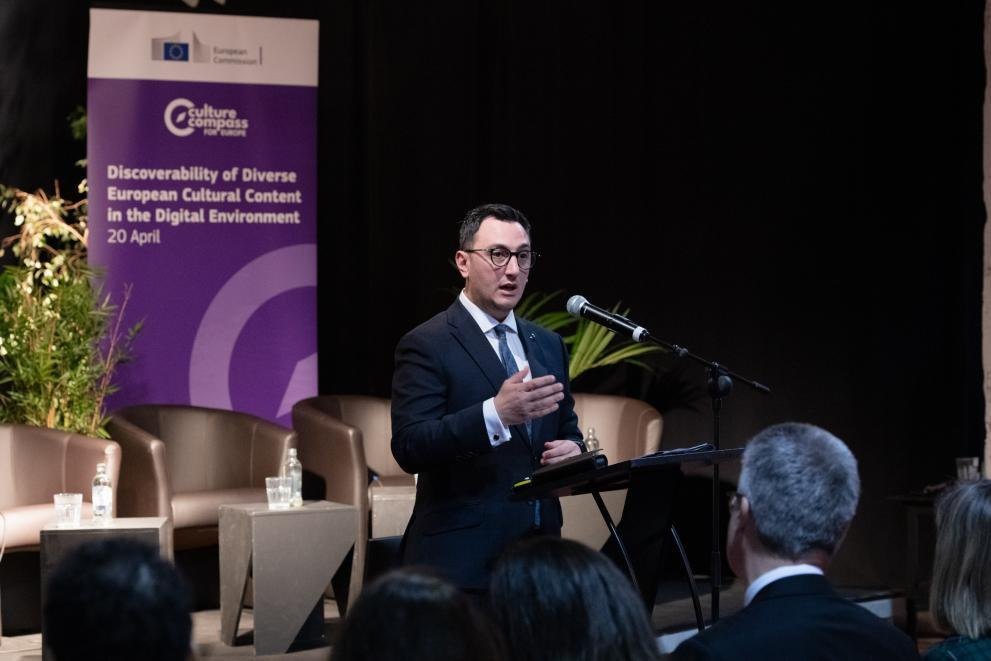
The exercise feeds a strategy the Commission intends to publish in the first quarter of 2027. Commissioner Glenn Micallef has set out three pillars for it: fostering innovation and competitiveness across the creative industries, defending the position of artists and protecting their rights, and helping the sector manage the digital transition rather than be managed by it. The strategy sits under the Culture Compass for Europe, the framework adopted in November 2025 that made culture a horizontal concern of EU policymaking rather than a niche portfolio.
The consultation frames its purpose carefully. It asks how AI can complement human creativity instead of replacing it, how the technology might widen access to culture and knowledge, and what a fair and competitive European creative economy would require. Those framings are not neutral. They signal that the Commission has already accepted the sector’s central premise, which is that generative systems trained on creative work pose a distributional question and not merely a technical one.
Rights holders arrive at the consultation with a specific grievance. The text and data mining exceptions in the 2019 copyright directive were drafted before large generative models existed, and creators argue the exceptions now license industrial-scale training on protected work with no remuneration and little transparency. The Commission is running a parallel review of that directive, which means the AI strategy cannot settle the copyright question on its own even though respondents will inevitably raise it.
Working conditions form the second thread. The Culture Compass identified precarious employment among artists as a structural weakness, and proposed an EU Artists Charter, an EU Cultural Data Hub and a periodic State of Culture Report to give the sector evidence it currently lacks. AI intensifies the precarity problem in fields where commissioning budgets were already thin, particularly illustration, voice work and stock photography.
Money moves separately from strategy. The 2026 Creative Europe call for European Cooperation Projects carries 60 million euros and will support roughly 150 projects, guided by the Culture Compass priorities. That figure is modest against the scale of the transition the strategy describes, and it comes from a programme whose successor depends on the post-2027 budget negotiation.
Consultations of this kind reward organised respondents. Culture Action Europe published detailed recommendations through its Digital and AI Action Group in May, and the large collecting societies will file their own. A studio in Kraków with three employees and no policy staff competes for attention against submissions written by people who do this professionally, which is a familiar asymmetry in Brussels consultation practice and one the multilingual format only partly offsets.