August 10, 2026
LATEST
Europe’s Air Quality Improves but WHO Limits LoomTwelve New EU Medicines Win a Green Light from EMAFIFA Agent Rules Must Answer to Europe’s CourtsTachograph Rules Now Reach Vans Crossing Europe’s BordersNature Restoration Plans Come Due as a Hard Deadline NearsBrussels Opens a State Aid Probe Into Spain’s Renewables PayoutBrussels Extends Its Tariff Suspension on US Goods IndefinitelyFarmers Win Stronger Contract Rights Across the EU Supply ChainEurope Finally Locks In Its 348-Satellite Answer to StarlinkPlatform Work Rules Face a National Scramble Before DecemberDuty-Free Parcels Reach the End of the Line for EU ShoppersAfter Nine Years, Europe and Australia Seal a Trade PactBeijing Answers Europe’s Russia Sanctions in KindOne Year On, the EU-Japan Alliance Faces Its First TestEurope’s Chip Ambitions Still Run Through Taiwan’s FabsWhy South Korea Bet Its Research Future on Europe’s ProgrammeEurope and Japan Deepen Their Economic Alliance as Rivals CircleFive Joint Defence Projects Launch Europe’s Military ShieldElectrification Plan Aims to Make Europe First Electro ContinentHorizon Europe Budget Fight Heats Up as Ministers Push BackEurope’s Air Quality Improves but WHO Limits LoomTwelve New EU Medicines Win a Green Light from EMAFIFA Agent Rules Must Answer to Europe’s CourtsTachograph Rules Now Reach Vans Crossing Europe’s BordersNature Restoration Plans Come Due as a Hard Deadline NearsBrussels Opens a State Aid Probe Into Spain’s Renewables PayoutBrussels Extends Its Tariff Suspension on US Goods IndefinitelyFarmers Win Stronger Contract Rights Across the EU Supply ChainEurope Finally Locks In Its 348-Satellite Answer to StarlinkPlatform Work Rules Face a National Scramble Before DecemberDuty-Free Parcels Reach the End of the Line for EU ShoppersAfter Nine Years, Europe and Australia Seal a Trade PactBeijing Answers Europe’s Russia Sanctions in KindOne Year On, the EU-Japan Alliance Faces Its First TestEurope’s Chip Ambitions Still Run Through Taiwan’s FabsWhy South Korea Bet Its Research Future on Europe’s ProgrammeEurope and Japan Deepen Their Economic Alliance as Rivals CircleFive Joint Defence Projects Launch Europe’s Military ShieldElectrification Plan Aims to Make Europe First Electro ContinentHorizon Europe Budget Fight Heats Up as Ministers Push Back
August 10, 2026
LATEST
Europe’s Air Quality Improves but WHO Limits LoomTwelve New EU Medicines Win a Green Light from EMAFIFA Agent Rules Must Answer to Europe’s CourtsTachograph Rules Now Reach Vans Crossing Europe’s BordersNature Restoration Plans Come Due as a Hard Deadline NearsBrussels Opens a State Aid Probe Into Spain’s Renewables PayoutBrussels Extends Its Tariff Suspension on US Goods IndefinitelyFarmers Win Stronger Contract Rights Across the EU Supply ChainEurope Finally Locks In Its 348-Satellite Answer to StarlinkPlatform Work Rules Face a National Scramble Before DecemberDuty-Free Parcels Reach the End of the Line for EU ShoppersAfter Nine Years, Europe and Australia Seal a Trade PactBeijing Answers Europe’s Russia Sanctions in KindOne Year On, the EU-Japan Alliance Faces Its First TestEurope’s Chip Ambitions Still Run Through Taiwan’s FabsWhy South Korea Bet Its Research Future on Europe’s ProgrammeEurope and Japan Deepen Their Economic Alliance as Rivals CircleFive Joint Defence Projects Launch Europe’s Military ShieldElectrification Plan Aims to Make Europe First Electro ContinentHorizon Europe Budget Fight Heats Up as Ministers Push BackEurope’s Air Quality Improves but WHO Limits LoomTwelve New EU Medicines Win a Green Light from EMAFIFA Agent Rules Must Answer to Europe’s CourtsTachograph Rules Now Reach Vans Crossing Europe’s BordersNature Restoration Plans Come Due as a Hard Deadline NearsBrussels Opens a State Aid Probe Into Spain’s Renewables PayoutBrussels Extends Its Tariff Suspension on US Goods IndefinitelyFarmers Win Stronger Contract Rights Across the EU Supply ChainEurope Finally Locks In Its 348-Satellite Answer to StarlinkPlatform Work Rules Face a National Scramble Before DecemberDuty-Free Parcels Reach the End of the Line for EU ShoppersAfter Nine Years, Europe and Australia Seal a Trade PactBeijing Answers Europe’s Russia Sanctions in KindOne Year On, the EU-Japan Alliance Faces Its First TestEurope’s Chip Ambitions Still Run Through Taiwan’s FabsWhy South Korea Bet Its Research Future on Europe’s ProgrammeEurope and Japan Deepen Their Economic Alliance as Rivals CircleFive Joint Defence Projects Launch Europe’s Military ShieldElectrification Plan Aims to Make Europe First Electro ContinentHorizon Europe Budget Fight Heats Up as Ministers Push Back

Defence Innovation Fund Bets 115 Million on Europe’s Start-Ups

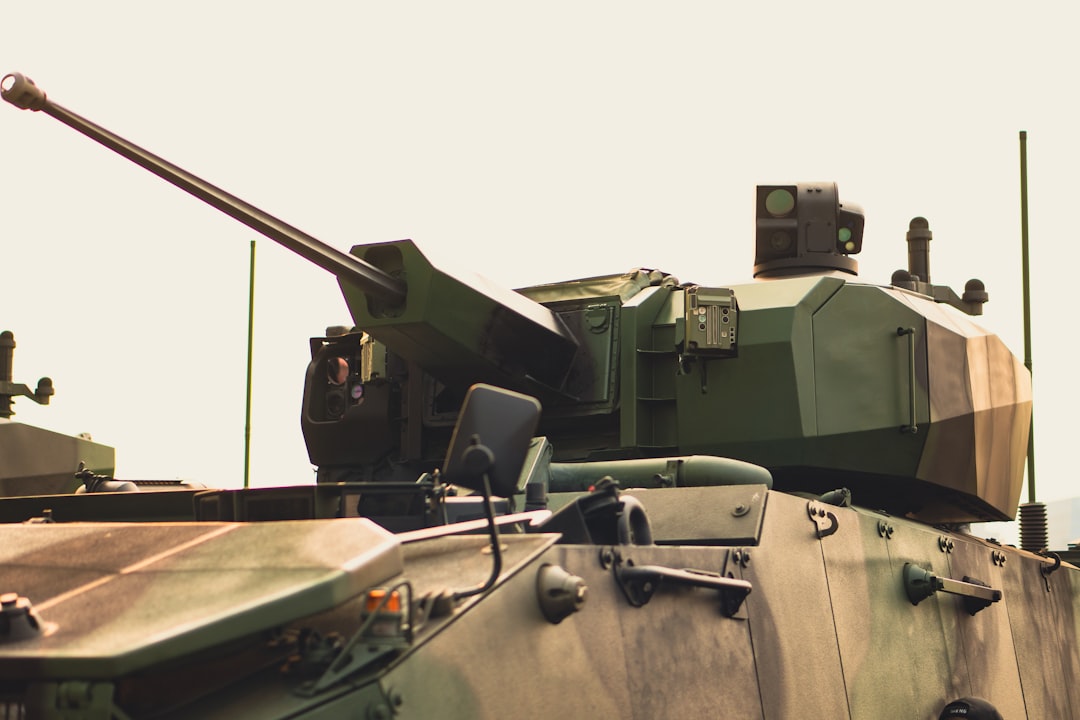
Tallinn: Europe’s defence establishment, long the preserve of sprawling prime contractors and decade-long procurement cycles, is making a deliberate bet on speed and small firms. Earlier this month the Council agreed its negotiating mandate for AGILE, a proposed 115-million-euro programme designed to channel rapid, targeted financial support to small and medium-sized enterprises, including the start-ups and scale-ups that have struggled to break into a market built around incumbents. The acronym is no accident: the instrument is meant to move at a tempo the sector has rarely managed.

The logic is drawn straight from the battlefields shaping current strategic thinking. Conflicts on the union’s periphery have shown that cheap drones, software-defined systems and quickly iterated hardware can rival far costlier platforms, and that the decisive advantage often lies with whoever can innovate and field new capabilities fastest. Europe’s traditional defence-industrial model, optimised for large, slow, exquisitely engineered programmes, is poorly suited to that rhythm. AGILE is an attempt to graft a venture mindset onto a sector famous for the opposite, betting that nimble companies in places like the Baltic capitals can deliver what the giants cannot.

AGILE does not stand alone. On 10 June the Council presidency and European Parliament negotiators reached a provisional agreement on legislation to simplify security and defence procurement, removing administrative delays, accelerating permit-granting, easing the transfer of defence products across internal borders and strengthening cooperation between member states. Together with the 1.5-billion-euro European Defence Industry Programme running through 2027 and the SAFE instrument backing joint procurement, the bloc is assembling a layered architecture meant to carry projects from early research all the way to production and fielding.

The ambition is genuine, but so are the obstacles. A 115-million-euro envelope is modest set against the scale of Europe’s capability gaps and the budgets of established contractors, and there is a real risk that the money is spread too thinly to move the needle. Start-ups also face the defence sector’s notorious valley of death, the chasm between a promising prototype and a signed production contract, where many innovative firms exhaust their funding before a ministry commits to buy. Simplifying procurement helps, but national governments still control the purchase decisions that ultimately determine whether a clever idea becomes a deployed system.

There is a sovereignty dimension too. By nurturing a domestic ecosystem of small defence innovators, the union hopes to reduce its dependence on non-European suppliers and keep critical know-how within its borders. That goal collides with the persistent fragmentation of national markets, where twenty-seven sets of requirements and procurement rules have long frustrated cross-border scaling. The procurement-simplification deal is aimed precisely at that fragmentation, and its success will determine whether AGILE’s start-ups can sell across the union or remain trapped in their home markets.

For now, the package signals a shift in mindset as much as money. Europe is acknowledging that the next conflict may be won by the side that iterates fastest, and that the firms capable of that speed are often the smallest. Whether 115 million euros and a streamlined rulebook are enough to turn that recognition into capability will be tested not in committee rooms but in the workshops of the start-ups now being invited, at last, to the table.