Delft: The EIC Pathfinder Open 2026 call has produced its winners, and the European Innovation Council announced on 14 October that it will back 43 projects. Each project can receive up to €4 million in grant funding, which implies a ceiling of about €172 million for the whole group, although the agency has not published a total. The call received a record number of proposals for the second year running, so the selection was demanding.
Pathfinder is the programme within the European Innovation Council that supports early-stage research into radically new technologies. It sits well before the stage at which a start-up pitches to investors, and it funds ideas that may take years to prove. The EIC Pathfinder Open format has no thematic restrictions, which lets researchers propose whatever they believe could change a field.
The successful consortia are broad. In total, 218 organisations from 30 countries take part, including 24 EU member states. Across the 266 participations, 44% come from higher or secondary education, 28% from research organisations and 25% from private companies, while public bodies and other organisations account for the remaining 3%. Small and medium-sized enterprises take part in 34 of the 43 projects, a sign that firms are working with academics from the start.
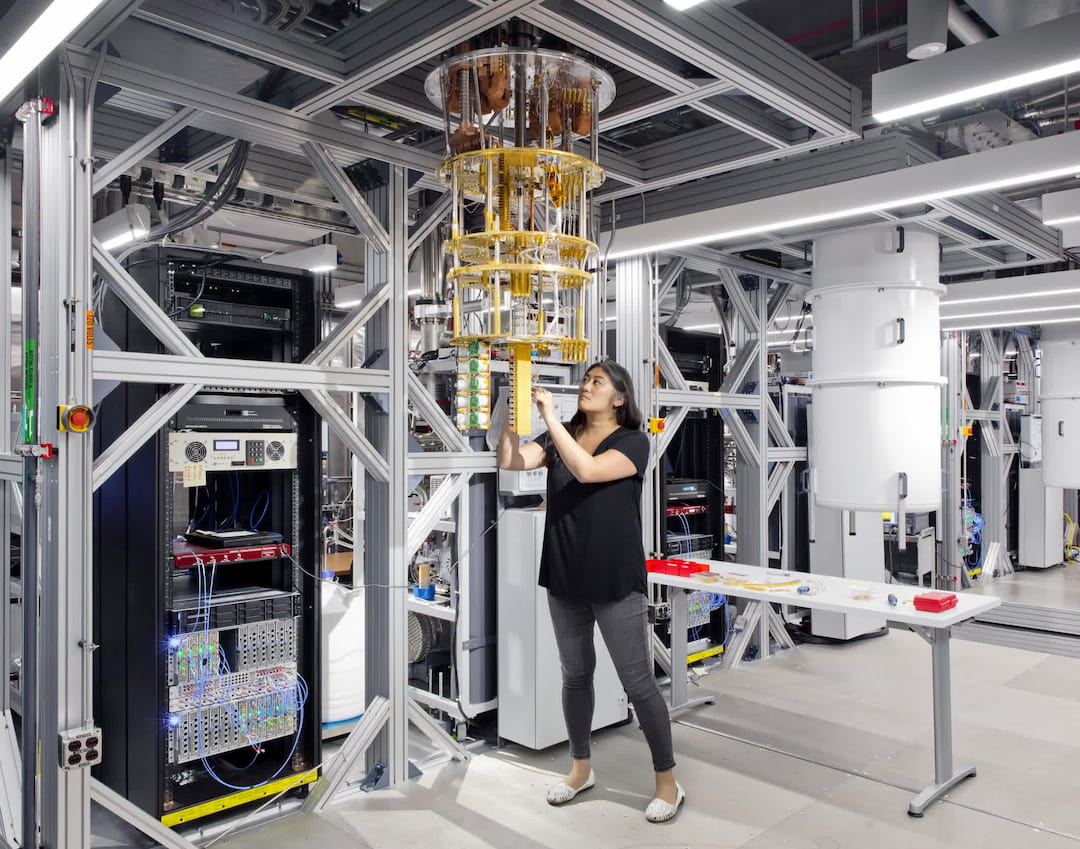
The portfolio shows how wide the EIC Pathfinder Open call can stretch. LUNGBOT aims to use inhalable, engineered bacteria that produce therapeutic molecules directly inside lung tumours, offering a more targeted route to cancer treatment. NoBIQu proposes a quantum computing architecture that combines superconducting qubits with more efficient error correction, with the goal of cutting the hardware needed for reliable computation.
Two further projects point towards industry and agriculture. DyHoLIT develops a holographic lithography approach for very small and complex structures, with possible uses in semiconductors and in three-dimensional structures for biomedical research. DEW2ROOT works on a wood-based material that captures moisture from the air and delivers it to plant roots, which could help young plants survive drought.
The projects have now been notified and are preparing their grant agreements. Funding depends on signing those agreements, so the figures remain ceilings until the paperwork is done. The agency has not stated the success rate of the call, and it has not said how many applications it received, which makes it hard to judge how selective the process was.
The EIC Pathfinder Open results matter for European competitiveness. The Union has long struggled to turn strong science into commercial leadership, and the EIC Pathfinder Open instrument is one of its tools for closing that gap. Quantum computing, biotechnology and advanced manufacturing all appear in this year’s list, and each is a field where the Commission wants European firms to hold their own against American and Asian rivals.
Researchers who missed out have another chance soon. The EIC will open its 2027 funding opportunities at the beginning of November, and applicants will want to study the winning topics for hints about the agency’s tastes. For the 43 selected teams, the next test is signing their grant agreements and delivering results that justify the early bet that EIC Pathfinder Open has placed on them.