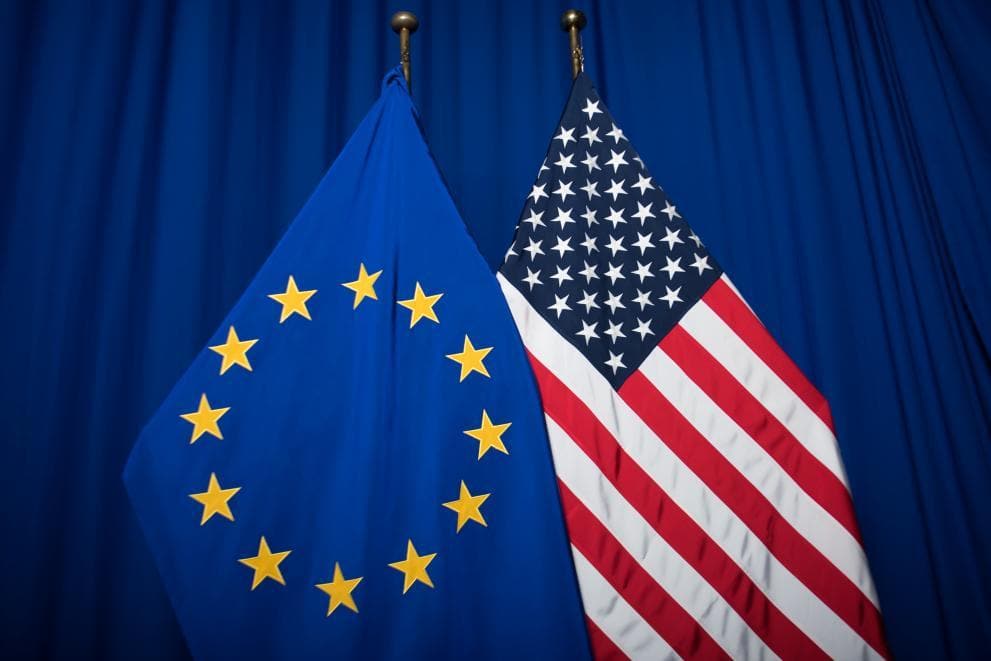
Antwerp: The EU-US trade deal legislation includes a safeguard clause and an end date of 2029, according to the Commission’s description of the political agreement reached on 22 May 2026. Parliament and the Council settled the two regulations after more than five hours of talks, and Trade Commissioner Maroš Šefčovič welcomed the outcome. The sources reviewed do not confirm whether formal adoption has since been completed.
The regulations implement the Joint Statement that the EU and the United States issued on 21 August 2025. The first regulation eliminates tariffs on US industrial goods and gives preferential access to selected US agri-food and seafood products. The second extends the suspension of duties on lobster and processed lobster.
The EU-US trade deal also contains protections for European producers. A safeguard clause allows action when imports rise in a way that injures, or could injure, EU industry, and the Commission will monitor trade flows regularly. The EU can also suspend the tariff concessions in full or in part if conditions change. The Council’s earlier negotiating mandate had added a stronger bilateral safeguard mechanism and clearer rules of origin.
Time limits shape the arrangement. The Commission has to report on implementation and economic impact to Parliament and the Council by 31 December 2028. According to the Commission, the liberalised measures apply until the end of 2029, with a possible extension. That schedule gives lawmakers a built-in review before the arrangement lapses.
The Council adopted its negotiating mandates on 28 November 2025, which opened the way for trilogues. Parliament had pushed for tighter conditions during the talks, and the final text reflects a compromise between the two institutions. The Commission said the texts would proceed to formal adoption in the coming weeks, with the aim of rapid entry into force.
The stakes are large. EU-US trade in goods and services exceeded 1.7 trillion euros in 2025, made up of 911 billion euros in goods and 865 billion euros in services. A stable legal basis matters to exporters on both sides of the Atlantic, and the safeguard clause matters to farmers and manufacturers who fear import surges.
Exporters have practical questions. Companies that ship industrial goods want to know when the EU-US trade deal tariff cuts take effect, and farmers want to see how the quota system for US agri-food products will work. The EU-US trade deal also touches coastal communities, because lobster duties are part of the package.
Observers will watch how the Commission uses its monitoring powers. The EU-US trade deal gives Brussels the tools to suspend concessions, yet political pressure may make that step hard to take. The first monitoring reports will show whether the safeguards are a real brake or a symbolic promise.