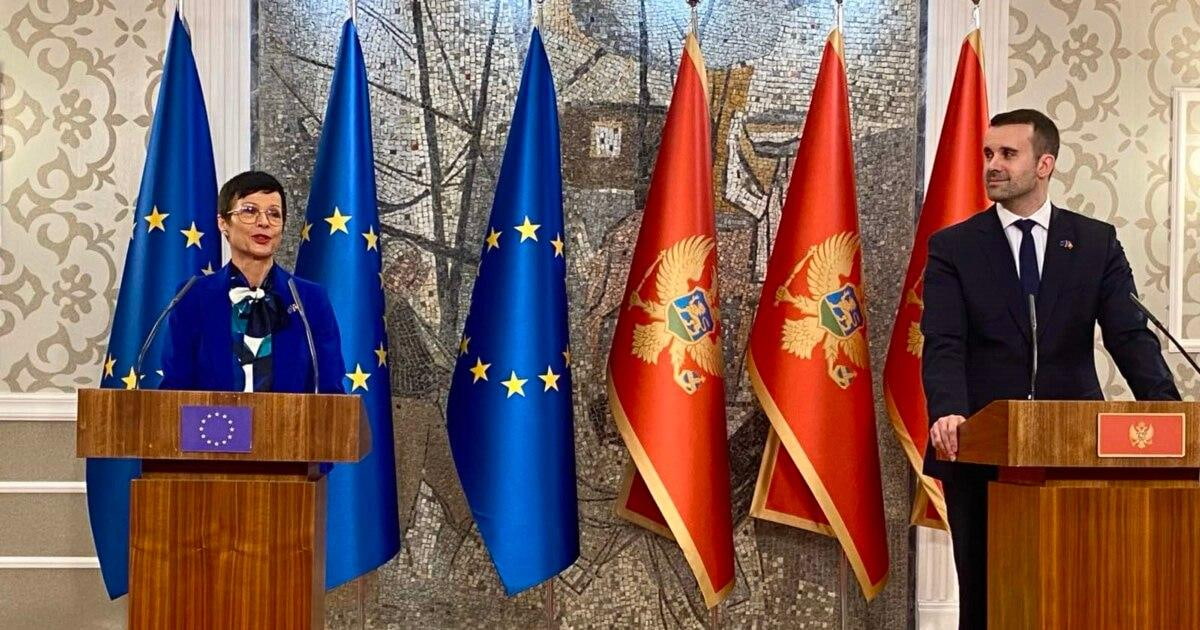
Podgorica: Montenegro EU membership moved closer on 4 November 2026, when the European Commission presented its 2026 Enlargement Package with indicative roadmaps for the four most advanced candidates. Montenegro, Albania, Ukraine and Moldova each received a set of concrete milestones and targets. The Commission says it may adjust the roadmaps and will update them regularly.
Montenegro leads the field, and Montenegro EU membership is the only roadmap that runs all the way to accession. It has provisionally closed 21 negotiating chapters, and the Commission says the remaining chapters could be provisionally closed by the end of this year if member states agree. A summary of the package says the Commission considers the country on track to become the 28th member state in 2028, and that an accession treaty could be signed in June 2027 at the earliest.
Albania follows Montenegro in the queue for membership. It has opened its last negotiating cluster, provisionally closed four chapters and aims to conclude talks in 2027, provided reform momentum holds. Moldova has opened four clusters, meets the conditions to open the rest and targets early 2028, although it must build a track record in corruption cases.
Ukraine has also opened four clusters and meets the conditions for the remaining ones. Its target is the end of 2028. High Representative Kaja Kallas wants all clusters opened by the end of the year, and a joint task force will feed an interim benchmark report in the first half of 2027. Enlargement Commissioner Marta Kos presented the package alongside her.
The picture is less encouraging for other candidates, and none of them is close to Montenegro EU membership. Serbia has made no substantive progress, according to the reports, and North Macedonia still has constitutional amendments outstanding. Bosnia and Herzegovina is increasingly disengaging, and Kosovo’s reforms have stalled amid an institutional crisis. One summary adds that Georgia’s accession is de facto halted and that legal action against officials and civil society widens the gap with Türkiye.
The package also introduces gradual integration, a conditional and reversible way to give partners access to common frameworks in energy, transport, digital and defence. The Commission will start dialogues with partners within six months. It is the first enlargement report with a dedicated section on security and defence.
The sources reviewed do not describe the content of each roadmap milestone, and they give no Council timetable. Ministers must now consider the Commission’s recommendations and decide on the next steps. For Podgorica, the 2028 date is an ambition that depends on unanimity among all 27 governments. Accession requires every capital to agree, which is why the Commission stresses that the roadmaps are indicative and subject to adjustment. Montenegro EU membership therefore depends on both national reforms and a political decision among the member states, and the reports reviewed do not say how governments will vote.
Montenegro EU membership now has a visible timetable, and the coming months will show whether member states treat the roadmap as a commitment or as guidance.